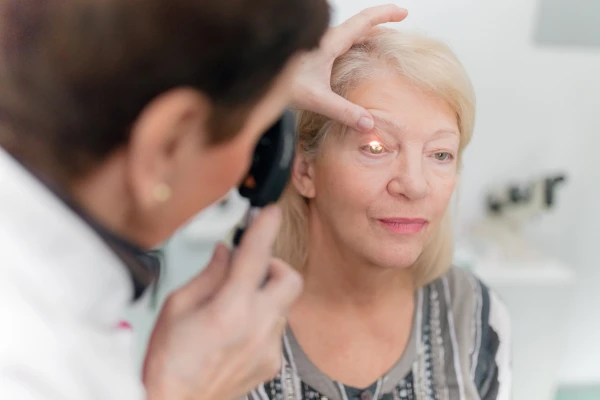
The population of our republic aged 50+ faces serious eye problems, up to blindness – as it is systematically under-examined. This was reported in the Saeima by the Latvian Society of the Blind, which demanded that vision checks, corresponding medications, and procedures be included in the list of state-funded services.
Take care of your macula from a young age
My first visit to the eye doctor in fifth grade plunged me into distress: I was diagnosed with myopia, and in my right eye – minus two right away! I remember the atropine drops, the blurry world, the sad return home with my mother from the children's clinic on Jāņa Asara. The main thing is that no boy in my class wore glasses at that time. A complete loss of image.
What they found was the simplest myopia – a refractive error where the image is focused in front of the retina, causing a person to see poorly at a distance. The main causes are elongation of the eyeball (axial) or increased refraction (refractive). Symptoms include blurred distant objects, eye fatigue, headaches… I was prescribed glasses, which I shamefully began to use in class to read what was written on the board. And also in the cinema. Then, a quarter of a century later, while driving a car. It went like this – at home, I would be without glasses. Stepping outside, I became a glasses-wearer. There are probably many of us!
The macula, or yellow spot, is the central part of the retina. Here, photoreceptors are concentrated, allowing us to have clear, sharp, color vision. Blood vessels are absent in the macula, so its nourishment comes from the adjacent choroid (vascular coat). The role of the yellow spot in our eyes is very significant: it is responsible for clear central vision and color perception. The ability to see small objects and shades of colors is provided by special cells – cones. In the case of pathology in the macular zone, a patient experiences a number of characteristic signs:
-
Decreased brightness of the image
-
Distortion of the shape and size of visible objects
-
Appearance of a spot in the central area of vision.
The Latvian Society of the Blind notes the widespread prevalence of eye diseases in our population – age-related macular degeneration and diabetic retinopathy. This refers to damage to the retina of the eyeball of any origin. The main cause is vascular disorders that lead to impaired blood supply to the retina. Retinopathy often manifests as a complication of hypertension, diabetes, and other systemic diseases.
As a result, people who have not yet reached retirement age can unfortunately become visually impaired – and this is already a serious social problem, as this category of our compatriots finds it very difficult to live independently.
Patients, unfortunately, too often regard pathology as a normal, "age-related" change in vision. While they wait for an examination, the disease progresses. I can note this from the tragic experience of my father – the deterioration of his vision became a precursor to cancer. The overall condition of the body affected his eyes before a fatal diagnosis was established, and he arrived at the oncology center already with poor vision. He ended his days practically blind.
Fortunately, for most people suffering from eye diseases, they are not associated with life-threatening pathologies. But even if a person becomes "only" visually impaired, this places a significant burden on the state budget, the Society of the Blind emphasizes. People leave the labor market and become dependent on assistants, whose system in the country is still underdeveloped...
At the parliamentary subcommittee on public health, Slovenia was cited as an example, which is quite similar to Latvia in population (2.1 million) – there, mandatory screening for diabetic retinopathy was introduced. According to statistics, "diabetes" affects about 14% of the adult population in one form or another. Now imagine that all of them could go blind… The most painful issue for Latvia is the accessibility of ophthalmological services in the regions – it is urgently necessary to open offices in Latgale, where there are thousands of under-examined patients. Next is the issue of compensating for medications to stabilize vision; all of this must be included in the plans of the Ministry of Health.
The "silver economy" sees poorly
Older people "on you" with computers, especially if they see poorly, especially up close, creates a vicious circle – and because of this, about 30% find the very procedure of making an appointment with a doctor difficult. Another 18% have no opportunity to receive state-paid services.
All of this, roughly speaking, does not align with the model of the "silver economy" proclaimed by the authorities, where more and more older workers will be present in the labor market, thus compensating for low birth rates. The idea is certainly good – but unfortunately, 57% of seniors have vision problems that hinder their work. They would work until the end – but, unfortunately, they cannot use computers and smartphones, cash registers, and other devices and instruments. "Poor vision is an 'invisible barrier' to the digital state," the Latvian Federation of Pensioners states.
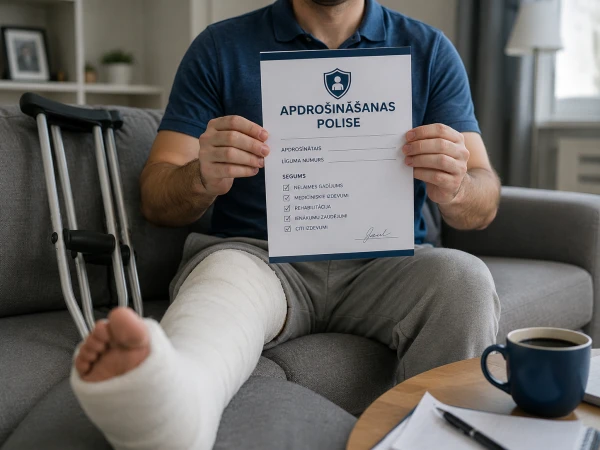
Our older generation, of course, tries not to put off problems for the long term. 40% of seniors have already undergone some kind of medical procedures on their eyes. The first place in the ranking is occupied by cataract surgery – 31%. Here a paradox arises – on average, a working pensioner contributes 3759 euros to the social budget per year. However, when it comes to surgery (after standing in considerable queues!), 45% are forced to pay for it out of their own pockets; the budget covers expenses for 39%; another 16% is covered by insurance.
Treating vision… with injections
But let's return to the most hidden eye disease. As stated in the Saeima by the chairman of the board of the Latvian Association of Eye Doctors, associate professor at the University of Stradiņš, Juris Vanags, today the leading method for treating the macula in patients with diabetes is antiVEGF therapy. Finally, at the end of 2025, it began to be funded from the state budget – the first 62 patients were selected for the procedure in the Stradiņš and Gaiļezers hospitals.
The process takes about 4 months, including 2-3 injections – and an observation period. Everything would be fine, but as the public health doctor noted, the current rules do not facilitate the spread of the practice to small ophthalmology offices. This means more queues and the continued threat of vision loss. Moreover, Juris Vanags pointed out – there is a "neglect of pediatric ophthalmology" in Latvian medicine. Healthy vision is established – from a young age!
In this regard, I recall the epic that our family went through regarding eye surgery for our son. Quite a lot of nerves, but fortunately, everything was done without queues. Just pay, any whim for your money. In the UK, meanwhile, the most advanced surgeries are performed for children for free – for example, using gene therapy. But we cannot see Albion from here...
SENIORS
According to a study by the Latvian Federation of Pensioners, 87% of those aged 60+ have vision problems; 51% see poorly up close; 47% find it difficult to read.