
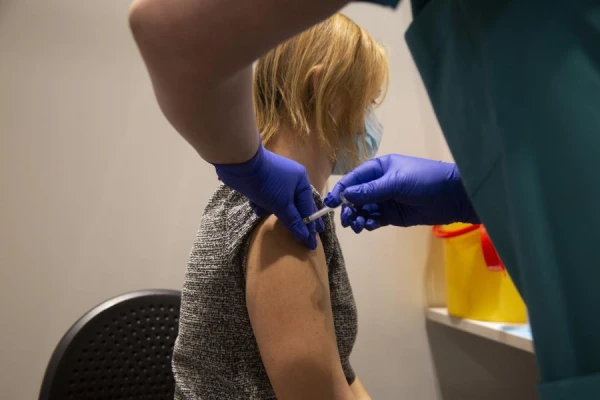
Contagious and dangerous measles, which seemed to have been eradicated in Latvia, has returned. 38 cases of the disease have already been registered. This indicates an insufficient level of herd immunity.
Given the worsening situation, a decision has been made to change the children's vaccination schedule, reports TV3 News.
Although vaccination against measles in Latvia began as early as 1968 and the incidence decreased from about 15,000 cases per year to one, the situation has recently worsened again.
Currently, several dozen people have fallen ill. About 14,000, or 4%, of children aged 1 to 17 have not received any measles vaccinations, and only 18.9% of family doctors' practices reach the necessary vaccination level of 95%, which is the critical threshold to prevent the spread of the virus in society.
Vaccination is currently conducted in two stages: the first dose is given in infancy, and revaccination occurs at 7 years. There is a risky period between the first and second vaccinations when the child is less protected.
To reduce risks, it is planned to change the vaccination schedule — moving the second vaccination from seven to four years.
This idea is not new. Experts warned about it two years ago when concerns about a possible outbreak were growing. At that time, changes were not implemented due to a lack of funding. Now the ministry promises to find resources and simultaneously strengthen cooperation with family doctors to understand why some parents refuse vaccination or postpone it.
"The Immunization Council was not heard with this recommendation. No action was taken. As a result, we have come to an outbreak that we warned about and needed to prepare for. And here we are. In connection with the outbreak, a decision has been made," said Dace Zavadska, head of the Family Vaccination Center at the Children's Hospital.
"I really did not notice this recommendation back then, two years ago," said Health Minister Hosam Abu Meri.
Now funding — about 300,000 euros — is planned to be found in the existing budget to start vaccination according to the new schedule in the second half of this year.
However, the main challenge will be different. Research shows that up to 40% of parents postpone vaccinations, and one in three does not vaccinate at all due to their own beliefs.
"Some doubt because they believe that such a disease does not exist. Many postpone without justification — due to a runny nose, cough, wanting the child to grow up, which has no basis. And some truly believe the absurd claims of the anti-vaccine movement," Zavadska explained.
Work in this direction will also be intensified, assessing the situation in family doctors' practices.
"We have given the Center for Disease Prevention and Control and the National Health Service one month, after which an analysis will be conducted, we will find out and talk individually where there are signs of problems," noted the minister.
Measles is not just a rash and fever. It can cause severe complications — from pneumonia to life-threatening conditions. That is why young mothers surveyed by journalists support changing the vaccination schedule.
"Both of us have children around a year old, and what is happening is alarming. Diseases that were considered eradicated are returning, and children can get sick," says Iluta.
"After all, it’s the 21st century, medicine has proven itself. We have children, we want to protect them. And we are vaccinated ourselves. The whole family, relatives — this is important," says Anna.
"I haven’t delved deeply, but I usually listen to my family doctor and trust him," notes Anete.
In Latvia, vaccination against measles is funded by the state; however, the decision is made by the parents. And it is this choice that determines whether the measles outbreak will be a brief warning or a serious public health crisis.








Leave a comment