
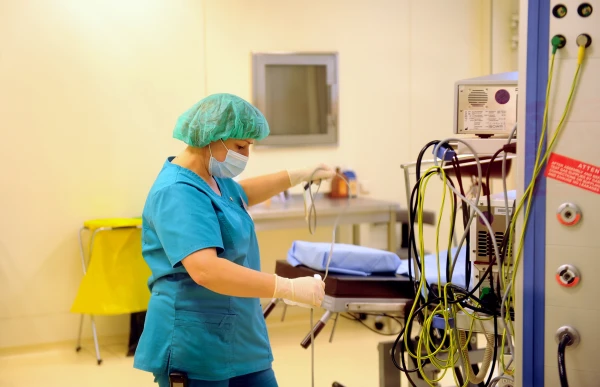
In the next 3-4 months, we face the most challenging challenges. No, we are not yet talking about medical reforms, but about snow, rain, icy slush underfoot, as well as billions of bacteria and viruses in public transport. The winter season fills the corridors of clinics and hospitals.
And the members of the Saeima are also, it turns out, people – at the subcommittee on public health, they were figuring out where one can get treated in Latvia.
How Scary It Is to Live
Here’s a life hack: if next time you are accused of lacking patriotism in a social media discussion or in an ordinary conversation, don’t forget this argument – the Health Ministry’s indicators in December 2025:
-
the expected lifespan of newborns in Latvia is 6 years lower than the EU average;
-
men in Latvia live almost 10 years less than women;
-
only half of the residents of Latvia believe they are in good health.
Naturally, the ministry led by Hosam Abu Meri (“New Unity”) hands out self-risk to patients: smoking and alcohol significantly worsen health, especially among men, and obesity is diagnosed in Latvia more often than the EU average. However, the medical sector also, unfortunately, acknowledges its share of the blame:
-
long waits for treatment: quotas and low tariffs hinder access;
-
medically preventable mortality in Latvia is twice as high as the EU average;
-
no improvements in mortality within 30 days after a heart attack or stroke;
-
Latvia has one of the highest rates of male suicides in the EU.
A sad reality. And, notably, it is not reported in a hybrid war mode by foreign slanderers, but during an official meeting of a parliamentary working body.
Who Does the Medical Assistant Help
The “basic” medical personnel, who are supposed to provide emergency medical assistance, are in short supply in Latvia. The register counts 4,366 people, with 3,471 employed in the profession. There are “11,823 nurses” on paper, but only 9,200 are working in the profession.
There are various reasons for the shortage:
- In the 1990s, Latvia experienced a 10-year gap during which no qualifications were awarded to mid-level medical personnel. They resumed training medical assistants, also known as paramedics, in 2004. It is now believed that a 3-year college program provides a “short-cycle professional higher education.” However, if one tries hard, they can obtain a diploma in just 9 months through the European Structural Funds. Currently, 57 people are being trained, and they promise to accept another 18 by June 2026. Will this be enough for all of Latvia? I doubt it. One way or another, former paramedics from the ambulance service, who have the privilege of a pension after years of service, are invited to transform into outpatient medical assistants after 160 hours of training...
In general, it is still too early for the guys to retire – 60% of licensed medical assistants in Latvia are under 40 years old. I was surprised by the youthful staff in the emergency room of the famous Gailesers when I recently visited the hospital for a broken wrist. By the way, it happened just before New Year’s!
- The second major problem is nurses: the age group of 50-60 years dominates. Of course, against the backdrop of the main client group of retirees, the medical personnel seem quite youthful and vigorous, but still...
What the Leaders Say
The head of the subcommittee on public health, Liga Kozlovska, a “green peasant” (herself a medical professional with over 40 years of experience, a family doctor since 1993 in her hometown of Balvi), passed the word to Svens Henkuzens, Deputy State Secretary of the Ministry of Health (who obtained a Master’s degree in health management from Maastricht University, Netherlands), who assured: “The ministry has developed a human resources strategy…”
For now, here’s how it is:
-
in terms of healthcare worker availability, Latvia has a figure of 73 per 10,000 residents; the EU average is 121,
-
in terms of practicing physicians – 3.4, while in OECD countries – 3.7,
-
in terms of nurses – 4.2, while in OECD countries – 9.2.
So we see: we have more than twice as few of these “human resources” specifically in the relatively low-paid segment.
Another feature of Latvia: we have significantly more doctors aged 55+ – 47%, while in the EU – 35%. At the same time, we slightly exceed in young doctors: we have 22.6%, in the EU – 20.2%.
Although sweet rewards are, as usual, not enough for everyone. And a medical school graduate, before they can start earning their “many thousands of euros,” must patiently stand at the end of the food chain.
Super Nurse – The Newcomer of the Year
In 2025, the Riga Stradins University began training “advanced competence nurses” under a professional master’s program. A total of 32 students were enrolled. This position corresponds to “in-depth clinical knowledge, the ability to make independent decisions, and to consult patients…”
While listening to presentations from the medical leadership, I couldn’t help but notice how much Brussels plays a role in the news. For example, the same nurses are governed by the EU directive on the recognition of qualifications, the matrix of the European Federation of Nurses Associations… Everything is logical: in Latvia, training a medical professional costs several times less than in the EU. Therefore, having studied in our system but according to EU standards, a specialist will quickly end up where the salary is higher.
Personal Experience
– In Sweden, I earn about 3,500 euros a month as a nurse with a 40-hour work week. Yes, about 800 euros goes to taxes. But I essentially have free healthcare, and all children receive free dental care, – shares a participant from the social network Reddit. – In Sweden, you need to study in college/university for three years to obtain a Bachelor of Science degree in nursing and be eligible to apply for a nursing license. I think we are underpaid.
And what about nurses from Latvia? They will study and gladly go to work in Sweden, as locals consider these salaries “underpayments.” In this regard, wouldn’t it be logical to issue a Euro certificate, for example, only after 3-5 years of work in their homeland?










Leave a comment