
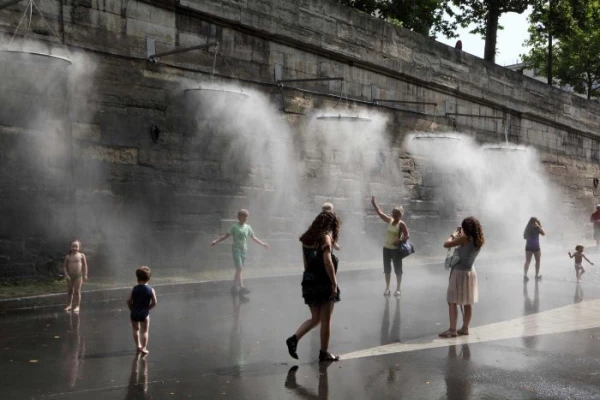
In 2025, the country experienced the hottest summer on record, officially recognized as a record.
Spain is creating a nationwide network of climate shelters by next summer, Prime Minister Pedro Sánchez announced on Wednesday.
A number of public buildings will provide people with refuge from the increasingly intense heat waves that the country experiences during the hottest months of the year.
The network will include climate shelters already established in Barcelona and the Basque Country.
At a conference on Wednesday, Sánchez presented the country’s detailed plan to combat the escalating effects of climate change, which includes 80 initiatives.
The measures address issues such as flooding, wildfires, misinformation about climate change, and rising temperatures.
"Devastating droughts and heat waves are no longer rare. In some summer seasons, we are facing not individual waves, but one long heat wave stretching from June to August. This is now the new norm," he said.
In 2025, the country experienced the hottest summer on record. A 16-day heat wave in August was accompanied by temperatures exceeding 45 °C, according to the State Meteorological Agency (AEMET).
The average temperature in Spain has risen by 1.69 °C between 1961 and 2024, leading to more frequent episodes of above-normal temperatures.
Climate change is at the root of rising temperatures and increasing extreme heat, as confirmed by the Intergovernmental Panel on Climate Change (IPCC) analysis of global temperature trends.
Spain Creates National Network of Climate Shelters
The new climate shelters will provide people across the country with places to wait out the heat next summer.
They are especially important in cities. "The heat island effect is exacerbated during such waves and usually manifests in urban areas," said Euronews Green data specialist Manuel Banza.
"The reason is that cities are densely built, with a lot of asphalt that absorbs the sun, and by the end of the day, we see that at six or seven in the evening it can still be very hot, even though the sun is no longer shining, because the surface has absorbed the heat."
The government will allocate funds to those areas "that need them the most, where the heat hits people the hardest," Sánchez said.
The network will build on programs already established by regional authorities, including Catalonia, the Basque Country, and Murcia.
In the Catalan capital, Barcelona, around 400 climate shelters are already available in public buildings such as libraries, museums, sports centers, and shopping malls.
These air-conditioned spaces are typically equipped with seating and free water and are intended as shelters from the heat, especially for the elderly, infants, people with health issues, and those without resources at home to cope with high temperatures.
According to Spain's daily mortality monitoring system (MoMo), more than 21,700 people died from heat-related causes between 2015 and 2023, most of them over the age of 65.
This summer, over 3,800 heat-related deaths have been recorded (an 88% increase compared to 2024), according to estimates from the Ministry of Health.














Leave a comment