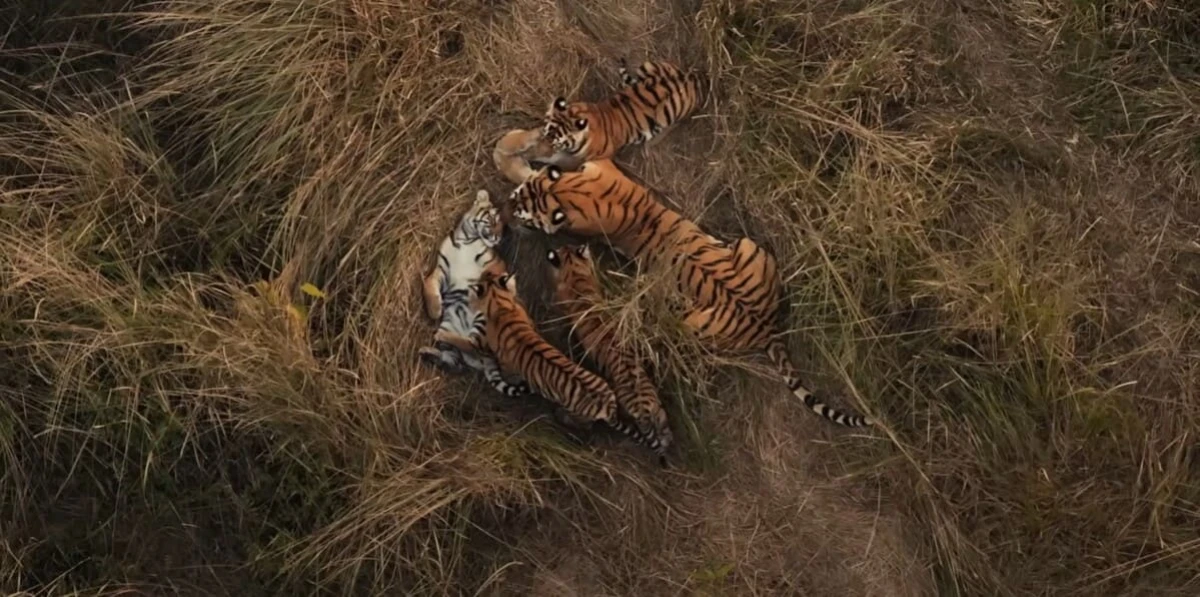
Predators were observed from a drone.
Unique footage was obtained in Nepal during the production of the BBC documentary series "Tiger Island." The project tells the story of wildlife filmmakers and big cat specialists studying the lives of tigers in a remote area of western Nepal. The series focuses on a small island of about four square kilometers in a river system, which is home to one of the highest concentrations of tigers in the world.
According to BBC Wildlife Magazine, the research team spent two months observing the animals and identifying individual tigers by their unique stripe patterns. Using drones, the filmmakers tracked the movements of the tigers across the island and witnessed unexpected interactions between two tigresses and their offspring.
Tigers are typically considered solitary animals, with the main exception being the relationship between a mother and her cubs. However, aerial footage shows a tigress named Goma caring for three cubs belonging to another female, Jugini. At the time of filming, Jugini was elsewhere hunting for food.
"Tigers are believed to be extremely territorial," explained scientist Dan O’Neill, who is involved in the series. "Females try to avoid overlapping with each other unless absolutely necessary. They do not share cubs and do not participate in joint rearing of offspring."
Goma has two of her own cubs, but during Jugini's absence, she was seen looking after five cubs in total. Judging by the footage, she temporarily took on the care of the entire litter while the other mother was busy searching for food.
Researchers suggest that such behavior may have developed as a way to protect against threats from males. While one female guards several cubs, the other can go hunting. Additionally, scientists believe that Goma and Jugini are likely related: Goma may be Jugini's mother. Although Jugini rarely appears in the same territory as Goma, the creators of the series note that when they meet, their behavior remains calm and non-aggressive.