
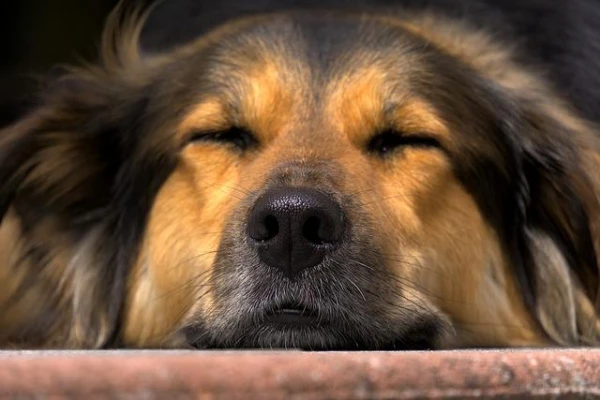
Fear of darkness in dogs is a fairly common phenomenon. When a pet refuses to go for a walk in the dark, owners often attribute this to disobedience or poor health. This problem is especially relevant in winter when it gets dark early. Dog trainer Vladimir Golubev explains how to help an animal cope with this fear.
Reasons for Dogs Refusing to Walk in the Dark
There are many reasons why dogs may be afraid of the dark. This fear may be inherited from their wild ancestors, who were wary of becoming prey to larger predators.
Additionally, the outlines of familiar objects change in the dark, and even in a familiar park, a dog may not understand where it is. As a result, any noise or movement can frighten it, leading the pet to panic, bark at every sound, and pull on the leash. This is most often the case for puppies and timid, insecure dogs. Alternatively, the pet may simply be used to walking during daylight hours when all objects are clearly visible and pose no danger.
If the fear of darkness has arisen in an adult dog, it is essential first to ensure that it is not related to health issues. Causes of anxiety may include deteriorating vision or thyroid dysfunction.
The fear may also be triggered by an unpleasant experience: perhaps during one of the walks, someone unexpectedly approached the pet or startled it with a loud noise.
Methods for Overcoming the Fear of Darkness in Dogs
Do not give up evening walks — the issue should be addressed gradually. It is best to start going outside at dawn and dusk, when one can observe how the outlines of objects change, and darkness turns into light and vice versa. This will help the pet gradually adapt to the dark.
As the dog begins to respond appropriately to sunrise and sunset, walks can be moved to later in the evening and earlier in the morning. Over time, the animal will get used to it and will respond more calmly to walks in the dark.
It is important for the owner to remain calm and confident: do not immediately pick the dog up if it starts to panic. It is better to sit down next to it to be at the same level and talk to it calmly. One should not return home immediately after the pet gets scared; it is better to wait until it calms down.
As a motivation and reward, one can take treats and the dog's favorite toys on walks.
What one should definitely not do is force the pet outside or lock it in a dark room. This will only exacerbate the situation and intensify the animal's fear.












Leave a comment