
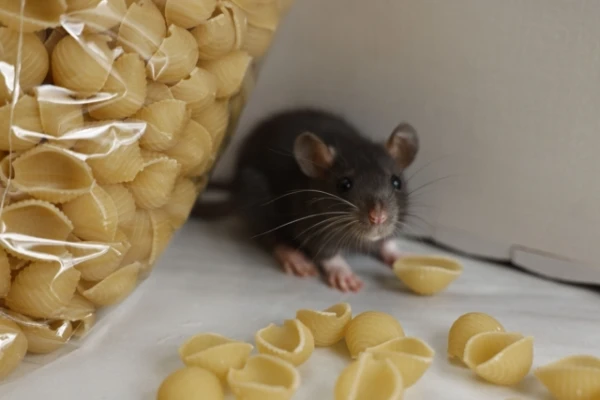
Experiments on wild mice have shown that these rodents are capable of assessing not only the quantity but also the quality of food, consciously taking on increased risks to obtain more nutritious or appealing feed.
In studies, mice were offered a choice between safe but less preferred food (such as standard pellet feed) in a shelter and high-quality but dangerous bait (such as sunflower seeds or peanuts) in an open, well-lit area where they felt vulnerable to predators.
It turned out that many mice, especially those that were well-fed and in good physical condition, regularly chose the risky option, demonstrating complex behavior based on an assessment of the 'benefit-risk' ratio. This indicates that they possess a certain level of 'subjective well-being' and the ability to make decisions that go beyond mere satisfaction of immediate survival needs. Such behavior may be evolutionarily advantageous, as seeking high-quality resources in the long term increases the chances of reproductive success.
Studying such decision-making patterns in mice helps to better understand the neurobiological foundations of risk, novelty-seeking, and motivation, which is relevant for research in human psychology, addictions, and mental disorders.












Leave a comment