
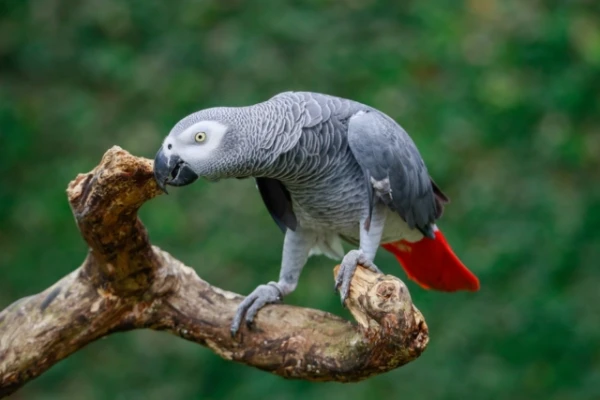
In the UK, a parrot named Nigel lived with his owner for fourteen years, learning to perfectly mimic his voice and characteristic British accent, and then went missing.
Four years later, when all hope for his return had been lost, Nigel was found completely by chance a few kilometers from home. However, the most surprising thing was that during his years of wandering, the bird had completely changed its "language": it was now speaking not in English with a British accent, but clearly and fluently in Spanish.
This case has become a striking example of how some species of parrots, particularly African grey parrots (Psittacus erithacus), are capable of replacing the vocabulary learned in youth with a new one even in adulthood — a phenomenon that was previously considered highly unlikely.
Scientists suggest that the bird may have lived for a long time in a Spanish-speaking family or regularly interacted with native speakers, leading to a complete "rewiring" of its speech skills.
Nigel's story provided valuable material for studying the neuroplasticity of birds' brains, their social adaptation, and the mechanisms of vocal learning, showing that these feathered creatures' abilities to imitate and integrate into a new social environment are significantly deeper than previously thought.














Leave a comment