
On May 6, Orthodox Christians celebrate the day of George the Victorious — a saint who gave his life for his faith. In the folk calendar, this day is called Yuri's Day. In the past, our ancestors engaged in sowing, caring for livestock, and honoring shepherds at this time.
On May 6, Orthodox Christians pay tribute to one of the most revered saints — George the Victorious.
George the Victorious
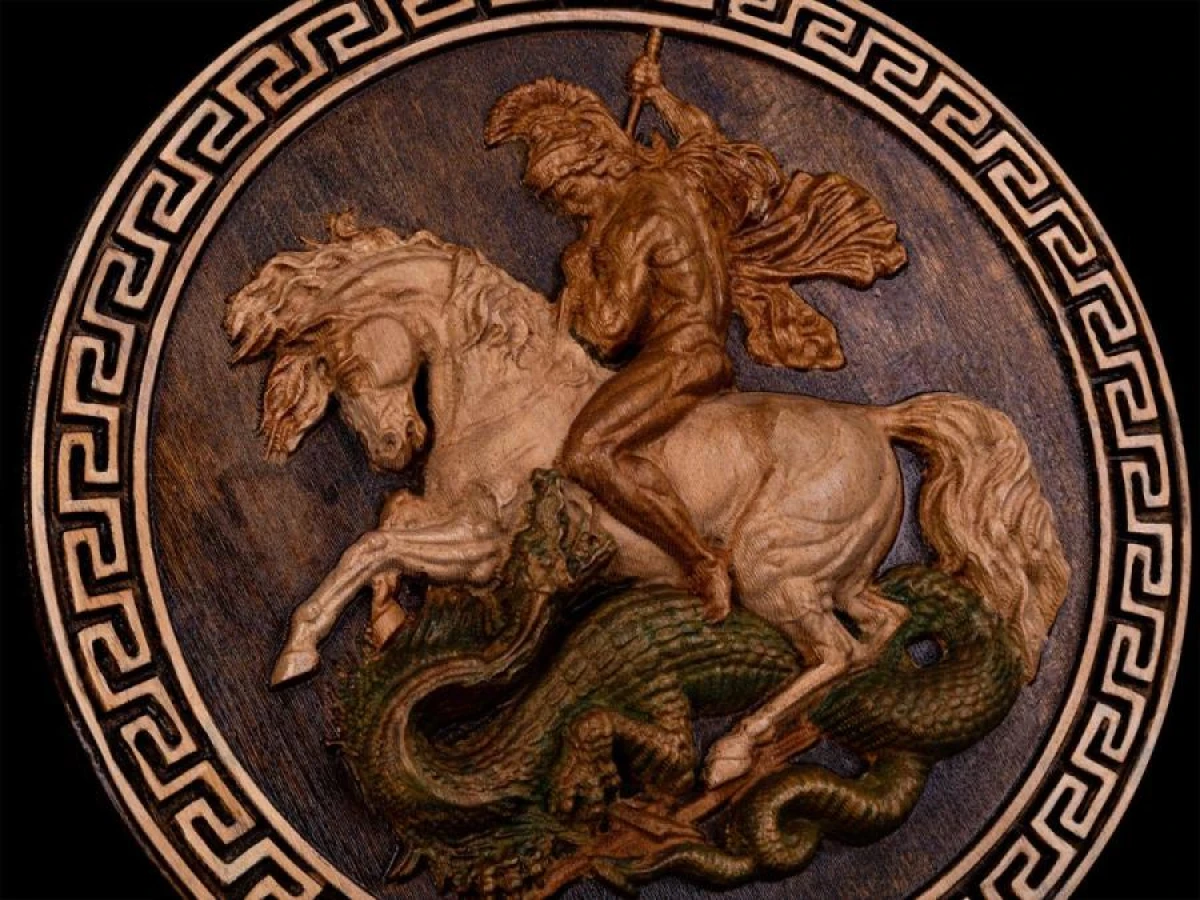
The Great Martyr George, known as the Victorious, lived in the 3rd century during the reign of the Roman Emperor Diocletian, who is known for his cruelty towards Christians. Many legends circulated about the brave warrior who served this ruler. One of them tells how George the Victorious killed a serpent with a spear that devoured children brought to him as sacrifices.
When the persecution of Christians began, George distributed his possessions to the poor. He then openly declared to the emperor his resignation from service, as his faith did not allow him to serve pagans. The Great Martyr was imprisoned, where he was tortured for seven years. During this time, 49,000 pagans converted to Christianity.
According to legends, before his death, George crossed the statue of Apollo, after which all the idols in the temple were destroyed. The wife of Emperor Alexander, falling at the feet of the Christian, begged for mercy for her husband and forgiveness for his sins. Angered by his wife's words, the emperor ordered the execution of Alexander and George.
Folk Calendar: Yuri's Day
In Russia, the holiday dedicated to George the Victorious was called Yuri's Day, Yuri the Spring, Yegory the Spring, Yegory's Day, and simply — Yegory. These names, resonant with Russian traditions, were associated by our ancestors with the name “George,” which became popular in later times.
The well-known proverb “Here you are, grandmother, and Yuri's Day!” refers to Yegory the Winter, when unexpectedly for the peasants the right to leave the landlord they were dissatisfied with was revoked. This happened in 1581.
The holiday, reminding of the feats of George the Victorious, became truly popular and one of the most beloved. In Russia, it was celebrated three times a year:
May 6 — on the day of the martyr's death of Saint George;
November 16 — in honor of the consecration in the 4th century of the Church of Saint George in Lydda (Jerusalem);
December 9 — in 1051, on this day the church of the Great Martyr George was consecrated in Kyiv.
The spring holiday was called “Yegory the Spring,” while the event celebrated in December was historically named “Yegory the Winter.”
Yuri's Day: Folk Omens
In ancient times on Yuri's Day, peasants would go out to the fields. The sowing works were in full swing by this time, and people were worried that they would not finish on time, so their thoughts were focused on the weather.
The people knew: if on Yuri's Day a heavy rain falls early in the morning, there will be a lot of grass in the summer, and thus, there will be enough feed for the animals in winter. If the Moon is waxing on the night of Yegory, and the wind is knocking people down, the bad weather will linger for a long time. If large swarms of mosquitoes are flying in the air — real spring weather will soon establish.
If in the morning people saw hoarfrost on the trees, they understood that there would be a lot of buckwheat in the summer. If the morning of Yegory was clear and windless, it foretold a good harvest. If the night from May 6 to 7 was warm, it meant that the wheat would ripen before the first frosts.
To find out if there would be enough cucumbers that summer, on the night of Yegory the Spring, housewives would hang wet towels on ropes. If they dried by morning, it was a sign of a good harvest.
Yegory's Day: What Can Be Done at This Time
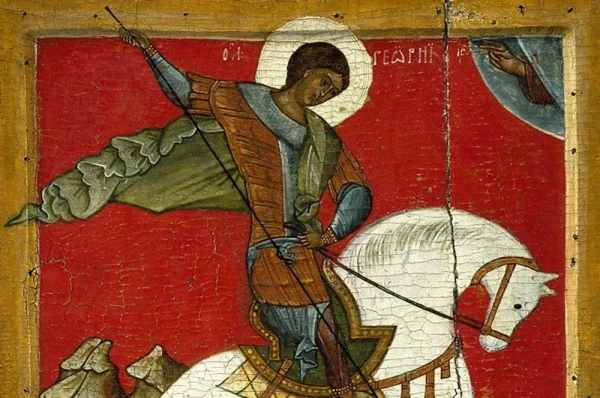
The day of remembrance of George the Victorious began for our ancestors with a visit to the church and a prayer service. Lighting candles before the icon of the Great Martyr, they thanked the saint for his help. George the Victorious is considered the patron of warriors and people connected with agriculture.
Our ancestors believed that the Great Martyr George, commanding nature, influences the weather, the sun, and warmth. In ancient times, his image was associated with the sun god. He was depicted as a hero with the sun on his forehead and the moon on the back of his head.
Saint George protects from the malice of people and enemies, frees from troubles and calamities, and supports in difficult times. People pray to him for a good harvest and ask to protect livestock from diseases. On Yuri's Day, our ancestors honored shepherds, generously treating them with scrambled eggs and giving them money and fabric.
Yuri's Day: What Cannot Be Done
Knowing how carefully George the Victorious treated animals, on Yegory's Day they were carefully protected from troubles. To offend domestic animals and horses on Yuri's Day was considered a grave sin — they were the birthday celebrants. People tried not to raise their voices at them, to feed and water them on time. On Yuri's Day, it was also forbidden to:
prepare meat dishes — this leads to illnesses;
hunt and fish — this leads to financial difficulties;
engage in handicrafts — this confuses fate;
make anything from wool — this leads to problems in the family.
Our ancestors also feared on Yuri's Day to take sharp objects into their hands. Perhaps this was related to the legend of how George the Victorious struck down a mighty serpent with a spear. It is also possible that the fear was caused by other reasons.














Leave a comment