
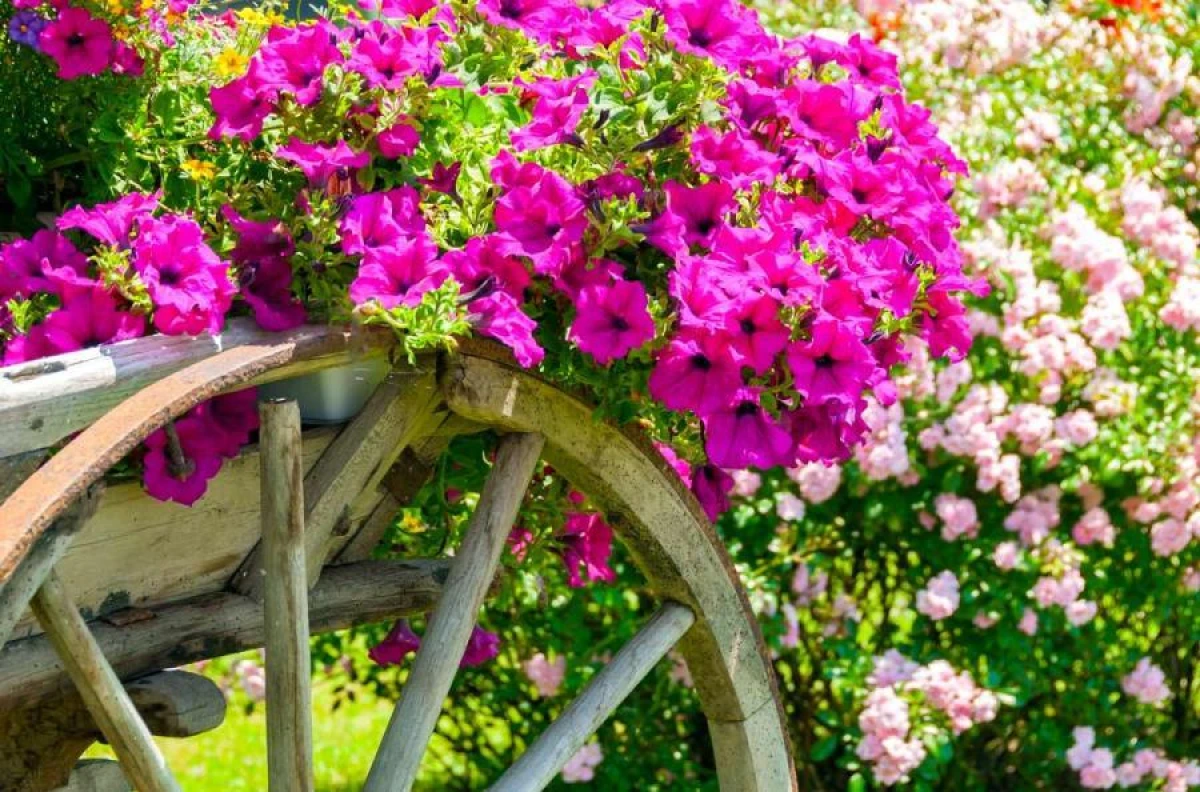
Late spring is the perfect time to plant bright and attractive flowers in open ground. Agronomist Natalia Minina shares recommendations for choosing the best ones.
1. Nasturtium
This is one of the most popular and unpretentious ornamental plants. It attracts attention with its bright orange large flowers and large round leaves.
The optimal planting period is late May. However, the seeds need to be pre-treated to ensure quick and even germination. Preparation includes soaking in hot water (40-45°C) for 15 minutes, followed by soaking the seeds in room temperature water for a day.
When sowing seeds, it should be noted that the plant forms long shoots, so the distance between them should be 20-30 cm. Nasturtiums do not thrive in soils rich in organic matter (in this case, many leaves and shoots are formed, but few flowers), nor in poor soils (the plants become smaller and bloom poorly).
2. Marigolds
These flowers grow well in any conditions and do not require special care. Seeds can be sown in open ground at the end of spring, but it is better to soak them in water for a day beforehand — this will speed up germination.
Marigolds will bloom well both in sunlight and in partial shade. There are many varieties differing in color, flower size, and plant height. They have a fairly strong aroma that appears a few days before flowering.
3. Godetia
There are many varieties differing in height and flower color. You can find blue, pink, and lilac godetia. This plant is interesting because it has no fragrance, making it suitable for allergy sufferers. Godetia blooms about 30 days after sowing. If planted in the last days of spring, you can enjoy delicate flowers by the end of June.
4. Cosmos
This is one of the easiest plants to care for. There are many varieties with flowers of various shades. The more fertile the soil, the more lush the bush will be. When sowing, it should be noted that the plant spreads very well.
5. Flax
The delicate sky-blue flowers of this plant will delight you even in conditions of insufficiently fertilized soil. Flax looks particularly impressive in group plantings. It has a long flowering period due to abundant branching of the main stem.
6. Clarkia
This is an eye-catching plant with large double or semi-double flowers resembling azaleas. Clarkia does not tolerate transplanting well, so sowing seeds directly into the soil is the best way to grow it.
7. Alyssum
The lush bushes of this plant form almost a solid carpet in flower beds. Alyssum is not demanding in terms of soil, watering, and lighting, although it grows better in sunny areas. However, the seedlings need to be protected from the cabbage flea, which can completely destroy the crops.
8. Lavatera
This unpretentious plant reaches about 100 cm in height. Lavatera is resistant to diseases, pests, and lack of care. The large crinkled corolla can be of various shades: from white to lilac. It blooms profusely starting from the second half of July.
9. Nemophila
These incredibly beautiful flowers are especially striking in pure plantings over large areas. Due to its delicate blue flowers, it is often called the “American forget-me-not.” Nemophila is a ground cover plant with bright green feathery leaves and fairly large five-petaled flowers (2-4 cm in diameter). More than 10 species of nemophila are known, differing in flower color and plant height.
When sown in May, flowering begins in July and continues until the end of September. However, it should be noted that the bushes have a tendency to spread, so the distance between seedlings should be 20-25 cm.
10. Nemesia
This is an annual low-growing plant reaching up to 25 cm in height. It does not tolerate transplanting well, so it is better to sow it in open ground in mid or late May. Nemesia germinates quickly and blooms abundantly. It is not demanding in terms of growing conditions, but it grows poorly in calcareous soils.













Leave a comment