
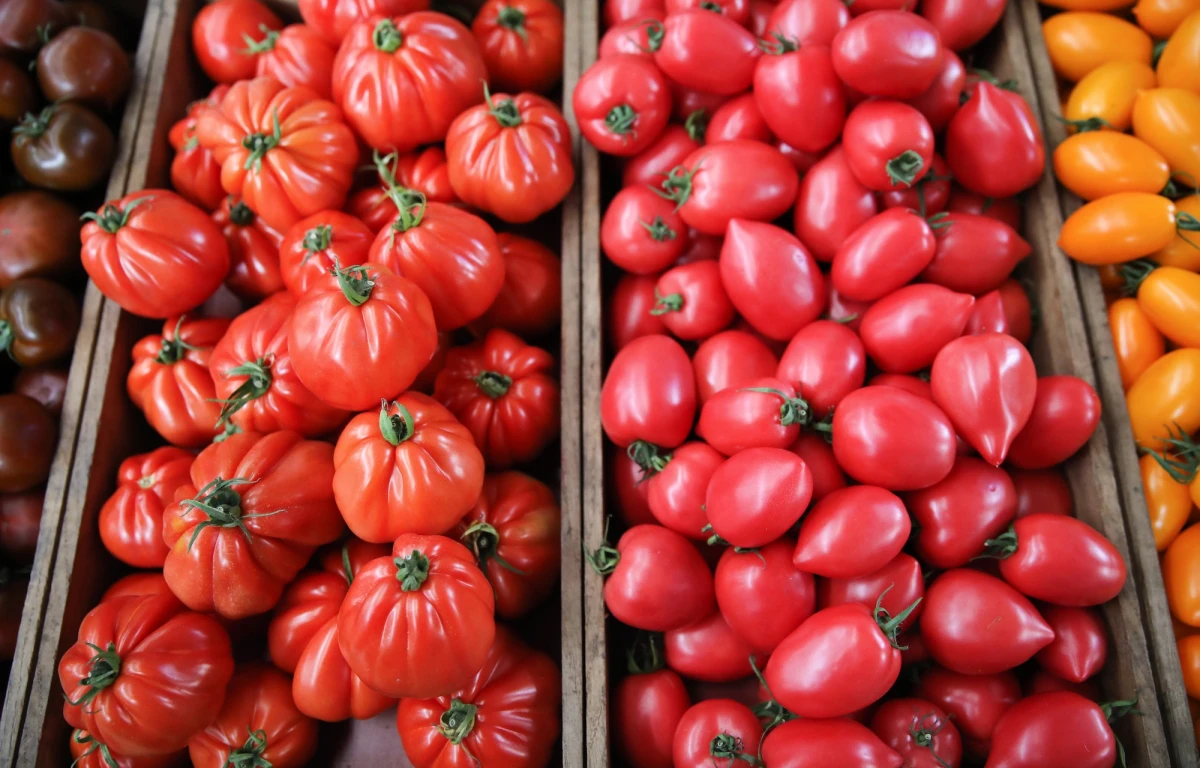
The tomato market in Latvia is changing: imports are rising, costs are increasing, and local producers are finding it increasingly difficult to compete, public media reports.
In 2025, the value of tomatoes imported to Latvia exceeded 48 million euros — a record figure. Against this backdrop, the area dedicated to tomato cultivation within the country continues to shrink.
Local producers note that pressure from cheaper imports directly affects prices and market structure. At the same time, they are facing rising costs — from energy to wages.
"They have definitely increased. For planting material, thermal energy. Wages have risen, everything is getting more expensive. Of course, we have to pay a little more for the final product so that we can survive," says Inese Raubiško-Reke, head of the greenhouses at the "Kliģeni" farm.
The farm from Cēsis began harvesting its first crop of tomatoes last week, but producers are not yet ready to accurately predict how much prices will rise this season.
According to Raubiško-Reke, competition with imports remains a key factor:
"Latvian products will be more expensive than tomatoes from warm countries. It has always been this way and will continue to be."
She adds that much depends on purchasing power: "It would be good if our tomatoes were more supported by Latvian buyers, but a person has only as much money in their wallet as they have."
The majority of tomatoes come to the country from the Netherlands (over 11 million euros), Lithuania (about 9 million), as well as France, Spain, Germany, and Poland. Major suppliers include Turkey, Belgium, and Italy.
At the same time, local producers emphasize the importance of the industry for the economy:
"This is our economy: behind every tomato is a living person... We create jobs, pay taxes. If there is no production, there will be nothing."
At the same time, exports of tomatoes from Latvia to neighboring countries are also increasing, but they do not yet compensate for the pressure from imports.
As a result, the market is moving towards greater dependence on external supplies, and the future of local producers increasingly depends on prices and buyer support.












Leave a comment