
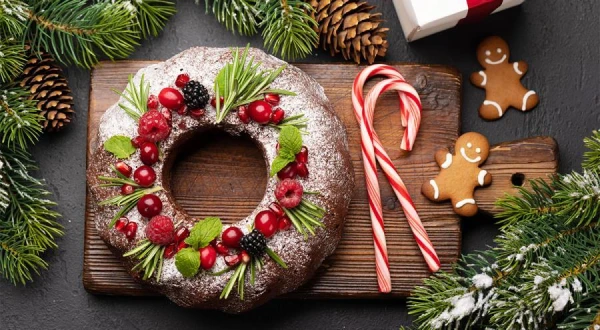
Christmas is not just a significant Christian holiday. It is associated with many customs, including those related to the Christmas table.
The meal begins only after the first star appears in the sky, and until that moment, it is recommended to refrain from food. This custom dates back to the story of the Bethlehem star, which guided the Magi to the birthplace of the Savior.
Fresh bread and baked goods must be present on the festive table. It is customary to prepare several dishes, but one should not focus on abundance: for Orthodox Christians, Christmas is primarily a religious event. The main and obligatory dish is kutya, made from rice, dried fruits, and honey. Kutya is eaten in memory of the deceased, and it is customary to bring it to the homes of loved ones: usually, this is done by children, who receive sweets for their efforts.
As for baked goods, they are used to predict health in the coming year. It is believed that if the pies have risen well and turned out fluffy and tasty, then health will be fine as well.
After Christmas, the twelve festive days begin. Since ancient times, there has been a tradition of baking gingerbread during the festive season, and this is not accidental, as ethnographer Alexandra Kormacheva explains. The fact is that during the festive days, work was prohibited. One could only engage in the most necessary tasks, so households needed to have a stock of food, preferably not only filling but also tasty — after all, these are holidays. Gingerbread was considered such food.
To satisfy hunger, only a small amount of treats was needed. Many spices were added to the dough, allowing the gingerbread to warm in the winter cold. Some recipes used up to forty ingredients, so this treat symbolized abundance: it was believed that when people eat gingerbread, they set an intention to be full and not know need in the new year.









Leave a comment