
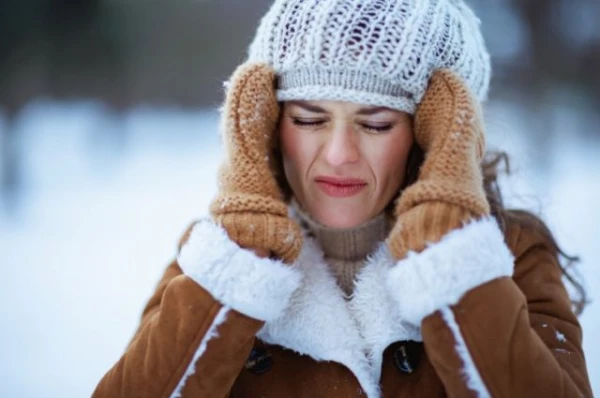
I noticed that headaches, which are usually not characteristic for me, occur after long walks in the cold. There are no health problems. What is the reason?
- This is a common reaction of a healthy body to cold, caused by irritation of the sensitive receptors in the scalp and the narrowing of superficial blood vessels due to a thin layer of subcutaneous fat, " explained neurologist Alexander SKLIMENOK.
People who suffer from migraines are more prone to this. With sudden cooling, especially in windy weather, the scalp muscles tense up, increasing pressure on the skull, which provokes discomfort. This is not a sign of illness, but a frequently occurring physiological response. Low air temperature, wind, and lack of headwear exacerbate hypothermia. The blood vessels in the head respond by narrowing, causing a brief spasm, while the intracranial vessels, on the contrary, expand – this can lead to a migraine-like headache.
Sometimes, vascular spasm in the cold can reflexively cause an increase in blood pressure, which will manifest as a headache.
Also, in the case of trigeminal neuralgia or occipital nerve issues, cold can be a trigger for headaches.
Therefore, in severe frost, the doctor recommends wearing a warm hat and limiting walks to 30-40 minutes. At the same time, if you experience frequent pain or additional symptoms (nausea, weakness), consult a neurologist to determine the possible cause.














Leave a comment