
Catholics already celebrated Christmas on December 25, while Orthodox Christians await it on the night of January 7. Why do the holidays share the same name but are celebrated on different dates, and what other differences exist?
Let’s consider the key differences, the first of which is the dates. Both Orthodox Christians and Catholics are Christians, but they follow different calendars. We use the Julian calendar, while Catholics use the Gregorian calendar. The date of Christmas for Catholics was borrowed from pagans, who celebrated the birth of the Sun on this day, as it marks the point when the daylight begins to increase. January 7 corresponds to December 25 in the old style.
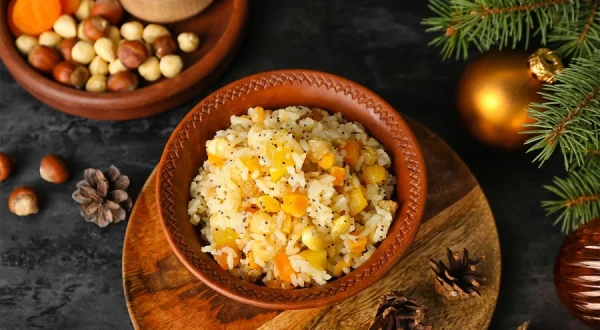
Another important difference is that Orthodox Christians observe a fast before Christmas. This fast is quite strict — meat and dairy products are prohibited, and it lasts from the end of November until the night of January 6 to 7 (as it is commonly said, until the “first star”). The last day of the fast and the eve of the holiday is called Holy Night. On this day, Orthodox Christians are allowed to eat only kutya — boiled wheat or barley soaked in water or honey.
Despite this, traditional Orthodox Christmas is celebrated without meat, as it is the first day after a long strict fast, and one must gradually transition out of it. There are always 12 dishes on the table, corresponding to the number of apostles.
For Catholics, the situation is quite different: they do not adhere to strict dietary restrictions. Although there is a practice of abstaining from certain foods, it is not as severe. The festive table also includes a similar number of dishes, but meat dishes, among which turkey is especially popular.












Leave a comment