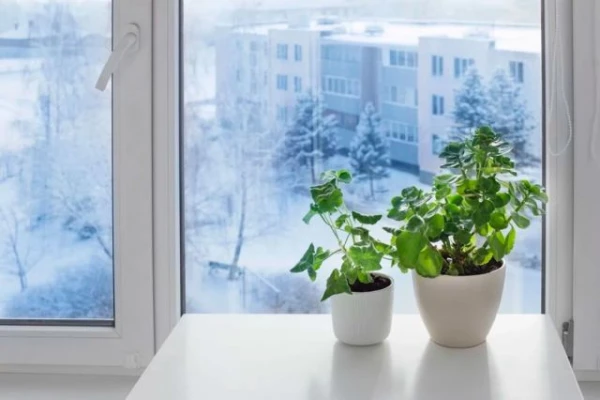
The winter period for most houseplants is not just a "cold season," but a phase of biological slowdown.
The shortened day reduces the intensity of photosynthesis, and plants experience an imbalance between energy production and consumption.
In nature, this period is compensated by low temperatures that force plants into deep dormancy. However, in the conditions of a modern apartment, the environment changes differently: we close windows, turn on heating, and the microclimate takes on the characteristics of a hot, dry desert.
It is this contrast that most often causes problems in winter. Plants continue to grow but do not receive adequate lighting in the correct mode. As a result, there is stretching and deformation of shoots, leaf shrinkage and brittleness, and slowed root formation. This often leads to a loss of decorativeness and diseases, especially if watering remains at a "summer" level. Therefore, it is important not to make 5 common mistakes. Agronomist Denis Terentyev spoke about them.
- Excessive watering
The most common mistake. In cloudy weather and especially during cool wintering, the plant uses minimal moisture, and even a slight overwatering leads to anaerobic processes in the soil and root death. In winter, watering is reduced by 2-3 times, and for succulents — almost to zero.
- Hot windowsills and drying out of the root zone
Radiators raise the temperature of the substrate, while the roots should be cooler than the crown. This causes stress and provokes growth cessation. An insulating mat or moving the pot to a less hot surface helps.
Also, remember to humidify the air. For the most moisture-demanding species (Fittonia, Calathea, Maranta, banana, some bromeliads), mini-greenhouses are created in winter. This is extremely simple: small plants are simply placed in a transparent bag individually or in groups on top, leaving it slightly open for ventilation regulation. For larger plants, just put a bag of appropriate size on top. The plant itself releases moisture, and conditions of a tropical humid forest quickly develop in the bag. Plants that require high air humidity noticeably begin to grow better in this way.
- Sharp temperature fluctuations
The bathroom, kitchen, or place near the front door are the worst wintering zones. There, fluctuations of +5… +10°C are possible, which causes stress in tropical species.
- Incorrect combination of light and heat
If the room is warm but there is little light, the plant will stretch. If it is cold but the light is weak, this is quite tolerable for wintering since the plant will hardly grow in the cool until spring. Balance is the key principle. In general, during the winter period, plants often experience "light hunger." Therefore, additional lighting is desirable.
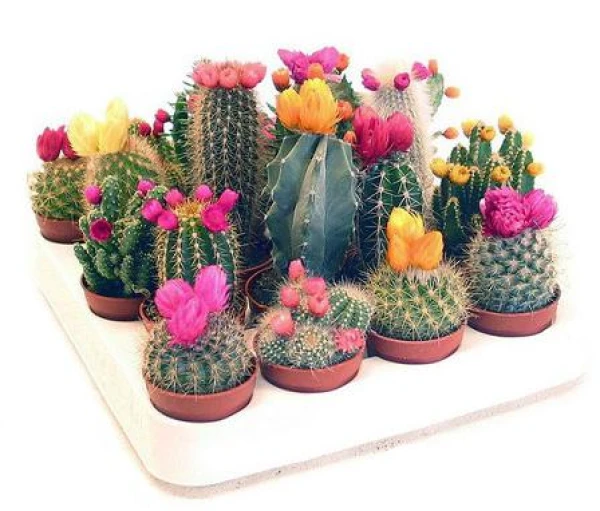
If additional lighting is not possible, it is necessary to artificially slow down growth: reduce the temperature, limit watering, and move the culture to a cooler room. This is especially important for species such as dwarf pomegranate, laurel, myrtle, hoya, oleander, and cacti — they winter much better at low positive temperatures than in warm but dark conditions.
- Frequent movement of plants
Each rearrangement changes the microclimate. In winter, it is better to minimize any movements, especially for plants with sensitive root systems.