
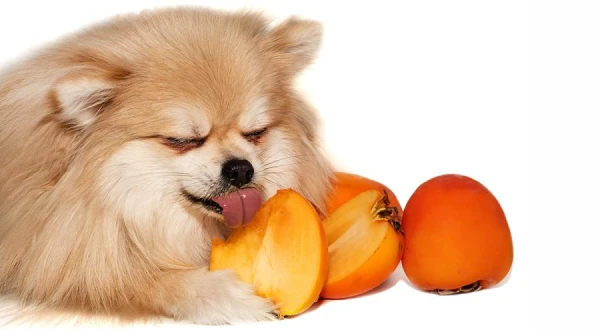
Sweet and slightly astringent persimmons are a source of vitamins, minerals, and beneficial substances. Aware of this, many dog owners treat their four-legged friends to this bright winter delicacy. But can persimmons be included in dogs' diets, or is it better to refrain from doing so?
Veterinarians and dog breeders around the world continue to discuss whether persimmons are beneficial for animals: some argue that this fruit should be included in pets' diets, while others are categorically against it.
If you decide to treat your dog to persimmons, it is important to remember some rules: before offering the fruit, you must remove the pits and seeds.
This is because, unlike humans, dogs do not always intuitively understand that these parts of the fruit are better left uneaten. The seeds and pits are not digestible and can cause digestive problems, including blockage of the small intestine. Additionally, the pits can pose a choking hazard.
Even if your pet loves this exotic fruit, moderation is key. The permissible amount depends on the breed and weight of the dog: for example, spitz, Yorkies, or pugs weighing between 2 and 10 kg can be given no more than 1/6 of the fruit per week. For medium-sized dogs (10 to 25 kg), offering half a persimmon once every 7–14 days is acceptable. Large breeds, weighing over 25 kg, can be given a whole fruit once every 2–3 weeks.
With skin or without?
Proponents of including persimmons in animals' diets believe that the skin is safe for four-legged friends. They argue that dogs receive antioxidants from the skin that help strengthen the immune system.
Dried or fresh?
The fiber, antioxidants, and vitamin content in persimmons vary depending on the variety; however, this does not matter much for dogs.
Nevertheless, dried fruit should not be given to pets as it contains more sugar, which can be dangerous for the animal's health.
When not to introduce persimmons into your pet's diet
Persimmons are a calorie-dense fruit, and dogs can easily gain excess weight. If this product is not excluded in time, there is a risk of obesity. Additionally, the fruit contains a lot of sugar, which negatively affects dental health and blood glucose levels. If you have an elderly dog or one prone to being overweight, persimmons are definitely not suitable for them.
While the fiber in persimmons is beneficial for humans, it can cause serious digestive issues in dogs: diarrhea, intestinal upset, and even gastritis.
Another reason not to add persimmons to your dog's diet is that this fruit is not hypoallergenic, which can lead to serious allergic reactions, especially in sensitive animals. Therefore, if your pet is scratching or develops rashes, it is better to avoid persimmons.
Since persimmons come to us from Asian countries, the fruits are treated with chemicals to extend shelf life before shipping. These substances can pose a health risk to dogs. If your pet experiences symptoms such as itching, skin discoloration, abdominal pain, diarrhea, or constipation, consult a veterinarian immediately. And, of course, before giving persimmons to your dog, they should be thoroughly washed.
Despite the presence of many vitamins, minerals, antioxidants, and other beneficial substances, this exotic fruit can cause serious harm to a dog's health. Therefore, there is no urgent need to include persimmons in your pet's diet.












Leave a comment