
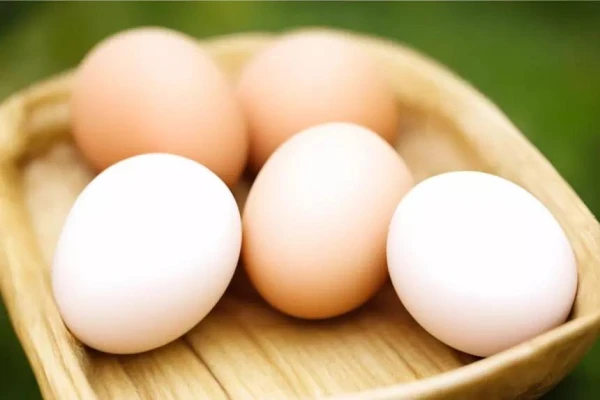
It is recommended to store eggs at home on the refrigerator shelf at a temperature of +2…+5 °C. The door experiences the most significant temperature fluctuations with each opening, which accelerates the spoilage of the product.
Storage Recommendations:
Position the egg with the pointed end down. The air cell at the blunt end remains in place, the yolk is better centered and does not touch the air cell. The product retains its freshness better.
It is recommended not to wash eggs before storage. There is a thin natural protective film on the eggshell that prevents microorganisms from entering the egg, experts from VGNKI explain.
It is preferable to store eggs in a closed container. This protects against the absorption of foreign odors and prevents accidental damage.
How to Check the Freshness of an Egg
Experts recommend placing the egg in a container of cool water:
a fresh egg will lie on the bottom on its side;
an egg that is not the freshest but still edible will float with the blunt end up;
an egg that has floated to the surface is spoiled and should be discarded.
Pay attention to the yolk and the white when you crack the egg. The yolk should be bright, firm, and hold its shape. The white should be clear, slightly viscous, and free of foreign inclusions. An unpleasant smell is a sign of a spoiled egg.














Leave a comment