
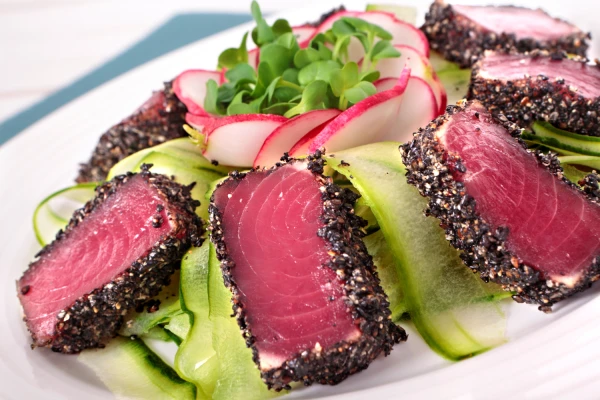
Tuna, rich in essential nutrients such as beneficial acids and proteins, has significant benefits for humans. Nutritionists around the world note its balance, comparing it to meat and fish. Some even call tuna "sea veal"!
Benefits of Tuna:
* Improves blood circulation in the brain and the conductivity of nerve impulses, helping to prevent diseases such as Alzheimer’s and contributing to the preservation of mental sharpness for a long time;
* Protects the cardiovascular system by reducing the risk of thrombosis and the likelihood of stroke;
* Supports eye health, preventing age-related changes such as macular degeneration;
* Participates in the synthesis of glutathione antioxidants, which slow down the development of dangerous tumors;
Also helps regulate blood insulin levels, easing the condition of diabetics;
* Aids in the delivery of oxygen to cells;
* Supports thyroid function;
* Strengthens the immune system;
* Stimulates the body’s detoxification processes;
* Normalizes metabolism;
* Contributes to the growth and maintenance of muscle mass due to its high protein content, which is reportedly absorbed at 95% (100 g of tuna covers half of the daily protein requirement);
* Has a positive effect on the condition of hair, nails, and skin;
* Activates tissue regeneration processes;
* Slows down cellular aging.
* Components of tuna promote the production of serotonin, so regular consumption of dishes made from this fish helps cope with depression, anxiety, and stress.
Important! Canned tuna retains most of its beneficial properties even after thermal processing, and its calorie content is often lower than that of fresh fish! The exception is canned tuna in oil.
Contraindications and Possible Harm of Tuna
Not all properties of tuna are equally beneficial. With improper selection, excessive consumption, or ignoring contraindications, even the “king of fish” can negatively affect health.
Tuna is contraindicated for:
* Allergic individuals who have reactions to seafood and fish;
* People with kidney diseases, urolithiasis, and gout, as tuna meat contains purines that worsen these conditions;
* Hypertensive individuals, for whom the increased sodium level in “sea veal” can cause blood pressure spikes;
* Children under 3 years old, as fish-based complementary foods can cause allergies;
* Nursing women, to avoid allergens entering breast milk;
* Patients with pancreatitis, gastritis, and other gastrointestinal diseases.
Important! In the latter case, the ban only applies to canned products, which may contain various flavor enhancers, stabilizers, and preservatives. However, fish that is steamed or baked with vegetables is often recommended for such patients, as properly cooked tuna is an easily digestible and nutritious dish.
Although fresh tuna can be very beneficial for expectant mothers, doctors do not recommend pregnant women include it in their diet due to its ability to accumulate mercury, which can negatively affect fetal development. The same applies to children aged 3 to 12 years.
Some specialists allow small portions of canned tuna during pregnancy, as harmful substances are destroyed during processing, but it is better to do this only with a doctor’s permission and to carefully select the canned products.
Nevertheless, adults who consume moderate portions of “sea veal” 1-2 times a week and alternate it with other types of fish will not experience harm from tuna.
Cooking tuna requires certain skills, as prolonged thermal processing makes it dry and tasteless. However, mastering the nuances of working with “sea veal” will allow you to prepare delicious and varied dishes that will elevate your culinary skills to a new level.
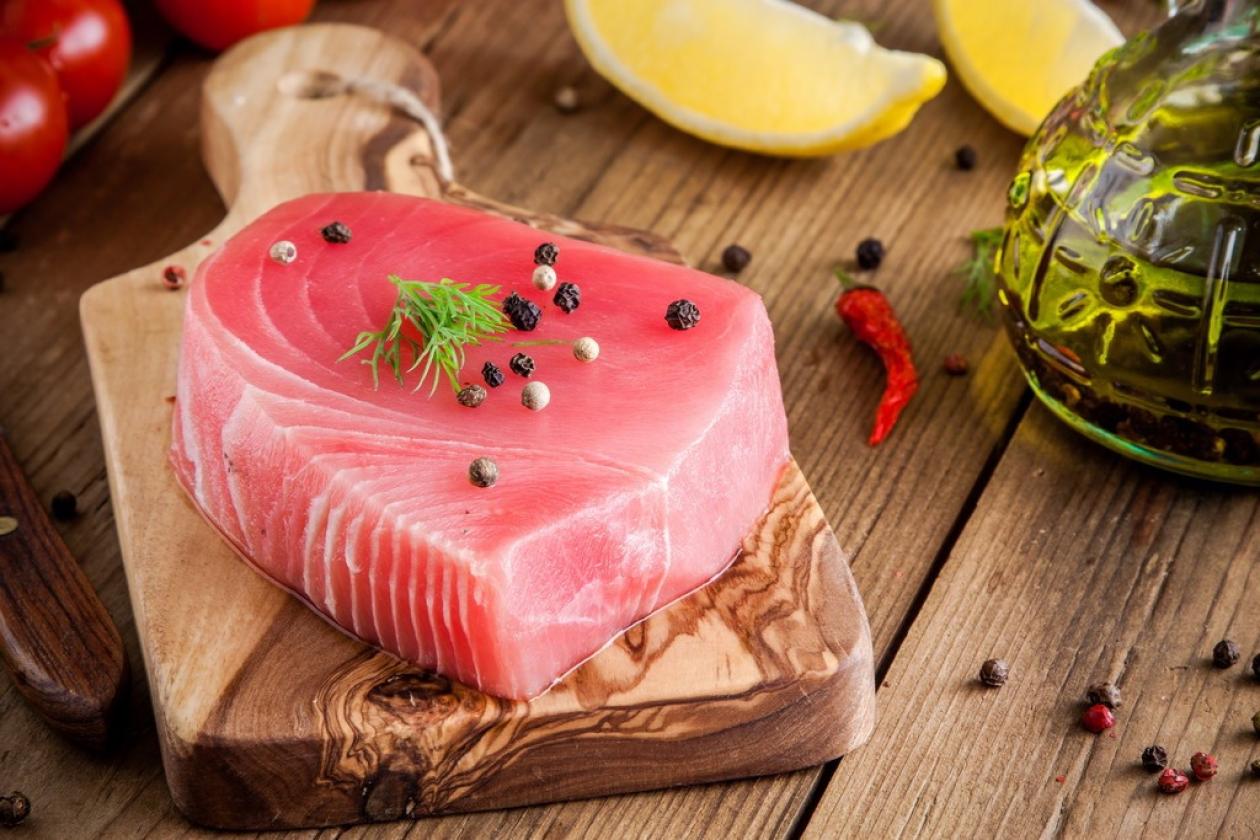
Popular Recipes:
Salad with Canned Tuna and Avocado. Place the contents of the canned tuna in its own juice into a salad bowl and mash with a fork. Finely chop two peeled cucumbers. Dice a small onion. Chop 3-4 sprigs of cilantro. Extract the flesh from a large avocado and cut it into random pieces. Combine all the ingredients, mix, and dress with a mixture of 2 tbsp of olive oil, 2 tbsp of lemon juice, salt, pepper, and ground cumin to taste. Tip: for a beautiful presentation, serve the salad in avocado halves.
Niçoise Salad with Tuna. Boil 2 eggs hard, peel, and cut into wedges. Boil 2 potatoes in their skins, peel, and slice into rounds. Cut 2 tomatoes into wedges. Chop 30 g of anchovies. Blanch 100-150 g of green beans in boiling salted water for 5 minutes, then drain in a colander, rinse with cold water, and let drain. Cut 250 g of fresh tuna into small pieces and sauté in olive oil with salt and pepper for 3 minutes. Mix 1 tbsp of olive oil and lemon juice, adding salt and pepper to taste. Combine all the ingredients, drizzle with the dressing, and serve on leaves of green salad, garnished with olives and herbs.
Bright Salad with Tuna, Canned or Smoked. Slice half a red onion into half-rings and place in a bowl, pouring over a mixture of 1 tbsp of soy sauce, 1 tbsp of lemon juice, and 0.5 tsp of honey. While the onion is marinating, chop 2 tomatoes, 1 sweet bell pepper, and 2 cucumbers. Combine everything in a deep plate, adding 120 g of chopped smoked tuna, and sprinkle with dill. Tip: use red and yellow tomatoes for a more vibrant and appetizing look.
Tuna Steak. Using a sharp knife, cut 800-900 g of fish into slices about 2 cm thick. Brush the steaks with olive oil, season with salt and pepper. Place on a hot skillet and fry for 3-4 minutes on each side. Ideally, each slice should be browned on the outside and remain juicy on the inside. Tip: use sea salt for a richer flavor.
Recipe for Tuna in Sour Cream Sauce. Clean, gut, rinse, and rub a fresh or thawed fish weighing about 1 kg with a mixture of salt, pepper, coriander, and fennel. Combine 4 tbsp of sour cream, 2 tbsp of mayonnaise, 1 tbsp of lemon juice, and 3 cloves of garlic, pressed. Coat the fish with the resulting dressing, wrap in foil, and leave in the refrigerator for 1 hour. Bake at 160°C for an hour. Serve sprinkled with fresh dill.
Pasta with Tuna. Boil 200 g of pasta. Chop 200 g of fresh spinach and sauté in a hot skillet with a piece of butter. After 7-10 minutes, add the contents of a can of tuna, mix, bring to a boil, and pour in 150 ml of cream. Season with salt and spices. Reduce the heat, add the pasta, and mix thoroughly.
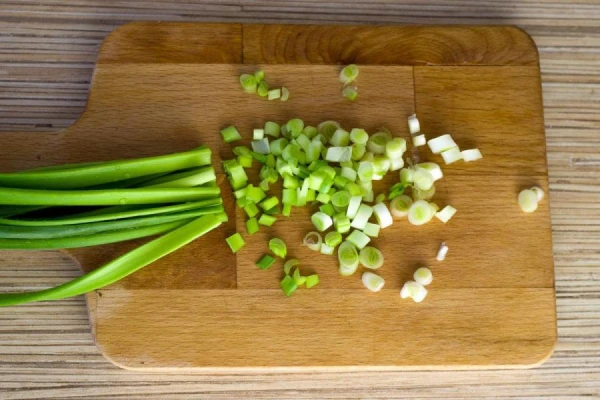
Tuna with Vegetables in a Skillet. Grate 1 carrot and finely chop 1 onion. Sauté them in a tablespoon of olive oil. Mix 200 ml of water with 2 tbsp of sour cream, salt, and your favorite spices. Cut 400 g of tuna fillet into medium-sized pieces, place on the vegetables, and pour over the dressing. Cover with a lid and simmer until cooked — about 20-30 minutes. Serve sprinkled with green onions. Tip: if you sauté the steaks in olive oil beforehand, they will look more appetizing, and the cooking time will be halved.
Soup with Canned Tuna. Peel 3 small potatoes, cut into cubes, and cover with water. Bring to a boil, while preparing a sauté of 1 grated carrot, 1 chopped onion, and 1 diced tomato, sautéing them in olive oil. Add your favorite spices and the sauté to the pot with the potatoes. Then add 3-4 tbsp of rinsed rice. After 10 minutes, add the canned tuna (1 can), and another 10 minutes later — the herbs. After that, the soup is ready to serve.
Tuna with Pear and White Wine. Mix 50 ml of olive oil, 100 ml of orange juice, and 150 ml of dry white wine. Marinate a couple of tuna steaks in this mixture for 2 hours. Wrap in foil and bake for 15 minutes at 190°C. Carefully unwrap the foil, slice the steaks, top with 2-3 slices of pear and 1-2 pieces of blue cheese, lightly drizzle with wine, sprinkle with spices, and keep in the oven for a few more minutes.
Alla Fedorchenko, endocrinologist-nutritionist.
Source: tutknow









Leave a comment