
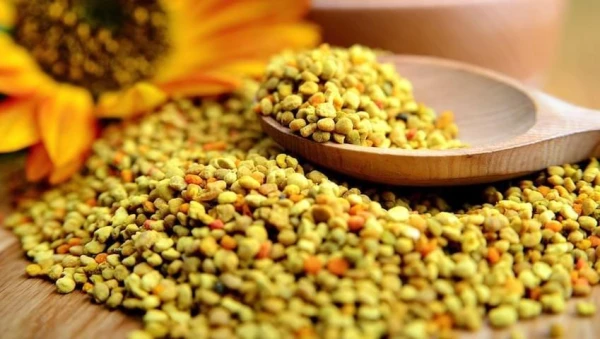
If you are looking for natural products rich in protein, antioxidants, and amino acids, as well as having anti-inflammatory properties, bee pollen is exactly what you need.
Bee pollen is a mixture of pollen, bee saliva, and flower nectar, consisting of small yellow granules. Bees form these granules and place them in special pockets on their hind legs. To collect the necessary amount of pollen, they need to visit between 200 and 500 flowers.
This product is incredibly rich in nutrients and has a slightly sweet taste, making it a great addition to various dishes.
A particular value is represented by perga, known as bee bread — it is the same bee pollen but has undergone fermentation in the hive.
The Benefits of Bee Pollen
Bee pollen is a product with a high concentration of nutrients in a small portion. It is especially beneficial in combating inflammatory processes, as it contains many anti-inflammatory compounds, including some antioxidants that help reduce inflammation in the body.
Additionally, bee pollen is rich in amino acids, protein, and other important nutrients such as vitamins A, B1, B2, B6, C, D, and E.
Studies show that bee pollen may help alleviate acute and chronic inflammatory conditions, promote liver detoxification, support the immune system, and even mitigate the effects of stress by improving blood circulation. It also has antifungal and antimicrobial properties, speeding up the healing of wounds and burns.
Incorporating bee pollen into your diet can contribute to healthy eating; however, it is not the only factor. It is important to diversify your diet by including a variety of nutrient-rich foods to provide your body with everything it needs.
Is Bee Pollen Safe?
Before adding dietary supplements to your diet, be sure to consult with a doctor to ensure their safety for you. It is also important to choose your place of purchase carefully.
Bee pollen may be unsafe if:
1. You are taking certain medications
Bee pollen may interact with some medications and cause bleeding when used in conjunction with anticoagulants. If you are taking any medications, be sure to consult with a doctor before use.
2. You are allergic to bees or pollen
If you have an allergy to bees, you should avoid bee pollen due to the risk of adverse reactions. Also, if you are allergic to plant pollen or sensitive to other bee products such as honey or beeswax, be cautious with consuming bee pollen. If you experience symptoms of itching, swelling, or difficulty breathing, stop using it immediately and consult a doctor.
Bee pollen can be consumed raw and added to almost any dish. For example, it can be sprinkled on Greek yogurt, added to salads, or blended into smoothies. The recommended serving size is three to five teaspoons.
Source: kiz











Leave a comment