
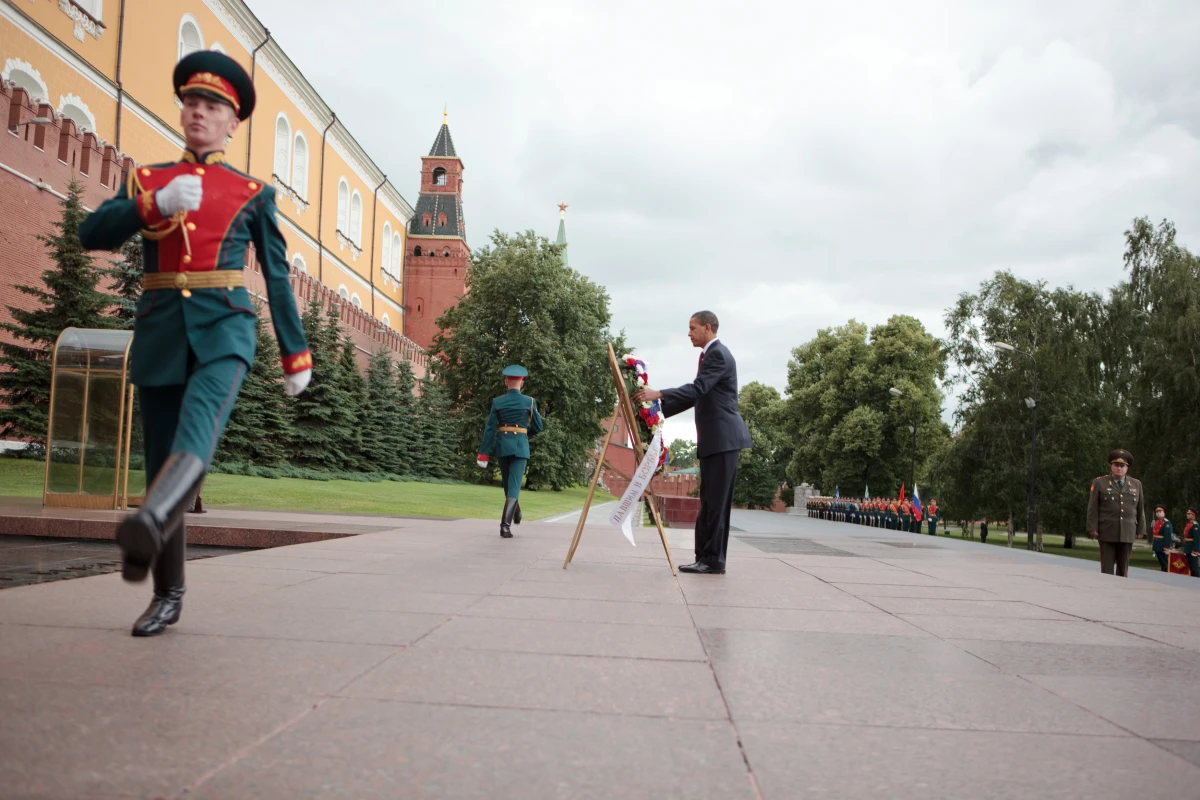
The reason for intervention could have been Putin's invasion of the Baltic states.
In 2014, the United States was prepared to engage in armed conflict with Russia to defend the Baltic states as part of its NATO alliance commitments. However, none of the scenarios considered at that time included military intervention due to Ukraine. This was stated by Ben Rhodes, former advisor to the 44th President of the United States, Barack Obama, in an interview with the Lithuanian publication LRT.
Rhodes claims that the U.S. was ready to use military force to protect the Baltic states. This was the message intended to be conveyed by Obama's visit to Estonia in 2014 amid the Ukrainian crisis. Speaking in Tallinn, the American president reaffirmed his commitment to NATO allies and reminded of Article 5 of the North Atlantic Treaty on collective defense.
"We would have sent troops there. That was the message of his speech," Rhodes added.
In Washington, there were fears that Russia might attempt to challenge NATO countries.
"We were concerned that they would try to play out a 'little green men' scenario in the Baltic states," Rhodes stated, referring to the soldiers spotted in Crimea during the preparations for the referendum on the peninsula's status in March 2014.
At the same time, as the former advisor emphasized, such concerns were not based on specific intelligence but rather on analytical assessments and warnings from the governments of the Baltic states.
Rhodes added that today he doubts the U.S. would be able to respond as decisively and promptly to defend its allies as it did before.
At the same time, the defense of Ukraine, which is not a NATO member, was not part of the Obama administration's plans, Rhodes acknowledged. In the interview, he shared details of an emergency meeting in the White House Situation Room that took place after Russian flags were raised over administrative buildings in Crimea.
"At the briefing, we were told: the Russians have already taken Crimea. It has already happened. It was not about something just starting. We were not warned," Rhodes recalls.
The response options did not include a military response. Rhodes admits that this was both an intelligence failure and a political miscalculation for the U.S.
"No one suggested sending troops and trying to forcibly remove Russia from Crimea," Rhodes noted.
According to him, Western countries had no leverage to compel Russia to give up Crimea. Even the harshest sanctions could not lead to such an outcome, Rhodes added.
In response to criticism of the sanctions policy as being insufficiently tough, Rhodes noted that at that moment the restrictions did not seem symbolic. The main problem was convincing European allies to support a more decisive course.
"We literally had to force Europe to impose more serious sanctions. France did not want sanctions. Merkel supported them, but they had the 'Nord Stream' project," Rhodes claims.
According to Rhodes, Poland, the Baltic states, the United Kingdom, and the United States had the most consistent position at that time.
"When the UK, the U.S., and Eastern European countries wanted to move to the next level of sanction pressure, we had to convince Merkel, then the French, and then literally twist the arms of Southern European countries," he said.
Rhodes also noted that he did not support the subsequent decision by Obama to refuse to supply weapons to Ukraine, which Kyiv had requested after the outbreak of hostilities in Donbas.
"Obama's argument was twofold. First, it was argued that if we start supplying weapons, Putin may move on Kyiv. Without going into the details of the intelligence, I will say that there were signs indicating such a possibility. Second, it was believed that the Ukrainian army needed a higher level of training," he added.




Leave a comment