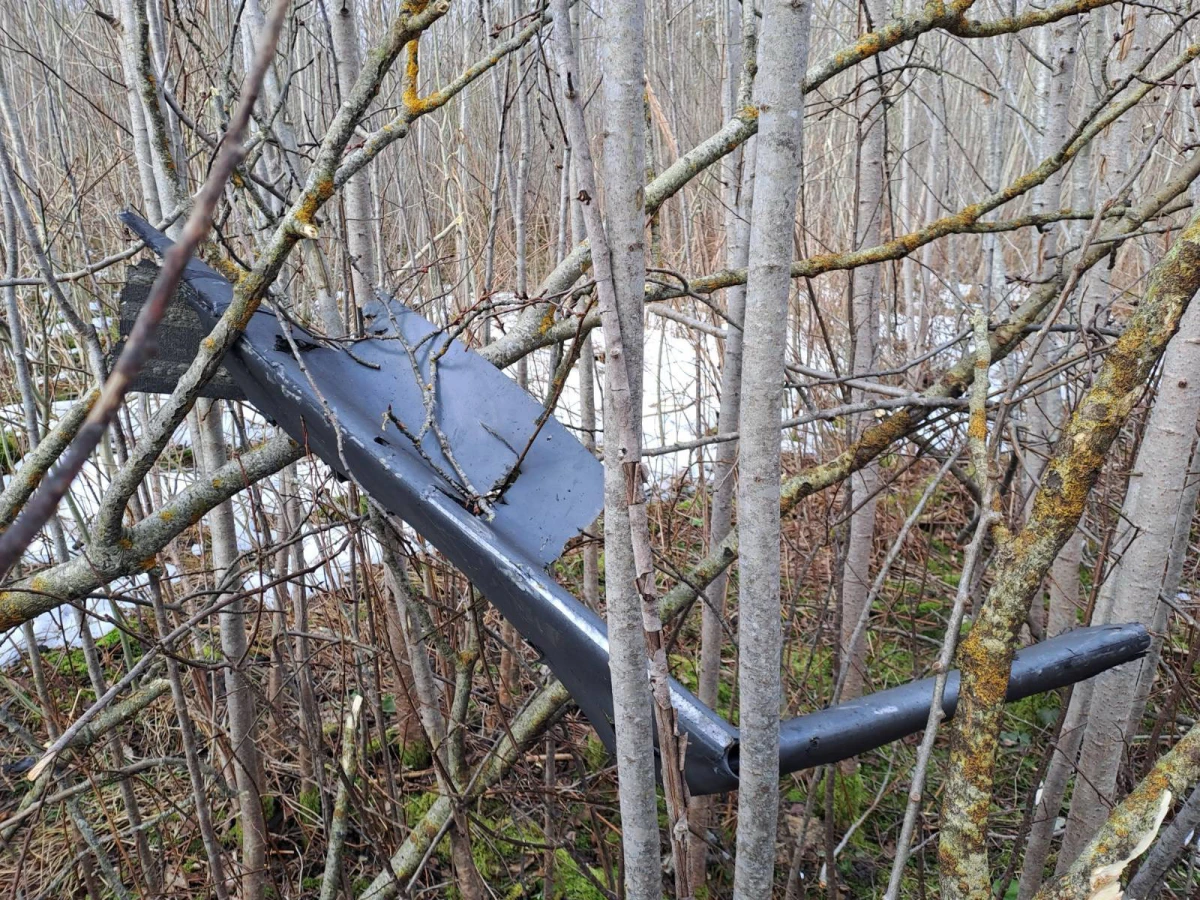
In pro-Russian channels on the Telegram platform, messages quickly spread after the drone incident in Latgale, attempting to shift the responsibility for what happened onto Ukraine, according to an analysis of Telegram publications from May 7 conducted by the LETA agency.
Ninety-nine posts published on May 7 across 50 different Telegram channels were analyzed. These posts collectively garnered around 4.69 million views. This does not indicate the number of unique users, as one person may have seen multiple posts across different channels; however, the data shows that the incident became a notable news event in the Russian-speaking Telegram community within a single day.
The analysis reveals that the dominant message in these posts is not merely about the drones falling in Latgale, but rather an interpretation of what happened. In many publications, the incident is explained as a failure of Ukrainian drones, an unsuccessful attack by Ukraine on Russia, or evidence that Ukraine allegedly uses the airspace of the Baltic states to attack Russian targets.
Ukraine, the Armed Forces of Ukraine, or Ukrainian drones are mentioned in 82 of the 99 analyzed posts from May 7. The total number of views for these posts exceeds 4.1 million, and the narrative blaming Ukraine in this dataset is dominant.
The version from the Russian Ministry of Defense is particularly frequently forwarded or retold. It appears 38 times in the analyzed posts. This message claims that Ukrainian drones were allegedly moving towards St. Petersburg, but some of them entered Latvia's airspace. The motive of St. Petersburg appears in 25 posts. This is significant because it presents the incident in Latgale not as a risk associated with the war initiated by Russia and the security of the region, but as a side effect of Ukraine's attack on Russia.
Another important element is the mention of NATO. NATO, F-16, "Rafale," or NATO fighters are referenced in 40 posts. These messages create the impression that the incident in Latgale is not just about drones falling on Latvian territory, but part of a broader military mechanism involving Ukraine, Latvia, and NATO countries.
This combination of messages allows the incident to be used in several directions at once. First, there is an attempt to shift the blame onto Ukraine. Second, it creates the impression that Latvia or NATO countries support Ukraine's attacks on Russia. Third, it amplifies the message that supporting Ukraine poses direct security risks for the residents of Latvia.
The dataset also traces attempts to turn the incident into a domestic political crisis in Latvia. Latvian officials, the government, the Saeima, ministers, the opposition, or Defense Minister Andris Spruds are mentioned in 42 posts: they are called to political accountability, or the authors of the publications claim that the state failed to protect its airspace.
Air defense, the National Armed Forces, airspace, radars, or the fact that the drones were not shot down are mentioned in 57 posts. This narrative emphasizes the question of why the drones were not neutralized before falling on Latvian territory. Often, this criticism is combined with claims that Latvia's support for Ukraine could lead to new incidents.
In some posts, there are also calls to "stop," "not provoke Russia," "ban flights of Ukrainian drones," or "negotiate with Russia." Such direct messages are few, but they show how the incident is used to weaken Latvia's support for Ukraine.
The data also shows contradictions regarding the number of drones. "Two drones" are mentioned in 22 posts, "six drones" in 12 posts, and "three drones" in one very popular post. These contradictions are not explained but serve as a backdrop for speculation about the scale of the incident and the completeness of the information provided by officials.
The Ukrainian drone "Lyuty" is mentioned in 29 posts. This detail is used as an argument to link the incident to Ukraine. At the same time, some posts do not clearly distinguish what is officially confirmed fact, what is speculation, and what is a statement from the Russian side.
There are also signs of network dissemination. Of the 99 analyzed posts from May 7, 17 are marked as forwarded. Additionally, the data reveals nine groups of exact text duplicates, totaling 21 posts. This does not mean that all dissemination was centrally coordinated, but it shows that the same phrases or messages quickly move from one channel to another.
The largest reach in the analyzed dataset was provided by several major channels. Two posts from "Readovka" collectively garnered about 849,000 views, three posts from the channel "Earlier than Everyone. Well, Almost." received approximately 785,000 views, and three posts from "SHOT" garnered about 391,000 views. This means that the message blaming Ukraine is spreading not only in small pro-Kremlin channels but also in popular information sources.
At the same time, the dataset includes channels from Ukrainian and independent Russian media. They more often highlight Latvia's statements, contradictions in the Russian version, or that the Russian side itself is trying to explain the incident as involving Ukrainian drones. However, in the overall mass of posts, they compete with a much louder and more repetitive Russian narrative about Ukraine's responsibility.
Interior Minister Rihards Kozlovskis publicly warned of the risk that Russia could use the drone incident in Latgale for information influence operations.
Overall, the analysis of the posts on Telegram from May 7 shows that the drone incident in Latgale was quickly turned into an information battle within hours. At its center is an attempt to explain what happened as Ukraine's fault, while simultaneously linking the incident to NATO, questioning Latvia's defense capabilities, and sowing panic regarding the potential involvement of Latvia in the war.
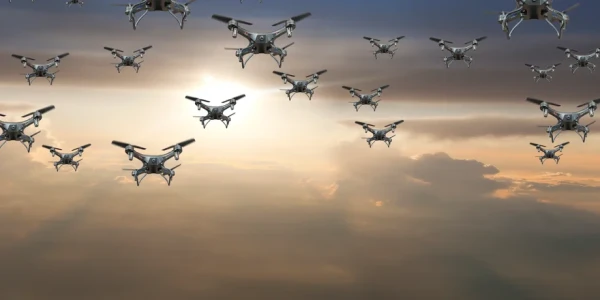
As reported by BB.lv, early Thursday morning, several unmanned aerial vehicles entered Latvia's airspace from Russia, at least one of which fell in Rezekne, damaging a fuel storage facility. Another drone is believed to have fallen in a more remote location, while another drone left Latvia's airspace.
People in the vicinity of Ludza, Balvi, and Rezekne during the incident received a mobile phone alert about a threat in the airspace.
The NAF reminds: as long as Russian aggression continues in Ukraine, there may be a repetition of cases where foreign unmanned aerial vehicles enter or approach Latvia's airspace.