
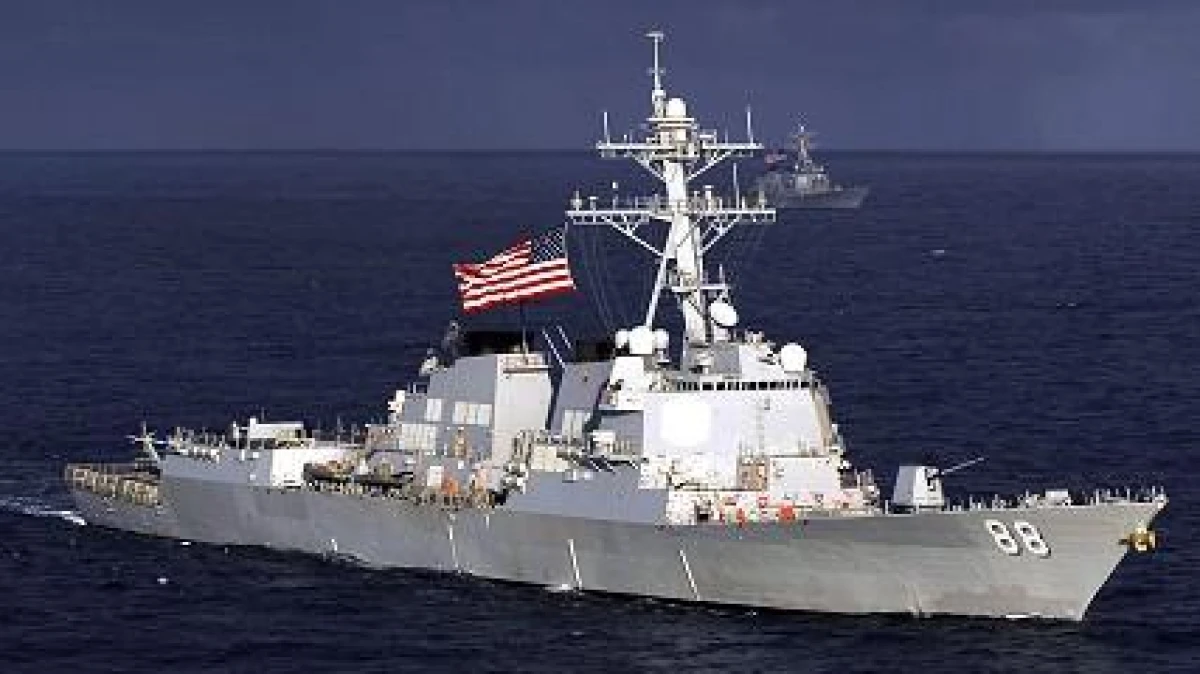
The incident in the Strait of Hormuz has jeopardized the fragile truce between the U.S. and Iran. The direct confrontation between American destroyers and Iranian forces has become the most significant escalation in the past month, occurring during attempts by both sides to negotiate peace.
According to U.S. Central Command (CENTCOM), three American destroyers were conducting a freedom of navigation operation when they came under attack from Iran. Missiles, drones, and fast boats were used against the ships. U.S. military leadership reported that the destroyers sustained no damage and returned fire, completely destroying the sources of the threat. The incident occurred at a critically important point for global energy exports, where Washington continues to ensure compliance with the sanctions regime against Iran.
U.S. President Donald Trump commented on the naval engagement on his social media, noting that American ships successfully navigated the strait under fire. Trump emphasized that only the Iranian side suffered damage, and he referred to the actions of the U.S. military as "just a touch of love," hinting at the limited use of force. According to the president, the U.S. utilized only a small portion of its capabilities but is prepared to act more forcefully if diplomacy does not yield results.
At the same time, Trump stated that contacts with Tehran are ongoing. Washington's main condition remains Iran's complete abandonment of its nuclear program. The American leader claims that Iran has allegedly already expressed a willingness to abandon nuclear weapons and is discussing the conditions for the transfer of all relevant materials. Pakistan is acting as a mediator in this process, having previously asked the White House to temporarily suspend the large-scale "Operation Freedom Project" to leave room for diplomatic maneuvering.
Tehran's version differs significantly from the American account. Iranian military officials accused the United States of attacking an oil tanker and conducting airstrikes on civilian targets in the areas of Qeshm Island, the cities of Bandar-e Hamir, and Sirik. According to Iranian statements, the republic's forces retaliated against American ships in the strait and south of the port of Chabahar. However, later Iranian state media reported that the situation in the coastal areas "returned to normal."
Tensions in the region directly affect the domestic political situation in the U.S., where rising fuel prices remain one of the administration's main concerns. Despite the tense situation, in recent days U.S. forces have destroyed several more Iranian boats that were obstructing shipping. The world's attention is now focused on Tehran's response to American proposals: this will determine whether the ceasefire will hold or whether the region will be engulfed by a new wave of escalation.













Leave a comment