
The Telegram channel Volya, which publishes military analytics citing its own sources, has spread a series of materials about the alleged ongoing preparation by Russia for a possible invasion of the Baltic states, writes Otkrito.lv. The authors emphasize that this is not yet a detailed approved operation plan but a possible scenario based on their sources and analysis of logistical, military, and infrastructural preparations.
The Telegram channel Volya published a series of materials claiming that Russia has allegedly moved to a new stage of preparation for a possible invasion of the Baltic states. The authors of the channel refer to sources in Russian military structures and emphasize that their publication is not a call to panic but should be viewed as one possible scenario.
The channel specifically states that, at the moment, according to their data, there is no detailed military operation outlined with an exact list of units, parts, combat tasks, and directions of movement. It concerns a general plan and preparatory actions that may be related to a future military scenario.
At the same time, the topic of a possible threat from Russia to the Baltic states is discussed not only in unofficial sources. In January 2026, the Latvian Bureau for the Protection of Satversme stated that Russia would continue to pose a significant military threat to European countries and NATO, and the perception of Latvia in Russia, according to the service, is becoming increasingly similar to how Ukraine was perceived before the full-scale war. However, the same assessment emphasized that there was no direct military threat to Latvia at that time.
According to Volya, since mid-March, the authors began receiving confirmations from sources in the Russian Ministry of Defense and other structures that the preparation for a possible invasion has allegedly moved to the next stage. It reportedly concerns not only the army but also infrastructure: roads, bridges, overpasses, and railway hubs in the border regions of Russia adjacent to Latvia, Estonia, and Belarus.
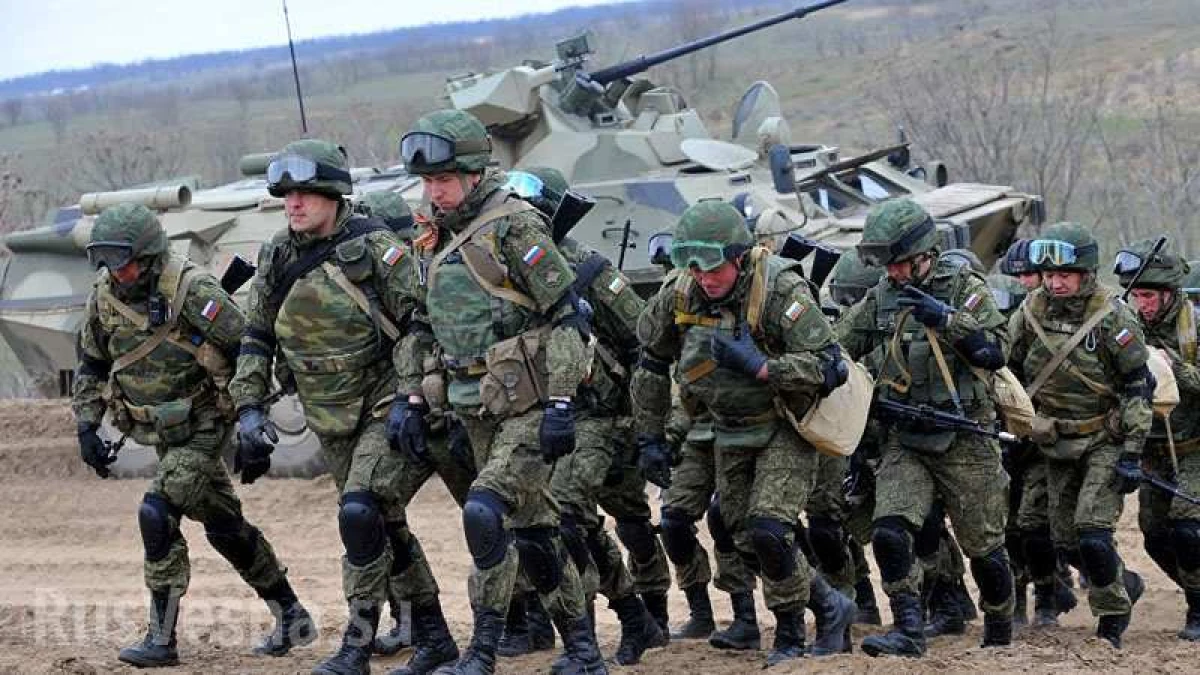
Among the military elements of preparation, the channel mentions the reformation and the beginning of the formation of new combined arms armies, as well as the second composition of the 11th and 14th army corps. Additionally, there is mention of the accumulation of armored vehicles, tanks, artillery, missile weapons, and launchers.
A separate section of the publication is dedicated to logistics. According to the authors of the channel, by April, work on expanding the capabilities of the road network in the Pskov, Novgorod, and Smolensk regions was allegedly 90% complete. It is also claimed that the modernization of railway hubs in Smolensk, Velikiye Luki, and Pskov has been completed.
The authors of Volya consider this an important sign of preparation, as Russian military logistics traditionally relies on railways. Smolensk is mentioned in the publication as one of the key railway hubs in this part of Russia. According to the channel, the modernization of stations and the construction of roads towards the Pskov region and Belarus may be necessary for the mass transfer of troops and equipment.
Particular attention in the publication is given to the Pskov region. The authors claim that since the end of 2024, work has begun on constructing and improving sections of ring roads connecting major highways in the border area with Latvia. Additionally, according to the channel, in 2025, switches were replaced at major railway hubs in Smolensk, Velikiye Luki, and Pskov, which allegedly allows for the transfer of personnel and equipment in larger volumes than before.
Furthermore, Volya writes about the repair and construction of roads from the Pskov and Smolensk regions to Belarus. According to the authors, the Russian side may consider the territory of Belarus as a logistics base, a parking area for armored vehicles, artillery, air defense systems, and missile complexes. The publication states that the roads may be needed for the rapid transfer of equipment to the border and into the combat zone.
The channel also points out the possible use of Belarus for the maneuvers of missile complexes. According to Volya, Russian "Iskanders" could move from Belarus to the Pskov region, strike, and then return to Belarusian territory, which may not be formally declared a participant in the conflict.
The publication also discusses the preparation of sites for air defense systems and missile complexes. The authors claim that new roads have been constructed to such areas and alternative escape routes have been prepared. According to their assessment, from certain areas of the Pskov region, Russian missiles could cover the entire territory of Latvia, a significant part of Estonia, and Lithuania.
The channel also states that in 2025-2026, more than two dozen bridges and overpasses were modernized and strengthened in the Pskov region. Most of these facilities, it is claimed, are located on roads leading towards Latvia or along the border.
In a separate part of the publication, Volya outlines a possible overall scenario for an invasion. According to the channel's sources, potential dates are mentioned as August 15-25, 2026, and the entire operation could allegedly be planned for 12-14 days. At the same time, the authors again emphasize that this is not a complete operational plan but a preliminary idea.
According to this version, the first stage of a possible operation could be presented by Russia as a "special operation to protect Russians" allegedly being persecuted in Latvia. The second stage, according to the channel, could be presented as Moscow's reaction to "aggression" from Estonia and Lithuania. The publication also mentions a possible landing of naval forces by the Baltic Fleet from the territory of the Kaliningrad region.
According to Volya, the Russian leadership may not be counting on the start of a full-scale war with NATO but rather on creating a large-scale crisis within the Alliance. The authors believe that the Kremlin may assume that major European countries would not risk entering into direct war with a nuclear power for the sake of the Baltic states, especially given the uncertainty of the U.S. position.
At the same time, the authors of the publication claim that Russia allegedly does not plan to act in the area of the border with Poland to avoid directly involving this country in the conflict. In such a scenario, Poland is viewed as a player with which Moscow would like to avoid direct confrontation.
Volya also writes that the Russian command may consider the risk of independent decisions by Finland and Sweden in support of the Baltic states. Therefore, according to the channel, Russian forces allegedly do not plan a main strike in the Narva area and along the Estonian coast of the Baltic Sea. Instead, the possible plan, it is claimed, involves bypassing Estonian forces from the southwest through Tartu, followed by an advance towards Tallinn and the blocking of NATO military bases, training grounds, and supply routes.
In light of such publications, it is important to consider the official context. The Baltic states have repeatedly stated the need to strengthen the region's air defense. In March 2026, the defense ministers of the Baltic states, in a joint statement, called for accelerating NATO's capabilities to detect and intercept aerial threats, including drones.
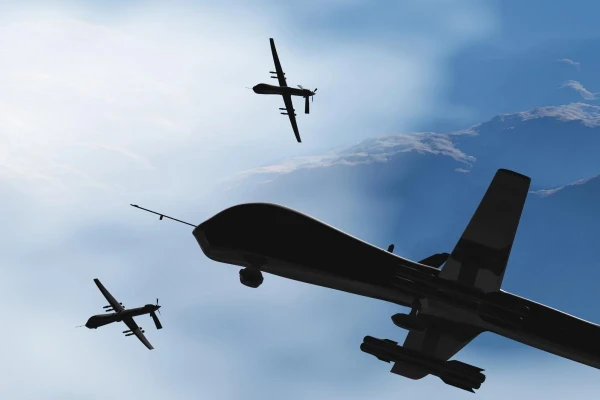
Latvia has also faced situations where the National Armed Forces (NAF) warned of a possible threat in the airspace in the eastern part of the country. On May 3, the NAF reported such a threat in the Alūksne, Balvi, Ludza, Rēzekne, and Krāslava regions, and then announced that it had ended. The NAF noted that such cases, where a foreign unmanned aerial vehicle enters or approaches Latvia's airspace, are possible while Russian aggression against Ukraine continues.












Leave a comment