
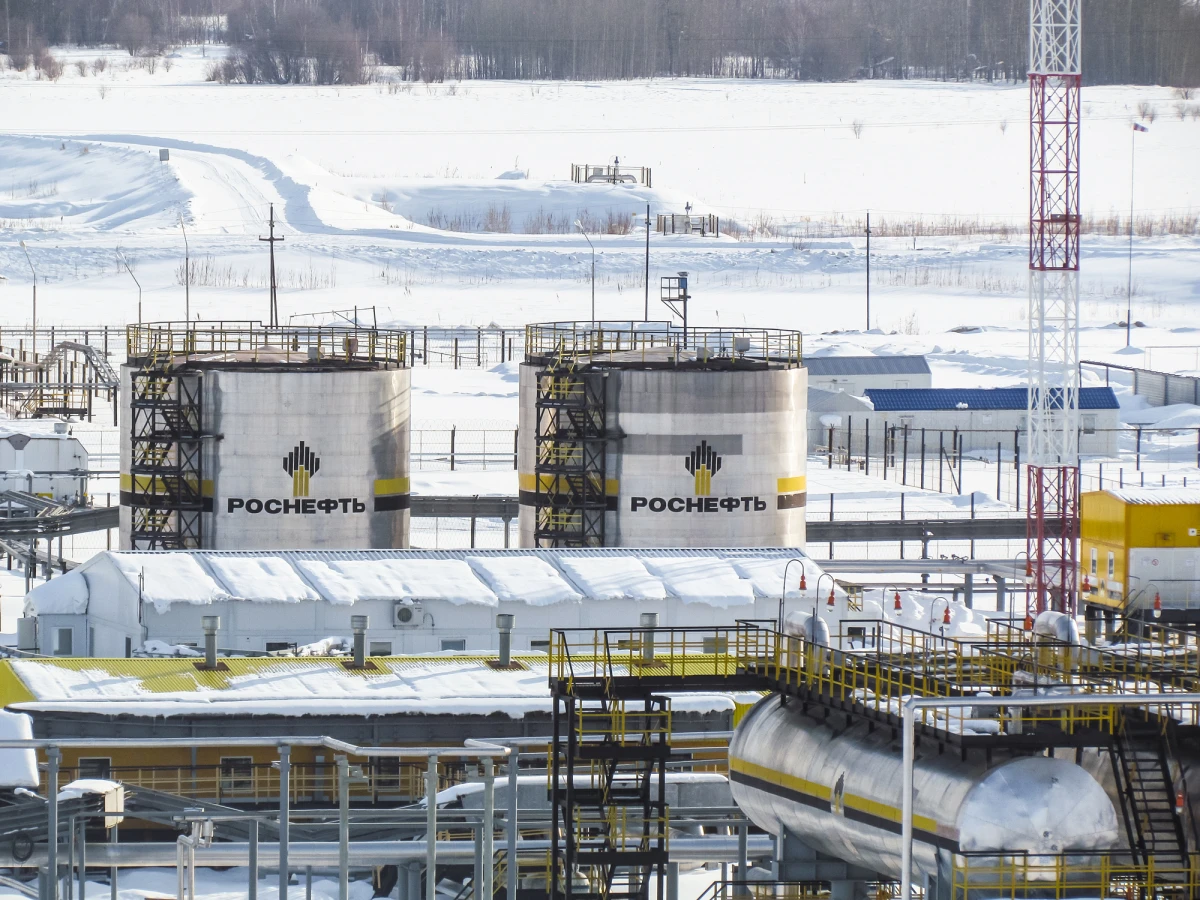
Ukrainian drone attacks on Russian oil infrastructure are causing noticeable damage to refineries and ports, but so far have not led to a significant decrease in oil exports and Moscow's revenues. This is reported by The Wall Street Journal.
According to the publication, in recent weeks, Ukrainian drones have repeatedly attacked oil facilities in Russia, including a terminal in Tuapse on the Black Sea. Russian media claim that this is already the fourth strike on the facility since mid-April. Videos of fires and thick smoke circulated on social media, and local residents complained about the so-called "black rain" with an oily residue.
Ukraine has also reported strikes on energy infrastructure in Perm, including a pumping station of the company Transneft. President Volodymyr Zelensky called such attacks "long-range sanctions."
At the same time, analysts note that the operation of Russian ports often recovers within just a few days after the strikes. According to Ronald Smith, founder of the consulting firm Emerging Markets Oil & Gas Consulting Partners, the destruction looks extensive, but does not cause prolonged disruptions.
Since the end of March, attacks have affected key export ports in Russia - Primorsk and Ust-Luga on the Baltic Sea, as well as Novorossiysk on the Black Sea. Analyst Nick Coleman from Prism Strategic Intelligence emphasized that such strikes can no longer be considered isolated.
Despite a decrease in shipments through the Baltic and Black Seas, Russia has compensated for losses by increasing supplies through ports in the Arctic and the Pacific Ocean. In April, Russia's maritime oil exports amounted to about 3.5 million barrels per day, almost unchanged compared to March and 2% higher than a year ago.
At the same time, experts acknowledge that the strikes have limited potential export growth. As Smith noted, the volumes of supplies "have not decreased as much as one might expect, but they have not increased either."
The most noticeable losses are recorded in the segment of petroleum products: fuel oil exports fell by 34% in April, while diesel fuel exports dropped by 12%.
Additional support for Russian oil revenues has come from rising global oil prices amid the conflict between the U.S. and Iran. The price of Brent approached $110 per barrel.
According to the International Energy Agency, Russia's revenues from oil and petroleum product sales reached $19 billion in March, nearly double that of February. However, analysts note that a sustainable effect is only possible with prolonged high prices.
Researcher Janis Kluge from the German Institute for International and Security Affairs (SWP) stated that the situation could become pivotal if the price increases continue or the crisis drags on.














Leave a comment