
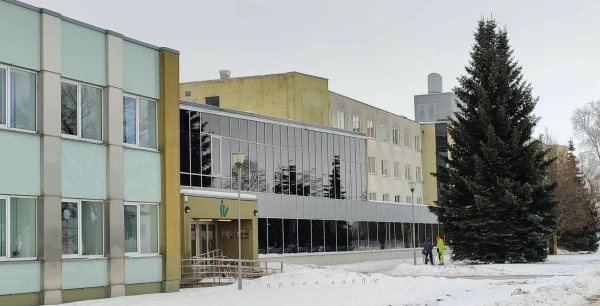
The Estonian language training was formulaic and uninteresting.
“Pretty good,” “basically fine,” “meaningless,” “hardly anyone from our group will pass” – students at the Ida-Viru Center for Vocational Education react differently to the transition to Estonian as the language of instruction. Of the five hundred students sent for intensive language study, about a hundred have stopped attending classes altogether. Among those who continue their studies, not everyone is counting on a diploma. However, the center's director, Hendrik Agur, promises that no one will be left behind.
In total, around 2000 people are studying in vocational schools in Narva, Sillamäe, and Jõhvi. But around a hundred students have been skipping Estonian lessons, leading to an online dispute between vocational education director Hendrik Agur and the city's mayor, Katri Raik, that lasted several days.
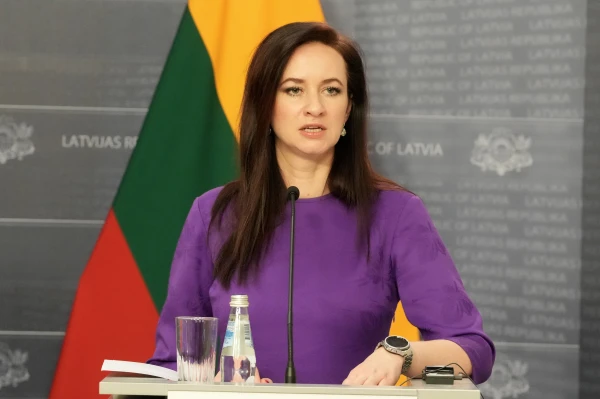
“Hendrik, this is not acceptable! The school has not done its homework! You started teaching Estonian on a large scale. Did you first talk to the students, involve them in planning the studies, ask for their opinion?” – Katri Raik wrote on her Facebook page, receiving numerous angry comments in Estonian.
Hendrik Agur responded on the same social network, calling it a political statement aimed at the mayor's Russian-speaking voters, and added about Katri Raik: “Unfortunately, my trust in her ability to continue working on the Estonian issue in Ida-Viru County has decreased to a minimum.”
In December, Hendrik Agur stated that many students are struggling with studies in Estonian. For first- and second-year students whose level does not reach B1, elective subjects in vocational education have been replaced with Estonian language courses, and all these study hours have been combined into one intensive course. About five hundred young men and women will only return to their regular subjects after this and continue their studies in the state language.
Not long before this, the winter enrollment at the Vocational Education Center faced difficulties, during which adults could also apply. In Narva, it was not possible to form a single group at all. Thus, a trend towards a reduction in the number of people receiving vocational education in Ida-Viru County has emerged.
Hendrik Agur, commenting on this for DV, disagreed with the notion that opportunities to receive vocational education in Ida-Viru County are decreasing: “Opportunities for vocational education have certainly not diminished. In the winter period, we offered 300 places for training in various specialties, which is 100 more than last winter. Twelve professions were represented,” Agur reported, listing these professions and adding, “However, local adults are not ready to study under the Estonian-language program, which is why the study groups were not opened.”
Large engineering enterprises in Narva, primarily Fortaco Estonia and Hanza Mechanics, organize internships for potential young workers and train them on the job (in Russian). But usually, this is not training for a profession from scratch after school. For example, Hanza Mechanics offers second-year vocational students and Ida-Viru colleges the opportunity to work with them two days a week under the guidance of mentors from among the factory specialists.
“I attend intensive Estonian lessons,” said a first-year student at the Ida-Viru Center for Vocational Education on the condition of anonymity. “The lessons are very formulaic, teachers are simply given materials, and they all have printouts from the same resource. Sometimes it happens that they even repeat the same materials across different teachers. I think this is ineffective, especially for those whose Estonian level is weak, and raising their level to B1 in eight weeks is almost impossible. Personally, my result after two weeks is very weak.”
“In my group, there are three different teachers, and none of them are educators, just people who speak Estonian at a C1 level. I think many students do not attend these classes because they find it pointless, very boring, and tedious,” the student adds.











Leave a comment