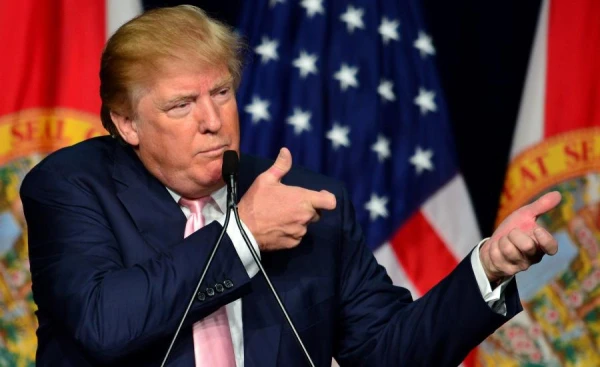
U.S. President Donald Trump said on Monday that he will soon make a decision on the supply of additional weapons to Taiwan following a warning from Chinese President Xi Jinping to refrain from this step, LETA reports citing AFP.
"I spoke with him about this. We had a good conversation, and we will make a decision very soon," Trump said. He added that he has a "good relationship" with the Chairman of the People's Republic of China, whose country considers Taiwan to be its territory.
On February 4, in a phone call with Trump, Xi called for "mutual respect" in relations with the U.S., but warned Washington against selling weapons to Taiwan.
"The Taiwan issue is the most important issue in China-U.S. relations (...) The U.S. must exercise caution regarding arms sales to Taiwan," Xi stated.
Both presidents are expected to meet in Beijing in April.
Taiwan and mainland China have been governed separately since 1949, when the nationalist government of the Republic of China, which had lost the civil war, took refuge on the island, while the communist-controlled mainland proclaimed the People's Republic of China, which still considers Taiwan part of its territory. Taiwan constantly lives under the threat of invasion from China.
The U.S. does not officially recognize Taiwan, but it is its main military partner.
In December, the U.S. approved an arms sale to Taiwan worth $11 billion. Shortly after, China began military maneuvers that simulated a blockade of key Taiwanese ports.
Although during his second presidential term Trump softened his support for Taiwan, this issue remains a problem in U.S.-China relations.
Over the past ten years, Taiwan has spent many billions of dollars on modernizing its military, but the U.S. is increasing pressure on Taiwan to do more for its own defense against China.
Taiwan's President Tsai Ing-wen proposed increasing defense spending by $40 billion over the next eight years, but this plan has been blocked ten times by the opposition-controlled parliament since early December.
Several dozen members of the U.S. Congress on Thursday urged Taiwan's opposition parties to stop blocking this plan.