
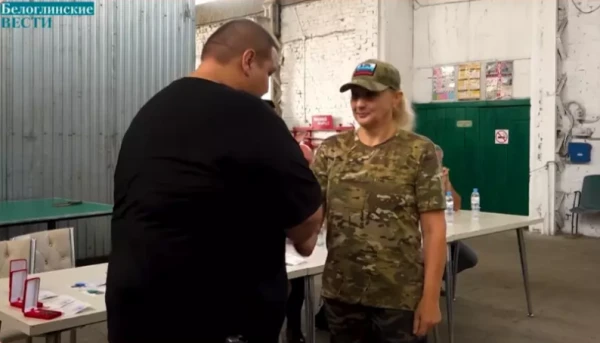
The production of equipment and the provision of assistance to the military are not publicized and are not reflected in the official communications.
Russian subsidiaries of the French agro-industrial group Sucden provided direct support to the Russian army in 2023–2025. This was reported by the TV channel Arte and the publication Mediapart. The support included the supply of equipment and materials for units involved in the war against Ukraine.
According to investigative journalists, several Russian branches of the Sucden group (Sucres et denrées), owned by French sugar magnate Serge Varsano, provided military equipment for weaving camouflage nets, rubber bands for protecting armored vehicles from drones, vehicles, and also participated in fundraising for front-line needs.
In the Lipetsk region, where local authorities actively involve businesses in helping the Russian army, there are two large sugar factories owned by Sucden, the Yelets Sugar Factory (“Agrosnabsakhar”) and the Dobrynsky Sugar Factory. The region has a special program called "Lipetsk Industry for Victory," which states that 34 enterprises are involved. However, it is impossible to find a list of participants. In May 2024, the speaker of the regional council, Vladimir Serikov, stated that "a number of foreign companies in the Lipetsk region are supporting the special military operation."
"A whole range of companies are helping, I personally interact with them. But it is not the time to name them to avoid problems with the parent companies," he said at that time.
As established by the Arte channel, among these enterprises are three subsidiaries of the French Sucden. For instance, the Yelets Sugar Factory provided Russian servicemen with machines for cutting camouflage tape. The Dobrynsky Sugar Factory supplied rubber for protective conveyor belts at the request of the 283rd Motorized Rifle Regiment. Additionally, the grain-growing agrofirm "Yelets" assisted volunteers in purchasing mesh fabric in 2025.
In the city of Kamenska in the Penza region, one of the largest enterprises in the region, "Atmis-sugar," manufactured ovens for the Russian military, supplied rubber conveyor belts, and opened a workshop for making camouflage nets.
In the Krasnodar region, the Uspensky Sugar Factory provided the Russian military with vehicles with anti-drone coatings for transporting personnel. The agricultural enterprise "Uspensky Agro-Union" purchased anti-drone blankets for the fighters of the 810th Marine Brigade, which participated in the capture of Mariupol. Alexander Koklin, a participant in the volunteer unit "Bars 20" of the Kuban Cossack Army, visited the enterprise in the fall of 2024 and presented its employees with 25 medals, calling those present "workers of the rear, just as much heroes and soldiers as those on the front lines."
Moreover, the Tbilisi Sugar Factory, based in the Krasnodar region and owned by Sucden, was mentioned in a list of enterprises participating in monetary donations for the Russian military in January 2025.
The production of equipment and the provision of assistance to the military are not publicized and are not reflected in the official communications of the sugar factories. Journalists established the participation of enterprises in supporting Russian military aggression in Ukraine through publications in volunteer communities, where thanks to them regularly appear.
The company initiated an internal investigation
In response to journalists' inquiries, Sucden stated that it had initiated an internal investigation. The press service emphasized that this may involve "private initiatives on the ground," carried out without the knowledge and approval of the Paris headquarters. According to the company, such actions by subsidiaries "contradict the rules and practices of the group." The company also stressed that since 2022, it has strictly adhered to the European Union's sanctions obligations.
EU sanctions do not directly apply to the agri-food sector, provided that European companies do not cooperate with individuals or legal entities that are under restrictive measures.
International criminal law attorney Emmanuel Daoud noted in a comment to Arte that such assistance could be considered as aiding a structure committing war crimes, which potentially falls under criminal law qualification.
The Sucden company, founded in the 1950s, entered the Russian market in the early 1990s. Initially, the company operated as a trader, supplying raw sugar and participating in its processing, but in the 2000s it shifted to direct investments in industry. Sucden acquired and modernized several sugar factories in the Lipetsk and Penza regions and built a vertically integrated model: sugar production, agribusiness (growing beets and grains), logistics, and storage.
Russia is a strategically important country for Sucden, as it is where the main production cluster of the group is concentrated, notes Mediapart: four factories producing 800,000 tons of sugar annually, as well as agricultural enterprises growing sugar beets and grains on an area of 250,000 hectares. As a result, although the Russian subsidiaries account for only 7% of the group's revenues, they employ 4,300 people — almost 80% of all company employees.
Nicolas Sarkozy in the orbit of Sucden
The investigation mentions former French President Nicolas Sarkozy, who collaborates with the French company as a consultant. He is also a friend of Serge Varsano's family and, along with his wife Carla Bruni, attended the wedding of sugar magnate Dmitri Varsano's son with Russian model Valeria Kaufman at Lake Como. At the ceremony, Carla Bruni sang for the newlyweds.
Previously, Mediapart reported on Sarkozy's business and political contacts in Russia, as well as his consulting contracts with Russian entities. In 2023, the publication revealed that the former president received two transfers totaling 300,000 euros shortly before and some time after his speech at the New Year's reception of the Russian Direct Investment Fund at the end of 2018. Representatives of Sucden and the Varsano holding declined to comment on the collaboration with Nicolas Sarkozy. The latter also did not respond to Mediapart's inquiries.



Leave a comment