
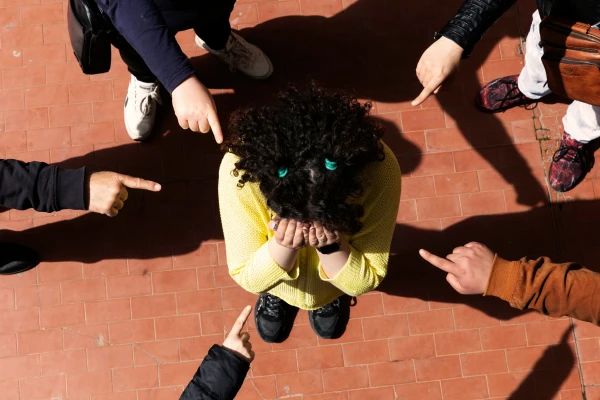
The State Police (GP) records a wide range of cases of violence in schools — from profanity and digital humiliation to physical aggression, which significantly affects the sense of safety for students and teachers, as well as the educational environment, the GP reported to the LETA agency.
The police acknowledge that they only receive a portion of the information about conflicts in schools, so it is possible to assess trends rather than absolutely accurate data. According to law enforcement, the police most often encounter the consequences, but to successfully resolve situations, it is necessary to identify the causes and work on them. Many cases are resolved at the level of schools or families.
According to GP observations, violence is most often concentrated in a specific age group, while older students usually become more cautious and are less frequently involved in aggressive behavior.
Violence manifests in various forms — verbally, physically, and in the digital environment. The most common are coarse language, name-calling, and humiliation, which hinder the educational process and create tension for both students and teachers. Often, verbal aggression is followed by physical actions — pushing, hitting, spitting, or throwing objects.
Violence often begins as thoughtless behavior but can escalate into targeted aggression — intentional pushing, tripping, deliberate throws of a ball at someone's body during physical education classes, which often results in bruises, scrapes, concussions, or fractures, the police note.
Emotional violence is often accompanied by property damage — tearing clothes, scattering school supplies, confiscating and damaging mobile phones. During the winter months, the number of incidents related to pushing into snow and throwing ice chunks increases, the police add.
In the digital environment, teachers and students receive obscene messages, mocking images are published, and offensive comments are spread, which significantly affects emotional safety.
Most often, the police deal with cases of violence between students, followed by incidents between a student and school staff; parents are involved less frequently.
By conducting discussions with authorized or responsible persons in educational institutions, police officers identify current safety issues in each school, including identifying those institutions where priority measures need to be taken to eliminate risks. In schools where several risk factors have been identified, GP may suggest conducting a safety assessment. In such cases, the police organize an analysis of both the physical environment and the school microclimate, incident statistics, and information exchange about risks. Based on the assessment, recommendations for improving safety are prepared.
GP staff, identifying specific problems or risks, participate in meetings organized by educational institutions with staff, as well as in training, so that school employees can timely recognize risky situations and act accordingly.
Preventive educational sessions on various safety topics are held in educational institutions, based on legal education for children and youth, safety and responsibility issues, including administrative and criminal liability.
GP has launched the "Safety Messengers" program as one of the main preventive programs aimed at involving educators and representatives of educational institutions in informing minors about safety risks and necessary actions to prevent them and protect themselves. Educators participating in the program implement various general preventive measures, including informing minors about safety issues.
It was previously reported that recently a "conflict situation" occurred between two students in one of the educational institutions in the Ropaži region, which was addressed by the local government.
Also recently, a case of violence at the Jelgava Primary School in Pārlepe drew public attention, where a third-grade student harmed a first-grade student.








Leave a comment