The ban imposed by the Taliban on the cultivation of opium poppy has only slightly reduced drug production but has severely impacted the well-being of rural areas.
According to the United Nations Office on Drugs and Crime, the area of opium poppy cultivation in Afghanistan this year amounted to only 10,200 hectares; this figure is considered one of the lowest in Afghanistan's history.
The Taliban banned the cultivation of opium poppy almost immediately after coming to power. However, for the most part, this policy has only led to poppy fields "relocating" from the southern regions to the north of Afghanistan — to areas that the Taliban does not control as tightly.
Thus, according to the UN, poppy production sharply increased in Badakhshan, on the border with Tajikistan, after the Taliban came to power. There, as well as in the neighboring provinces of Kunduz and Balkh, 85% of farmers have been unable to find an equally profitable alternative to poppy.
Some have decided to grow grains; however, according to the UN, the average income per hectare of wheat is $770, while opium poppy can yield $25,000 per hectare.
Before the Taliban returned to power in 2021, income from poppy sales was considered one of the main sources of income in Afghanistan.
This year, opium production, the main ingredient for heroin, is estimated at 296 tons, which is 32% less than the previous year. Farmers' incomes from opium sales have nearly halved: from $260 million in 2024 to $134 million this year.
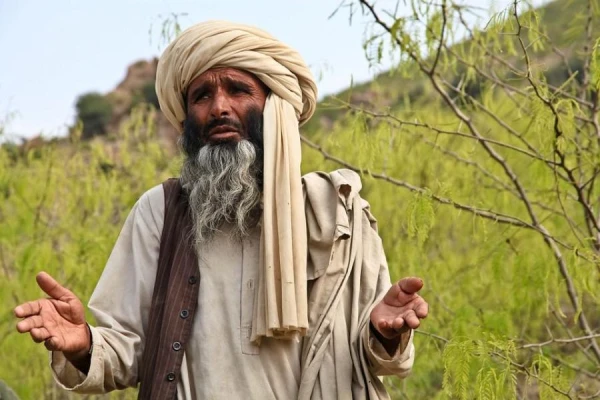
Destruction of Poppy Fields in Afghanistan Destruction of Poppy Fields in Afghanistan AP Photo The United Nations Office on Drugs and Crime notes that "the decline in income goes beyond household levels and is accompanied by a general decrease in purchasing power in rural areas, reduced economic activity, increased community poverty, and lack of food security."
The organization calls for encouraging farmers to switch to growing crops that thrive in Afghanistan's climate and yield high income. These include saffron, almonds, pistachios, walnuts, apricots, grapes, and various medicinal plants.
The Deputy Minister for Drug Control of the Taliban government welcomed the UN report, calling it "an important reflection of the real problems faced by farmers."