
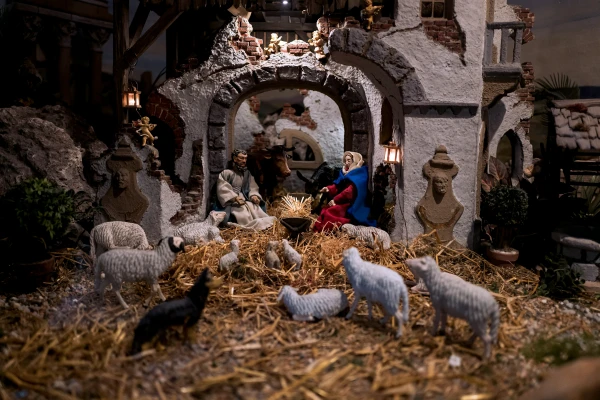
This evening, the celebration of the Nativity of Christ begins with Christmas Eve in the Western Christian Church, reports LETA.
The exact date of Christ's birth is unknown — the Gospels only mention the fact of Jesus' birth. In Egypt, in the 3rd century, the birthday of Jesus Christ was celebrated on March 25. In other Eastern countries, this day was also associated with the spring solstice.
In Rome, December 25 began to be celebrated as the birthday of Christ around 336 AD. Emperor Marcus Aurelius declared December 25 a state holiday in 274 AD in honor of the birth of the "unconquered sun god," thereby seeking to strengthen the pagan state.
To weaken the influence of paganism, Christians began to celebrate December 25 as the birthday of Jesus Christ, thereby proclaiming that Christ is the "light of the world" and the "sun of righteousness." From Rome, this tradition quickly spread to Africa, Spain, Northern Italy, and Gaul.
This evening, festive services are taking place in Christian parishes in Latvia.
In the Christmas liturgy, there is a vigil mass, which is held in Catholic churches on the evening of December 24, Christmas Eve. "Vigilare" means "to stay awake." In ancient times, before great holidays, people prayed, fasted, and repented all night. December 24 was also such a fasting day. Nowadays, fasting on this day has been abolished.
The seven days following Christmas are called the Christmas octave. During these days, the prayers of the Holy Mass are dedicated to the event of Christmas. The Sunday after Christmas is celebrated as the Feast of the Holy Family.










Leave a comment