
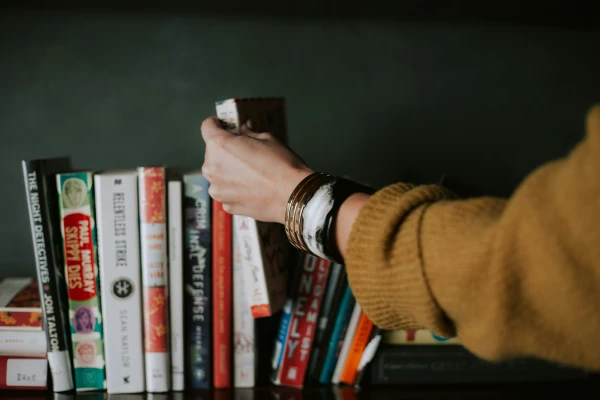
Starting next year, the VAT rate on printed and electronic media products in Russian will be increased in Latvia from 5% to 21%. Entrepreneur, founder of the Vilki books bookstore Arina Lindanen expressed her opinion on how this decision will affect the book business, the availability of books in Russian, and the overall situation in society on the program "Domkaja Square" on Latvian Radio 4.
The expected effect of the VAT increase on printed products in Russian is assessed by Arina as "absolutely tragic": "Books will become more expensive by at least 16 percent. And, considering the rising production costs, we predict price increases of up to 30 percent." Currently, bookstores in Latvia offer books in Russian, both produced within Russia and then imported to us, as well as those produced in Europe. "These two groups of products differ significantly in price. New publishing houses that have opened in recent years outside of Russia publish books that are much more expensive than Russian ones. The average price of such books is 20-25 euros. Now their price will rise to 30-35 euros," the interlocutor of LR-4 believes.
In this category of goods, there are quite a few children's books — beautifully illustrated, excellently published. Now, for many families, they will become inaccessible. Libraries are also reluctant to replenish their collections with such books. The own library project Vilki books had to close down, as it is impossible to maintain it without the help of funds and support from patrons.
According to Lindanen, all this will contribute to the development of an illegal market for printed and audiobooks, where the quality of products is noticeably lower.
Lindanen also notes: "The native language is just as much an unchosen parameter at birth as eye color or nationality. I was struck by the statistics: according to a survey conducted by the Central Statistical Bureau in 2021, 37 percent of Latvia's residents named Russian as their native, family language. This means that we have a large group of the population within the country that does not have access to books in their native language. Yes, many of these people are bilingual — for example, children who are currently learning in Latvian. Many speak English and other languages. But they have to pay 16 percent more to read books in their native language. Such segregation is offensive."
The entrepreneur is confident that Latvian publishers are unable to meet all the readers' needs. For example, there is currently no complete collection of books about the Moomins in Latvia, which means that readers will look for these books in other languages.
Lindanen considers the government's idea of raising one million euros through the increase in VAT on printed products in Russian to be utopian: "None of the industry players working with books in Russian see where this million could come from.
In reality, the literature market will shrink.
People will stop buying at the volume they currently do, they will turn to alternative sources of information. That is, we will not receive these taxes.
For us, booksellers, other European countries become much more attractive, and I will pay this tax there, not in Latvia. And for large European players, the Latvian market is becoming uninteresting, as it is economically unprofitable to operate here."








Leave a comment