In Germany, public discontent has erupted due to the fact that starting from the new year, private individuals will be prohibited from using rat poison. As Postimees reports, the same fate may soon await Estonia. Latvia is also unlikely to escape this.
German media report that starting from the new year, residents of the country will face a significant change: private individuals will be prohibited from purchasing rat poison, and to combat rodents, they will have to call a professional pest control specialist.
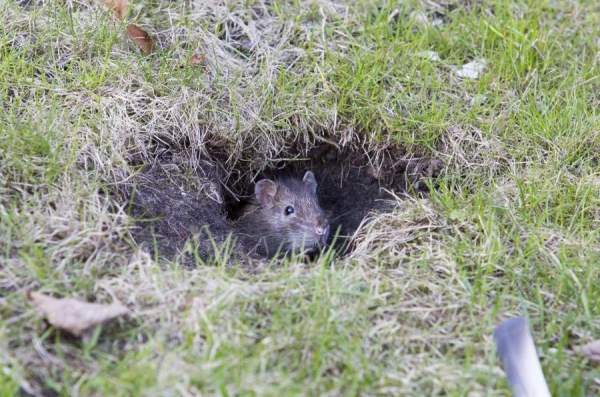
In many cities, there is an acute problem with the population of mice and rats. For instance, this spring, the administration of the Tallinn district of Mustamäe announced plans to use poison due to numerous complaints from residents about the constantly growing rat population.
A similar problem exists in other European countries. The German Pest Control Association stated to the media that in Germany, there are three to four rats for every person. It is necessary to combat them, as rodents are carriers of dangerous diseases, as well as fleas and ticks.
The Stuttgarter Zeitung reports that as part of a Europe-wide plan, starting next year, rat poison containing anticoagulants will be banned for ordinary consumers. The use of poison will still be allowed, but only professionals will be able to do so. The basis for the ban includes, in particular, environmental protection considerations: after consuming the poison, rodents die a painful death. Furthermore, poisoned rats can be eaten by pets, predators, and birds, resulting in the poison entering their bodies as well.
There are also concerns that rat poison could fall into the hands of children. According to the Stuttgarter Zeitung, in addition to professional services, farms will also be able to use poison. Ordinary citizens are advised by the newspaper to use chili powder or peppermint oil, as well as to seal all possible openings through which rodents can enter the home.
According to German newspapers, calling a professional pest control specialist costs around 400 euros, and they are already overwhelmed with work.
The Estonian Health Department notes that since this concerns a European Parliament regulation regarding biocides, the new measures may also affect Estonia (and Latvia as well).
However, it is still unclear what specific restrictions will be introduced in Estonia.
"Currently, opinions from EU member states are being collected, after which a vote will take place in the Permanent Committee on Biocides. The update on the approval for the use of anticoagulants is expected to come into effect in the second half of 2026. Let me clarify: at this moment, the update is planned with a limited scope of application, but based on proposals from member states, the conditions may change," said Irina Satsuta, a communications specialist at the Health Department.
The publication Postimees inquired about Estonia's position. "During the review of approvals for anticoagulant active substances (AAS), the ECHA Biocidal Products Committee (BPC) concluded that the approval of such substances should not be extended in two areas of application: for use by ordinary consumers as poisoned bait for mice indoors, and for use by service providers as permanently laid bait for mice and rats. Estonia agreed with this, as traps are a sufficient alternative, and AAS are very dangerous substances," explained Satsuta.
According to Satsuta, it is currently known that if a decision is made, the product can still be purchased, but the permitted areas of its application will be limited. "Ordinary consumers will be able to purchase rat poison with anticoagulants and use it to combat rats indoors, but not against mice. Currently, private individuals can use poisoned baits to eliminate mice indoors. The second change will concern the ban on the permanent use of bait to detect the presence of mice and rats; however, this measure was already only available to pest control service providers," said Satsuta.
It is worth noting that in recent years, the concentration of active substances in rat poison has already been reduced. Since March 2018, it has been permitted to sell poisons for mice and rats containing anticoagulants (substances that prevent blood clotting) of less than 0.003% to private individuals. Since that same date, the retail sale of poisons with an active substance concentration of 0.005% has been banned, meaning that for ordinary consumers, the poison has become less concentrated, leaving stronger agents for professionals.