
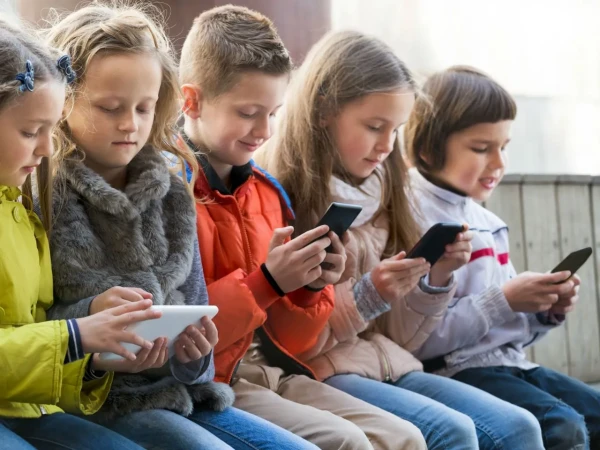
Taking away a child's phone or coming to terms with the side effects of global digitalization — that is the question. The complete ban on social media for impressionable schoolchildren has been discussed for a long time. However, there are still no ideas on how to implement this taboo in reality.
Few employees of regulatory bodies are ready to go "door to door" and monitor whether children and their parents are violating the regulations. Speaking of the latter, only they can dictate the conditions under which their child uses the gadget. Or they may take it away altogether, turn off the internet, or impose other restrictions. Is there any point in these draconian measures? Psychologist Ekaterina Makarova explained why the answer is likely negative.
What Are These Networks For
"Social networks are platforms for communication. Let's think: for what, with whom, and for whom? Communication, or interaction, is the transfer of information and connection. That is, we make our lives easier by having the ability to build social contacts with the widest possible range of people with minimal energy expenditure (it's easier to write than to call and say) and quickly (just press a button)," says the expert.
Since personal contacts are harder to establish, that is why they are so highly valued. And that is why we call communication through social networks a surrogate. After all, texting eliminates the risk of stepping out of one's comfort zone, exposing vulnerable areas of the psyche, and immediate reactions to messages from the interlocutor. "It is believed that virtual actions are safe for those who have already mastered real actions, for example, learned to make friends and maintain communication with them in real life, learned the rules of behavior and etiquette in personal and phone contacts, and acquired interactive skills (supporting a conversation, not interrupting, sharing news, etc.)," Makarova continues.
Internet Community as an Important Link in Development
In addition to data transfer during online communication, an important moment of building social contacts occurs. And this is not only the ability to articulate words considering the interlocutor's reaction but also the very form of interaction, the ability to maintain both personal and group connections. In these social relationships, people find reflections of themselves, strengthen their identity: "Who am I, what am I worth, what makes me significant and important, what is valuable to me." People learn to react to others, stay connected with the group, express themselves, and read feedback. In this skill, all forms of contact are important, including those that are prevalent in our time. No one disputes that the epistolary genre and diary essays are not popular now, and few people master them. However, experiencing one's connection with the group through social networks, finding new friends, and maintaining communication with old friends is something that must be learned.
Not to Ban, but to Educate
"At some point, a child simply needs to 'immerse' themselves in the global information flow: create a page, post interesting photos and posters on their wall, exchange memes, musical themes, and react to friends' posts. This is a new form of social interaction that has replaced the art of letter writing, and we must help our children master it in a timely manner (around the beginning of puberty) and teach them to behave safely in the social media space," emphasizes the psychologist. For this, parents teach non-communication skills even before the child becomes an active user of social media: they create groups based on the child's interests: family, leisure, camp sessions, etc. In these groups, they exchange photos, announcements, and wishes. Children take up the baton and use non-communication for the same purpose: to find real friends and facilitate contact for the whole group.
"However, aimless scrolling through pictures and short videos is a form of toxic contact with informational waste, which is harmful not only to children but also to their parents. It is clear that if adults engage in this themselves, it will be difficult for them to explain to the child why they shouldn't do it. Then perhaps we should think not about whether to allow children social media, but whether to allow people to contact the flow of information indiscriminately at all?" concludes the specialist.
















Leave a comment