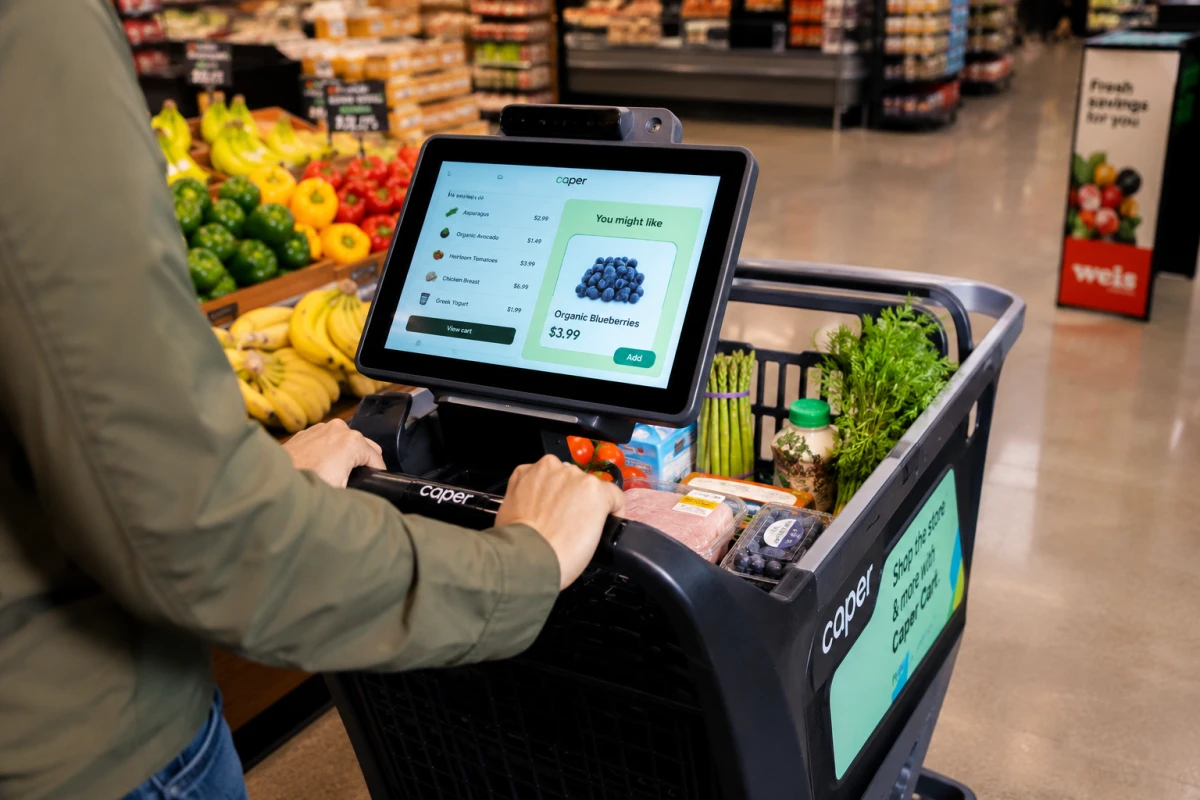
American company Instacart is expanding the use of smart Caper Carts, which use artificial intelligence to analyze customer purchases, track their movement through the store, and offer personalized advertising right during shopping.
Instacart, in collaboration with the Weis Markets supermarket chain, has started implementing smart Caper Carts in stores across Pennsylvania. This new technology allows for automatic tracking of selected items while simultaneously analyzing shopper behavior in real time.
The carts are equipped with several cameras, digital scales, a touchscreen, and an in-store navigation system. Developers describe this project as part of the concept of "physical artificial intelligence" for retail.
During shopping, the system tracks which items are already in the cart and which shelves the shopper is near. Personal recommendations, discount coupons, promotional offers, and reminders about items that may interest the customer appear on the built-in screen.
One of the features is the "Got everything you need?" system, which suggests complementary items based on previous purchases. According to Instacart, such prompts have led to an increase in the average transaction value by nearly 1%.
Additionally, the carts are integrated with the Weis Rewards loyalty program and the Buy It Again feature, which reminds customers of items they have purchased before.
The company notes that the number of Caper Cart implementations has more than tripled in recent years. The artificial intelligence in the system is trained on a database of over 1.6 billion online orders and data accumulated by Instacart over ten years in the grocery delivery market.
Similar technologies are currently being explored by other major American retail chains, developing their own versions of smart carts and digital assistants for shoppers.
Smart carts are gradually transforming the typical trip to the supermarket into a personalized digital experience. However, along with the convenience, privacy concerns are growing: stores are obtaining more data about shopper behavior and new opportunities to influence their decisions right at the moment of product selection.