
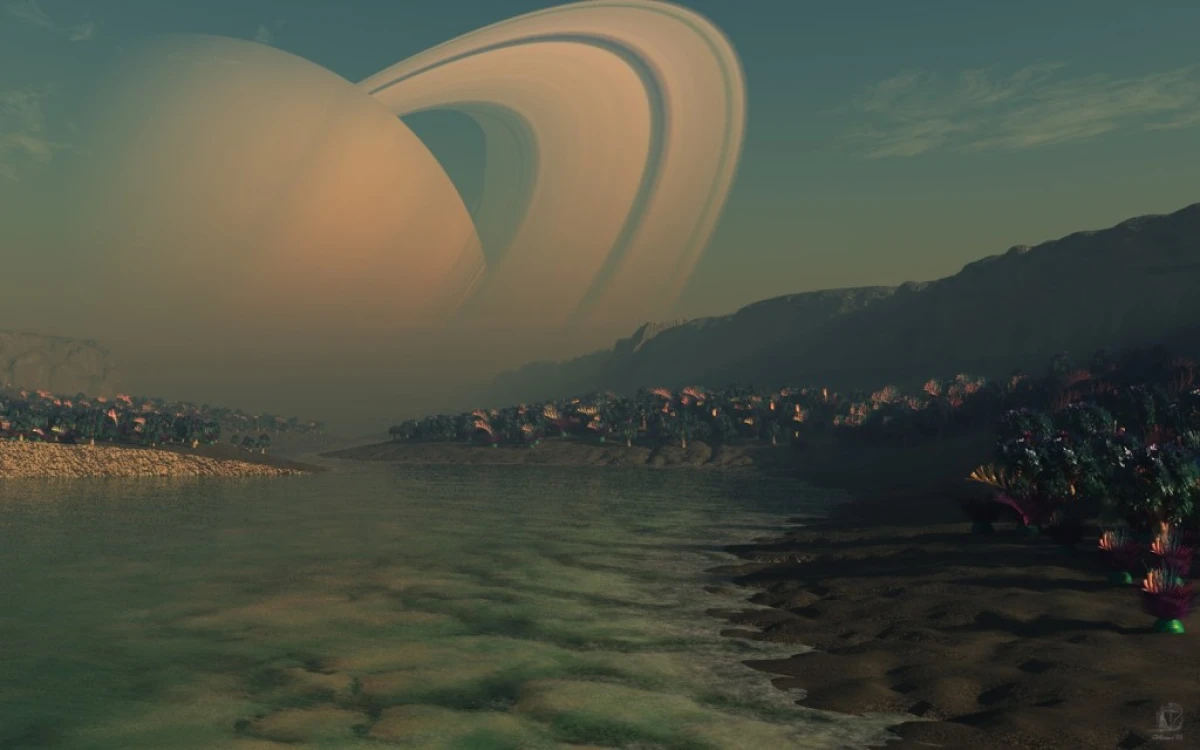
The celestial body has the size of a planet and rich organic material.
The largest moon of Saturn may become the main outpost for humanity beyond our planet. This conclusion was reached by specialists from three American institutions – NASA's Goddard Space Flight Center, Worcester Polytechnic Institute, and the University of Florida. The results of their work were published in the journal Acta Astronautica.
This object is unique in the entire known universe: it is the only one, besides Earth, that has a dense nitrogen atmosphere and a methane cycle resembling the hydrological cycle of our planet. The rich organic material and prebiotic environment have long attracted astrobiologists – which is why NASA is preparing the Dragonfly mission, scheduled to launch no earlier than July 2028.
Although Titan is far from Earth, and nuclear engines will be required to reach it, its advantages outweigh the logistical challenges. According to lead author Connor A. Nixon, there are simply no analogs to this world: it is the only place beyond Earth where hydrocarbons are present simultaneously in the atmosphere and on the surface.
About 5% of the atmospheric composition is methane, while heavier compounds such as propane, butane, kerosene, and gasoline have been found on the surface. Additionally, nearly half of the moon's mass consists of water: it is found in the form of ice on the surface, while liquid layers lie beneath, maintained in a liquid state by ammonia and salts.
Such abundance makes Titan an ideal location for establishing refueling stations and permanent settlements. It can also serve as a launch pad for exploring other moons of Saturn – such as Enceladus and Mimas. In the more distant future, it will become a way station for expeditions to the outer regions of the solar system and a source of valuable materials, including helium-3, which can be extracted from the atmosphere of the gas giant.













Leave a comment