
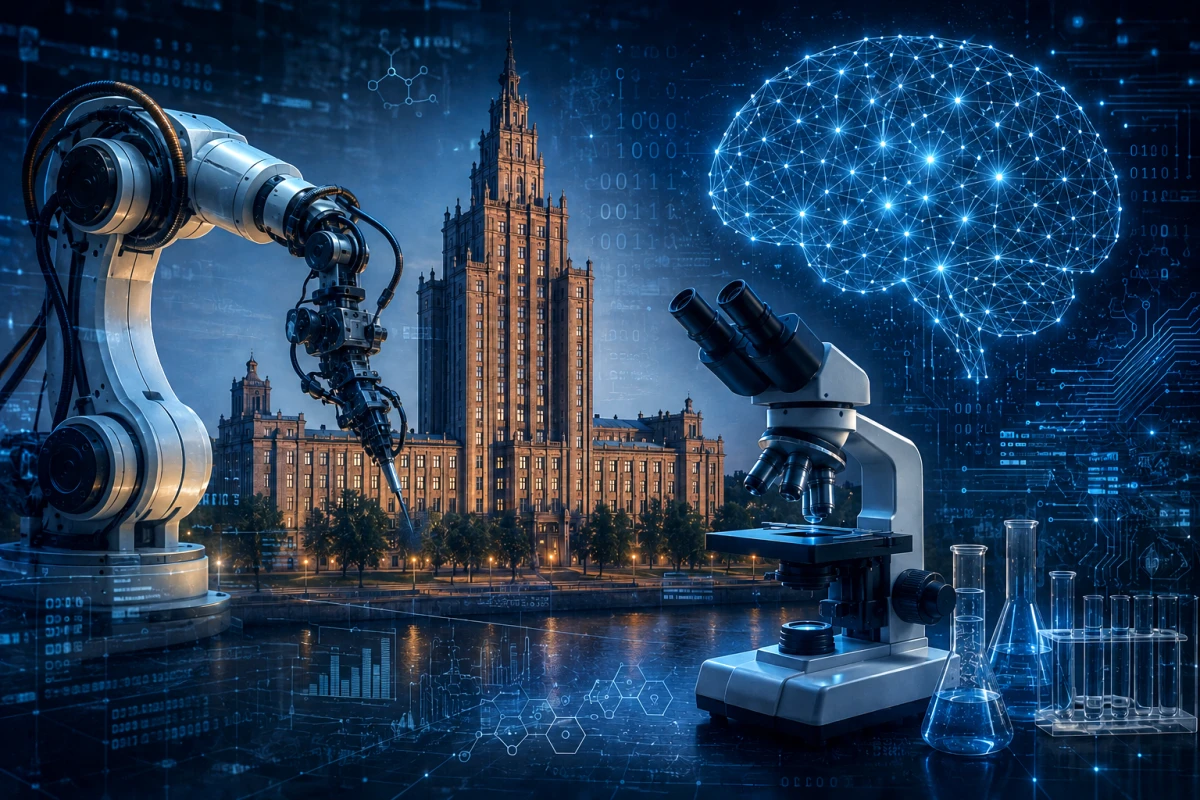
Research in the field of artificial intelligence is rapidly gaining momentum in Latvia. In recent years, AI has transformed from a narrow scientific discipline into a tool used in medicine, engineering, agriculture, and even the humanities.
Artificial intelligence has become one of the most dynamically developing areas of Latvian science. This is stated in a review by the Latvian Council of Science, which covers research and projects in the field of AI from 2018 to 2025.
During this time, 142 research projects related to artificial intelligence technologies have been implemented in the country. In addition, scientists have prepared more than 1,900 scientific publications on this topic.
If just a few years ago artificial intelligence was primarily viewed as a separate field of research, today it is increasingly used as a tool for solving a wide range of scientific tasks.
AI is applied in medicine, engineering sciences, agriculture, linguistics, as well as in social and humanitarian research. In many projects, it serves not as the goal of the research, but as a technology for data analysis and solution finding.
One of the largest sources of funding has been the Program for Fundamental and Applied Research, which has supported 47 projects. Another 40 projects have been implemented by young scientists under postdoctoral research programs.
It is important to note that almost a third of all projects in the field of artificial intelligence are carried out by young researchers. This indicates that interest in AI is particularly high among the new generation of scientists.
The most active participants in the research are the University of Latvia, Riga Technical University, and the Institute of Electronics and Computer Science. A total of 19 scientific institutions, as well as companies and organizations from the public and non-governmental sectors, have been involved in the projects.
One of the most sought-after areas remains machine learning. Latvian researchers use it to assess soil conditions, analyze medical data, and develop new materials.
Among the practical developments are systems for automatic assessment of the biological state of soil, solutions for improving the diagnosis of chronic fatigue syndrome, and technologies for creating more energy-efficient composite materials.
At the same time, scientific activity in this field is also growing. If in 2016 publications on artificial intelligence accounted for about 2.5% of all scientific works by Latvian researchers, by 2025 their share has approached 9%.
Almost half of such publications have been prepared in international collaboration. As the authors of the review note, this contributes to a higher citation rate of the research and increases its impact in the global scientific community.
Thus, artificial intelligence is gradually becoming not only a separate area of research but also an important tool for the development of Latvian science in various fields.








Leave a comment