
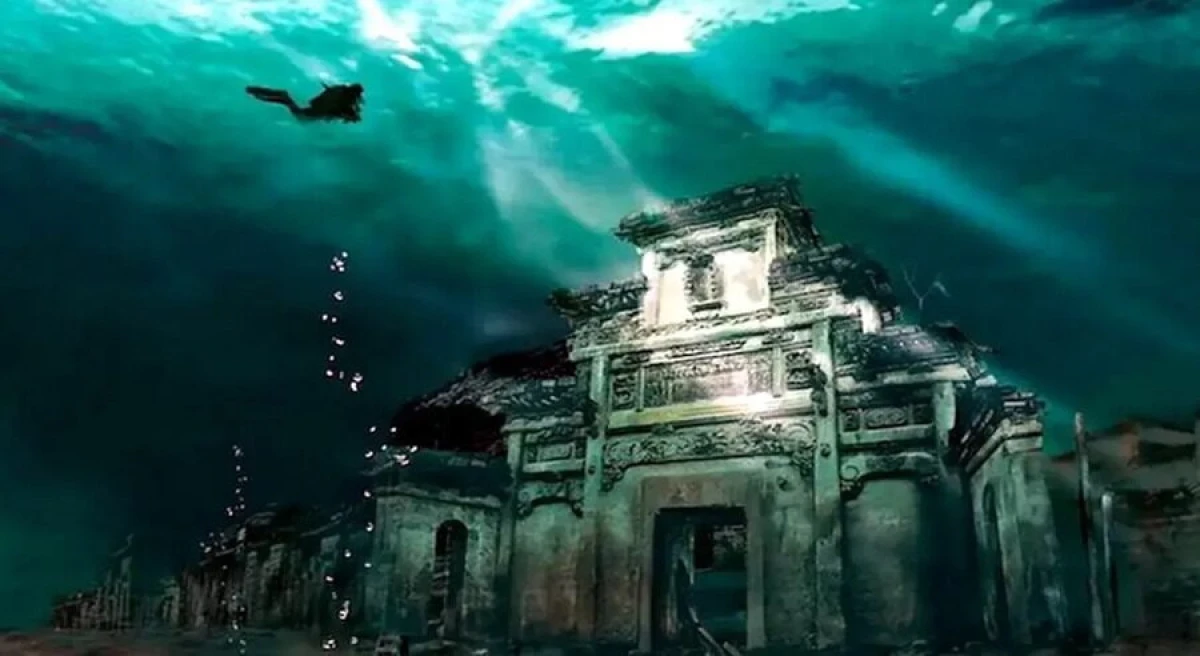
At the bottom of Lake Issyk-Kul, archaeologists have discovered the ruins of a medieval city that may have vanished after a powerful earthquake several centuries ago. Scientists are already calling the find one of the most important archaeological discoveries of recent years.
At the bottom of Lake Issyk-Kul in Kyrgyzstan, archaeologists have discovered the remains of a medieval city, which is already being compared to the legendary Atlantis. Scientists claim that this may be one of the most important archaeological discoveries of recent years.
An international expedition during underwater research in the fall of 2025 found streets, public buildings, residential quarters, and a Muslim cemetery underwater. The ruins are located just a few meters deep off the northwestern shore of the lake, reports Earth.
According to scientists, the city may have sunk after a powerful earthquake in the early 15th century.
Divers surveyed four sites at depths ranging from one to four meters. Using underwater drones, they created detailed maps of the destroyed buildings, walls, and wooden structures.
Archaeologists discovered burned brick walls, a millstone, and the remains of a large structure that was likely used for grain processing. Decorative elements were also found, indicating the existence of public buildings – possibly a mosque, bathhouse, or madrasah.
Researchers believe the city was an important trading center on one of the routes of the Silk Road. Caravan routes connecting the Talas and Chui valleys with Issyk-Kul passed through the region. Silk, metals, goods were transported here, and religious ideas were spread.
Particular interest was sparked among archaeologists by the underwater Muslim cemetery, which covers an area of about 300 by 200 meters. The burials date back to the 13th–14th centuries. The bodies were laid according to Islamic traditions - on their right side facing Mecca. The team of scientists extracted the remains of two bodies - a man and a woman, for study.
Scientists have already begun analyzing the wooden structures and soil. This will help establish the exact dates of the city's construction, destruction, and flooding.
Archaeologists believe that the underwater city at the bottom of Issyk-Kul could become one of the largest historical sensations of recent years. What today appears as scattered ruins may in the future turn into a complete map of an ancient city with streets, workshops, residential quarters, and religious buildings.












Leave a comment