PNAS: cholesterol crystals accelerate liver damage.
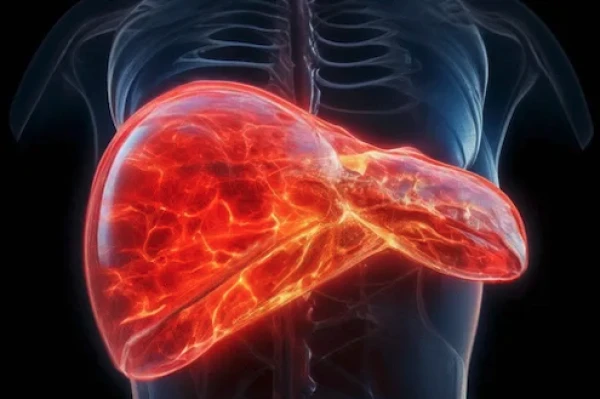
Excess cholesterol can harm the liver in unexpected ways. Researchers from the Perelman School of Medicine at the University of Pennsylvania found that cholesterol crystals can "stiffen" liver tissue in the early stages of metabolically associated fatty liver disease (MASLD) — even before scarring develops. The study was published in the Proceedings of the National Academy of Sciences (PNAS).
MASLD develops with the accumulation of fat in the liver and is increasingly common among people with obesity, insulin resistance, and type 2 diabetes. In animal experiments, the researchers compared the effects of a high-fat diet and a diet high in fat and cholesterol. In both cases, fat accumulated in the liver; however, it was specifically with excess cholesterol that crystals formed in the cells. These crystals made the liver tissue stiffer — regardless of any existing scarring.
According to the authors, increased stiffness creates conditions for further damage and accelerates the development of fibrosis. The removal of crystals in an experimental model reduced liver stiffness, indicating the potential reversibility of the process. However, such changes can currently only be detected through biopsy.
The researchers hope that in the future, non-invasive diagnostic methods can be developed to assess whether existing medications, such as statins, can influence the accumulation of cholesterol crystals in the liver. This would open up the possibility for earlier intervention and slowing the progression of the disease.