
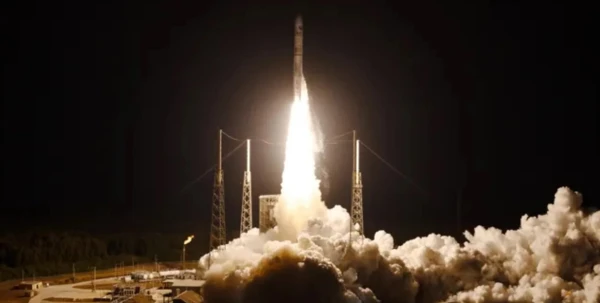
Despite another incident occurring in one of the boosters of the Vulcan Centaur rocket, it was able to place reconnaissance satellites into orbit for the Pentagon. This is already the second such incident for the Vulcan Centaur rocket, which has made only four launches.
On Thursday, February 12, the Vulcan Centaur rocket from United Launch Alliance made its fourth flight into space and delivered two reconnaissance satellites for the U.S. Space Force into orbit. During the flight, the rocket encountered another case of fire in one of its solid rocket boosters, writes Focus citing Space.
According to United Launch Alliance, a significant anomaly was detected in the operation of one of the four solid rocket boosters at the very beginning of the flight. It turned out that the fuel was burning in the nozzle area at the base of the booster, after which sparks flew from the rocket as it gained altitude. Despite this, the rocket accomplished its mission and sent two reconnaissance satellites into orbit for the U.S. Space Force. An investigation into the causes of the incident is currently underway.
This is already the second case where the Vulcan Centaur rocket has experienced such an incident during flight. A similar booster fire occurred in October 2024 during the rocket's second launch into space. This issue led to delays in the certification of the rocket by the U.S. Space Force, which granted permission for the use of Vulcan Centaur for space flights for national security purposes.
The Vulcan Centaur rocket consists of the main Vulcan stage and the Centaur upper stage, and it can have up to six solid rocket boosters. The first launch of the rocket took place in January 2024, when it sent the lunar lander Peregrine into space. It never reached the Moon and ultimately burned up in the atmosphere of our planet.
During the second flight of Vulcan Centaur, 40 seconds after launch, a fire was also detected in one of the boosters, leading to a slight deviation from its course. However, the rocket was able to complete its mission of delivering satellites into orbit. At that time, the investigation revealed that the nozzle of the solid rocket booster had detached during flight due to a manufacturing defect.
In August 2025, after the U.S. Space Force authorized the use of Vulcan Centaur for national security tasks, the rocket made its third flight. It successfully placed a military satellite into orbit.
United Launch Alliance stated that they will provide information about the causes of the latest incident in the near future. It is still unknown how this anomaly will affect the further use of the Vulcan Centaur rocket.














Leave a comment