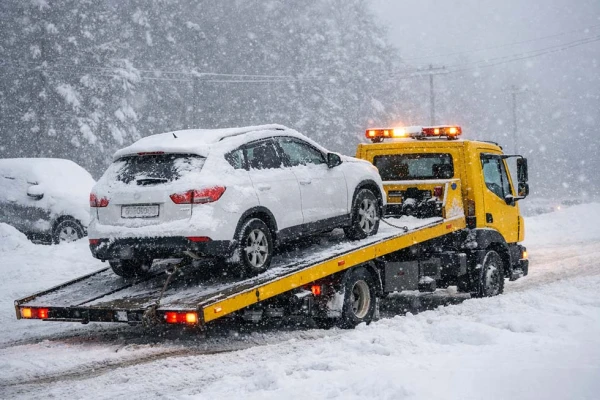
The harsh cold in Latvia has not yet receded, and the low air temperature brings unpleasant surprises for motorists.
To find out what the situation is like on the country's roads this winter, the portal tv3.lv contacted several companies providing towing services.
The auto evacuation center Lucky car notes that compared to last year and other seasons, the load this winter has increased by about 50%.
In cold weather, the most common problems are related to the electrical systems of cars. For example, while driving or attempting to start the car, several warning lights illuminate on the dashboard. Drivers prefer not to continue their journey and call for a tow truck.
The remaining calls are mostly standard — traffic accidents or technical malfunctions; however, "electrical problems" dominate most frequently. This is especially true for newer model cars that are not designed for the conditions of a Latvian winter.
The company Rīgas evakuators also reports an increase in the number of calls — during frosts, there are significantly more than in previous winters. Assistance is most often needed in cases where cars have a dead or frozen battery, unsuitable diesel fuel has been poured, or the car has been stationary for a long time and fails to start in the cold.
At the same time, a representative of the service emphasizes that problems in cold weather occur not only with old cars — there have been cases where even completely new cars required towing.
A striking example this winter was a car purchased just recently — about a month ago. The vehicle was manufactured in China and cost its owners quite a bit. However, such technology could not withstand the Latvian winter. The dashboard indicated that the battery charge level was 20%, but in the short time the owner was in the store, the vehicle completely stopped, and the tow truck had to take it back to the dealer.
The Auto evakuators service notes that in severe frosts, drivers most often encounter problems caused by unsuitable fuel. It is not uncommon for cars to still have summer diesel or fuel that does not match the current air temperature. The situation is exacerbated by fuel filters that have not been replaced in time.
Additionally, in cold and slippery weather, accidents occur where tow trucks have to pull cars out of ditches. A representative of the center adds that overall, the number of calls this winter is significantly higher than in previous years.