
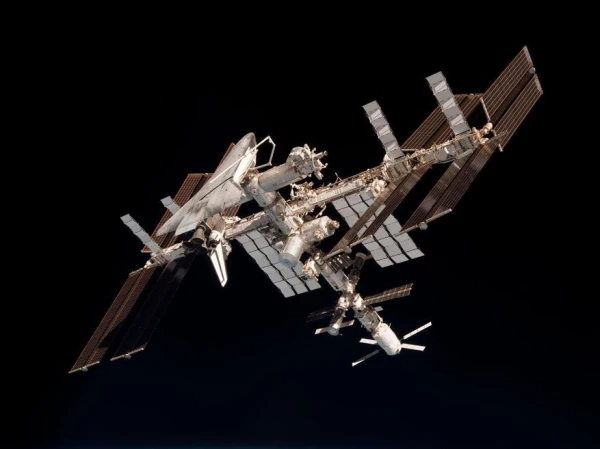
50 years ago, Americans were unable to control the descent of their complex.
In 2026, Roscosmos will discuss the timeline for deorbiting the ISS with NASA. The operation of the international station is planned to be completed in 2028.
Deorbiting is expected to occur by 2030. After the project is completed, private platforms will continue the work.
Russia is preparing a replacement — a national orbital station. Deployment will begin in December 2027. The first to be launched will be the scientific and energy module. The launch is planned from the Vostochny Cosmodrome.
The process of decommissioning the ISS is a planned multi-stage operation. A modified cargo spacecraft will be used for the final maneuver, which will give the station the necessary impulse to enter the atmosphere over a designated area.
Then the laws of physics will come into play. What happens to a massive object entering the atmosphere at several kilometers per second?
-
Initial fragmentation. The first elements to detach from the station will be the least durable and largest components — solar panels and radiators.
-
Destruction of the main structure. As it descends into denser layers of the atmosphere, the modules and supporting truss will begin to break apart. Loads and temperatures will increase exponentially.
-
Evaporation and survival. The outer shell of the modules will melt, and most of the internal equipment will simply evaporate from the immense heat. However, the densest and heat-resistant components, such as parts of titanium trusses or docking nodes, will survive the fiery descent.
-
It is these surviving fragments that are expected to fall within the uninhabited waters of Point Nemo. The calculations of the ballistic experts must be perfectly accurate and error-free.
To safely dispose of the decommissioned spacecraft, a location must be found where its debris will not hit anyone. And such a place exists on Earth. It is the oceanic pole of inaccessibility, or Point Nemo, located in the southern part of the Pacific Ocean.
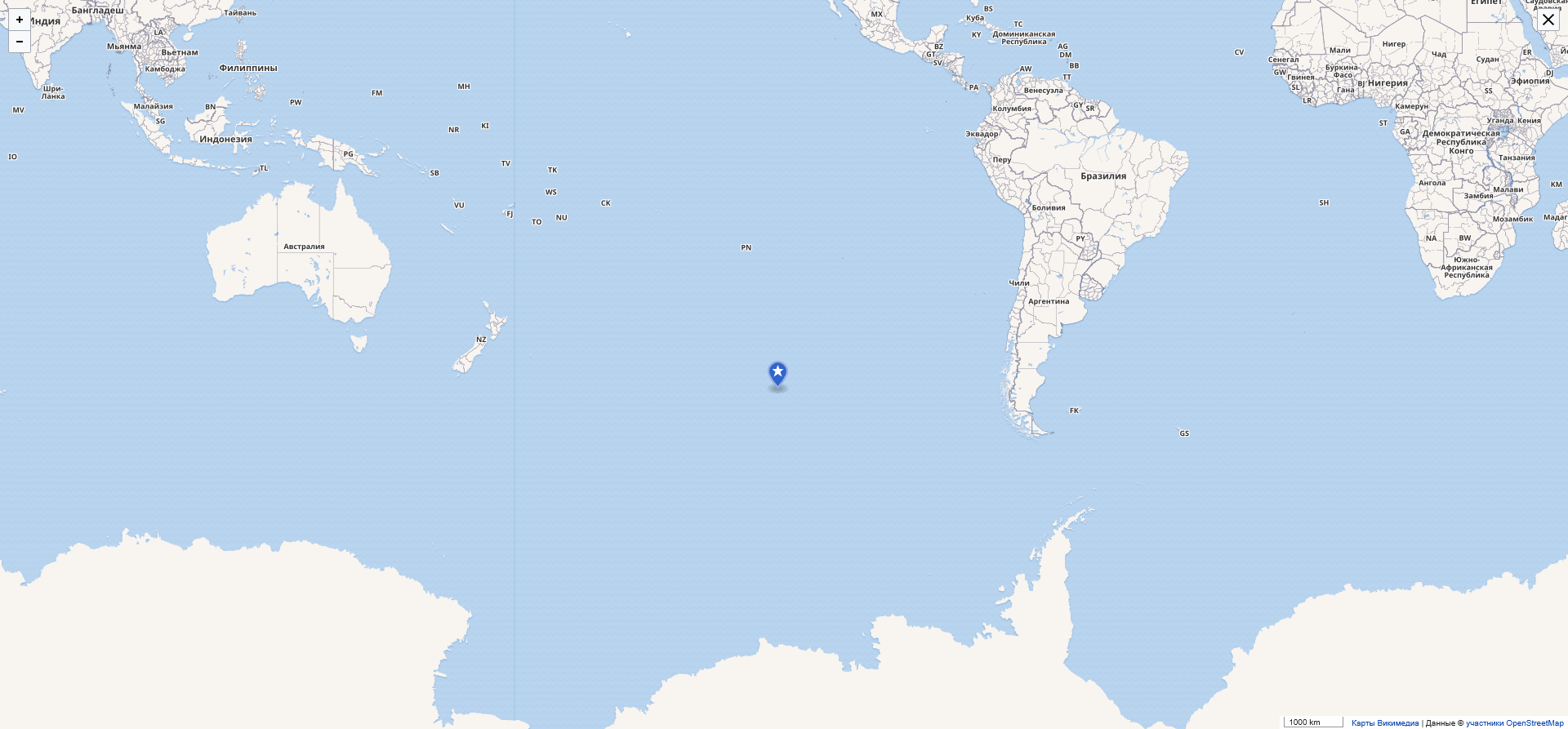
Its uniqueness lies in its maximum distance from any land. The nearest islands — Ducie, Motu Nui, and Maher — are almost 2,700 kilometers away. This makes Point Nemo an ideal target for sinking large orbital objects. The probability that unburned fragments in the atmosphere could harm people or infrastructure here approaches zero.
This is why this area has received the unofficial name "spacecraft cemetery." Over the past decades, hundreds of spacecraft have found their final resting place here, including the Soviet-Russian station Mir. Now this site is preparing to welcome its largest resident yet.
The plan to sink the ISS is based on previous experiences, both successful and not so much. Two cases have become textbook examples. The first — the American station Skylab in 1979. At that time, engineers were unable to fully control the descent. Instead of falling into the Indian Ocean, its charred debris scattered over the western part of Australia. There were no casualties, but the local municipality symbolically fined NASA $400 for littering. This incident vividly demonstrated the potential consequences of even a small miscalculation.
The second case — the domestic station Mir. In 2001, its descent was a model operation. The 130-ton structure was carefully directed precisely to the area of Point Nemo. This proved that the technology for controlled deorbiting works.
The ISS exceeds Mir in mass by more than three times, so the stakes are very high. This is not just a technical procedure, but the end of an entire era in astronautics, requiring impeccable precision and cold calculation.












Leave a comment