

The cost of the work is estimated at €60,000,000.
Former chief physicist of the Israeli government Yanai Yedwab has launched a startup, Stardust Solutions, which has already attracted $60 million in investments. He plans to develop a technology to block sunlight for partial cooling of the planet. Yedwab does not promise to create a tool for climate management and acknowledges that catastrophic weather events due to atmospheric overheating will still occur.
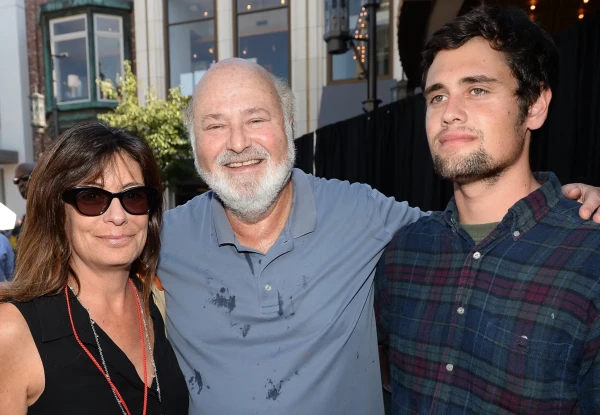
The concept of Stardust Solutions proposes to disperse a certain amount of aerosol into the atmosphere that will reflect part of the sunlight. Its head, Mr. Yedwab (pictured right), hopes for success.
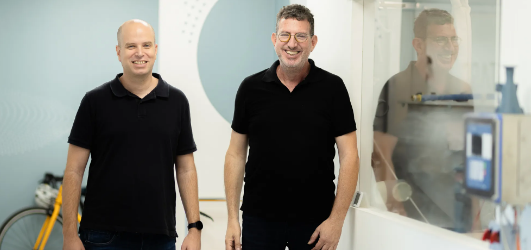
However, the most effective option to date based on sulfates has been deemed "unecological" and excessively costly by the startup's authors. Therefore, they intend to use the funds raised to develop a new substance for the same purposes.
Details on what the new aerosol will be made of are not provided. However, it should be extremely safe (literally, "like flour") and should also be very cheap to produce, as an incredible amount will be required. The startup keeps the details under commercial confidentiality – they intend to obtain a patent for their creation before putting it into operation.
The project has many critics, and their number is constantly growing because Yedwab promised to start testing the new aerosol as early as next spring. This is despite the fact that almost all large-scale projects in this area have been halted due to strong opposition from local authorities and populations in various parts of the world. People are asking a reasonable question: who and by what right decides to block sunlight? And, most importantly, what responsibility will the enthusiasts who wish to influence the climate bear when many things inevitably go wrong?
For decades, scientists have proposed the theory that if the atmosphere were covered with a layer of dust, it could temporarily mitigate global warming. However, very few have actually advocated for researching this practice, and no one could say how dangerous it might be to destabilize weather conditions, food supply, or global politics. Many scientists still warn that it will take years to understand whether such a technology would be reasonable or catastrophic. The terms used to describe it – "solar geoengineering," "aerosol injection into the stratosphere," or "solar radiation management" – sound deceptively innocuous. For most people, the idea of blocking the sun still evokes mockery and disgust – one could say, a global horror.
Despite tremendous advances in clean energy, greenhouse gas emissions continue to rise. Even the upper limits on temperature increases agreed upon by the international community in the Paris Agreement of 2015 seem increasingly unattainable. In 2022, the UN climate organization stated that humanity had already faced a series of horrific events: extreme heat waves, uncontrolled wildfires, record floods and droughts, the spread of tropical epidemics, and the destruction of coral reef ecosystems worldwide. These phenomena were expected to worsen depending on how quickly temperatures continue to rise in the coming decades, leading to mass extinction of wildlife, conflicts among people, and migration.












Leave a comment