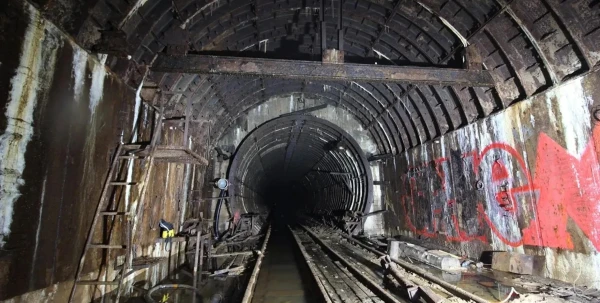
Russian physicists have been expelled from CERN, the European Organization for Nuclear Research, so now they will try to revive the Soviet collider, the documentation of which has been preserved in a single copy and only on paper. The "collider" itself represents an abandoned tunnel, writes Focus.
In the coming year, the Institute of High Energy Physics of the Russian "Kurchatov Institute" plans to allocate 176 million rubles (almost 2 million euros) of budget funds for an assessment of the condition of the "Proton Accelerator-Accumulator Complex." The issue is that the "complex" has not been used since the 1990s, reports The Moscow Times.
The relevant procurement has already been posted by the Federal State Budgetary Institution "A. A. Logunov Institute of High Energy Physics" of the National Research Center "Kurchatov Institute." According to the technical documentation, the goal of the work is to determine whether it is possible to continue the construction of the facility. The assessment is to be conducted in Protvino, Moscow Region. Until the 1960s, it was a secret settlement known as "Serpukhov-7."
The project was initiated in the USSR back in the 1980s and closely resembles the Large Hadron Collider of the European Organization for Nuclear Research (CERN). The complex includes 56 facilities, among which is a two-stage proton accelerator with energies of 600 and 3000 giga-electronvolts. The underground part consists of a ring tunnel 21 km long (6 km shorter than CERN's).
The project documentation, created in 1983, has been preserved only in paper form and in a single copy.
The Russian "collider" was planned to be equipped with superconducting magnets (like those in Geneva), but due to the project's freeze, some magnets were produced but not installed.
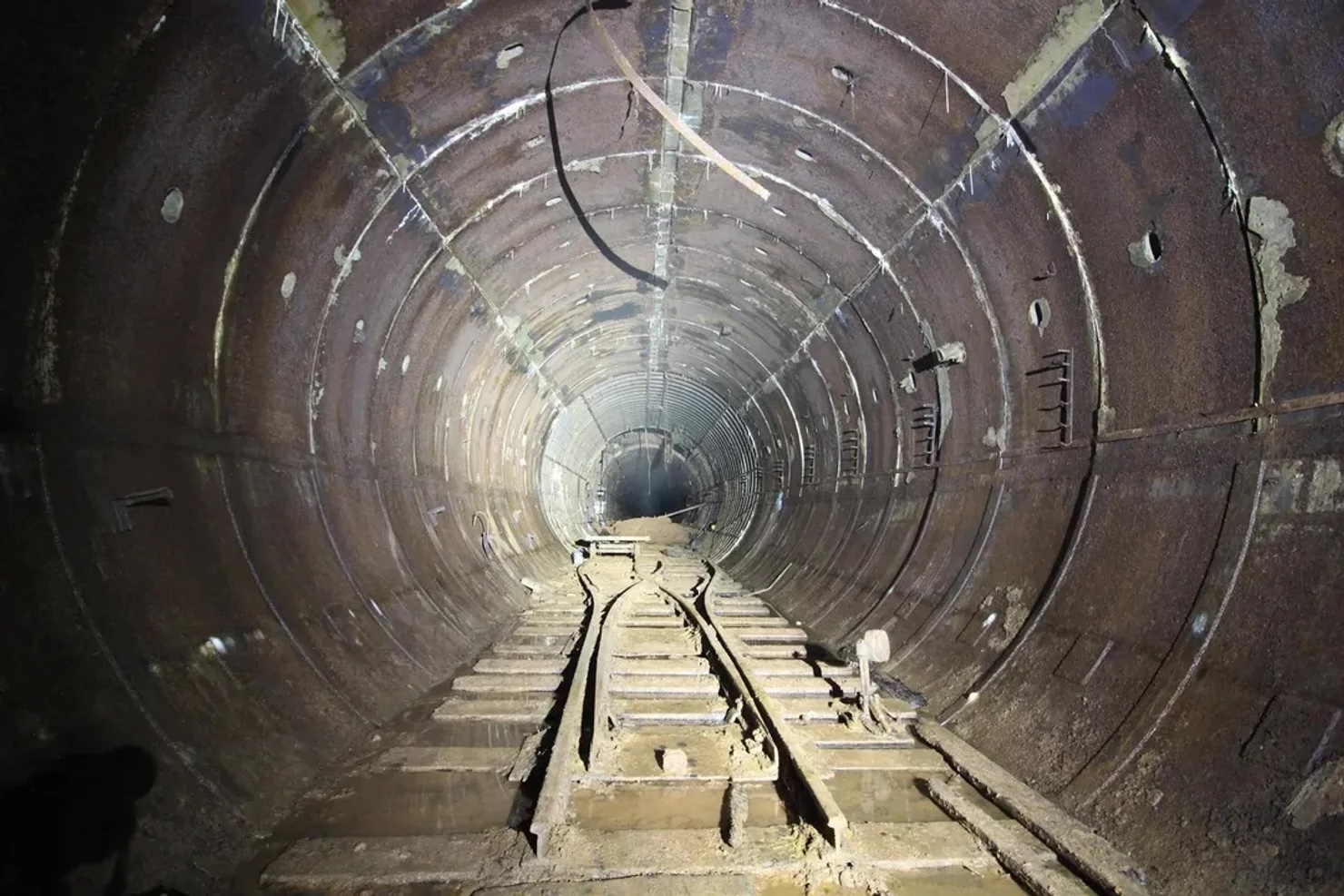
Essentially, the "Proton Accelerator-Accumulator Complex" currently represents a concrete underground tunnel where minimal order is maintained: water is pumped out to prevent soil collapse. Until recently, it was a popular spot for stalkers and fans of "abandoned places."
However, an old U-70 accelerator, built back in 1967, operates in Protvino. It serves as a "pre-accelerator" (injector). It works, but its power is hundreds of times less than that of modern giants. It is safe and used for medical and applied research.
It should be noted that starting from December 2024, CERN has ceased access to scientific work for about 500 scientists associated with Russian organizations. Some of them have participated in high-energy experimental physics projects for over 30 years. Researchers who collaborated with Russian institutes can no longer visit CERN and must return their French and Swiss residence permits. The decision was made in connection with Russia's war against Ukraine.