
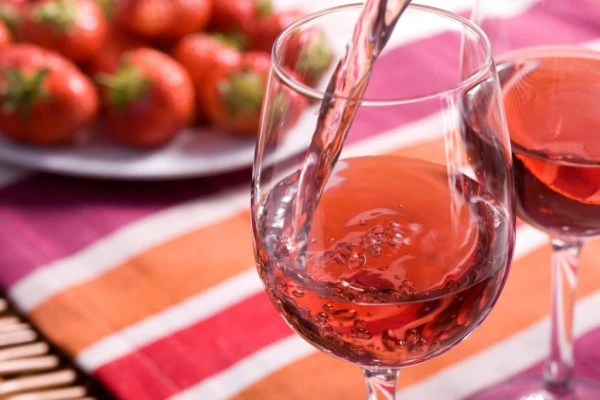
If you are planning dishes to pair with rosé wine, think about balance: less smoke, less vinegar, fewer spices.
Rosé wine is commonly considered universal because it is light and fruity. It is taken on picnics, opened with pasta, and served at romantic dinners. But this apparent simplicity can be misleading.
It is important to know that rosé wine is usually made with a short contact with the skin, so it has fewer tannins than red wine. The berry fruitiness can easily be overshadowed by strong flavors. This drink is about freshness and air, so aggressive dishes take away from that. This means that the thinner the style, the calmer the dishes should be with rosé wine.
Foods That Ruin the Taste of Rosé Wine
Fatty smoked meats (bacon, brisket, ribs). Smoke adds bitterness, fat weighs it down – and the rosé quickly seems flat and is mostly felt as alcohol.
Asparagus and broccoli (raw/steamed). Sulfur compounds can give a sulfurous note like burnt rubber or metallic harshness. The bright fruity notes of rosé go unnoticed.
Dishes with vinegar (marinades, pickles, preserves, dressings). Vinegar acidity makes the wine flat, sharp, and less fruity – there is a risk even from a drop in the sauce.
Blue cheeses (Roquefort, Gorgonzola, Dor Blue). The salt and pungency of the mold easily overpower dry rosé. Dry wines often seem more acidic and harsh alongside. If you want blue cheese – choose sweet, not dry rosé.
Curry and complex spices plus hot pepper. Alcohol enhances the spiciness, spices drown out the aroma: only warmth and sharpness remain. Only "slightly sweet and very fruity" works – and that with moderate spiciness.
Bitter greens (arugula, radicchio, endive). The bitterness makes it feel astringent, the wine feels drier and rougher than it is.
Rare steak, tartare, and other "bloody" red meats. The classic pairing with steak relies on tannins: protein/fat soften them. Most rosé wines have few tannins – so the meat tastes more metallic, and the drink feels empty. Exception: very structured rosés, such as those from the Tavel region.
Heavily roasted nuts and peanuts (especially with salt/spices). The roasted bitterness and spices emphasize dryness and astringency.
How to Avoid Mistakes in the Future
If there is smoke, vinegar, extreme bitterness, or very intense spices on the plate, the drink will almost certainly suffer as well. In the future, it is easier to consider rosé wine a delicate drink and pair it with similar food.
















Leave a comment