
This will reduce the risk of soil and groundwater contamination and support the idea of a circular economy.
Concrete is the most widely used building material on the planet: over 25 billion tons are used worldwide each year. Its production requires huge volumes of non-renewable raw materials and accounts for about 8% of global greenhouse gas emissions. Therefore, any technology that helps reduce the harm from its production is important.
Scientists from South Australia have found a way to utilize a byproduct of another resource-intensive process — lithium extraction — to make concrete stronger and more durable.
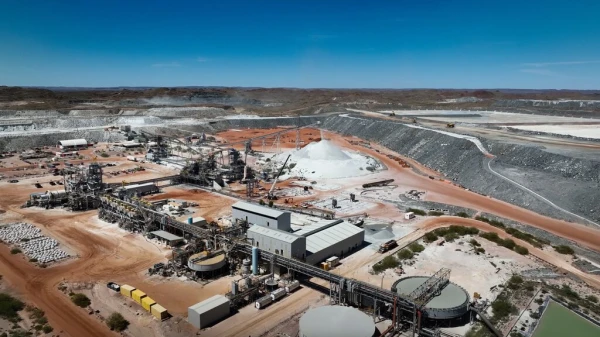
Lithium is actively used for battery production — for electronics, unmanned transport, and electric vehicles. However, its extraction leads to the generation of huge amounts of waste, such as spodumene ore.
For instance, the production of one ton of lithium hydroxide monohydrate generates 7–10 tons of byproduct — de-lithiated β-spodumene (DβS). Its properties remained largely unexplored for a long time, so the material was classified as hazardous waste and disposed of, adding new environmental risks to those already associated with lithium extraction.
Engineers at Flinders University established that DβS possesses pozzolanic properties, meaning it undergoes chemical reactions that make concrete stronger, less permeable, and resistant to corrosion. Experiments showed that using DβS as part of the binder significantly improves the mechanical strength and durability of concrete mixtures.
In the experiment, the scientists replaced part of the fly ash (waste from coal combustion) in the geopolymer binder composition — a type of cementing material used instead of ordinary Portland cement. When they replaced 25% of the fly ash with DβS and optimized the ratio of alkaline solutions, the strength of the concrete increased by 34% compared to the ordinary mixture made with fly ash alone. When the researchers further optimized the composition of these solutions, the strength increased by 74%.
The results indicate that using DβS allows for the production of concrete that is stronger than that made with fly ash alone. Such properties are achieved due to a denser and more stable internal structure of the concrete that forms after 28 days of curing.
"As lithium recycling increases the volumes of DβS, its reuse in construction could become a sustainable solution: it will reduce the amount of industrial waste, lower the risk of soil and groundwater contamination, and support the idea of a circular economy in the mining and construction sectors," noted civil engineer Dr. Aliakbar Golampour, who led the study published last month in the journal Materials and Structures.
Golampour has been researching alternative concrete materials for several years. In 2022, he led a study that demonstrated that geopolymers reinforced with natural fibers and sand waste can be used in modern concrete mixtures and provide the same strength and durability as traditional materials.











Leave a comment