
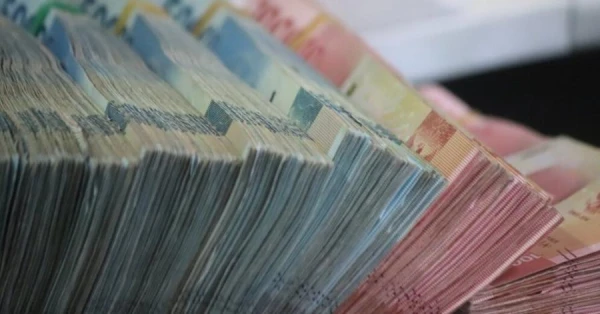
Many local governments in Latvia are approving budgets for the current year these weeks, and discussions about their funding model have flared up again — about the distribution of taxes, about subsidies from wealthier local governments to the benefit of other cities and regions. Calls to reform this system have been sounding for years. In the Saeima, they acknowledge: it is unlikely that they will decide on this in an election year, reports TV3 News.
Where do local governments get their money? Their budgets are replenished from various sources, but the lion's share comes from personal income tax revenues. 78% of these revenues are distributed in favor of local governments based on the declared place of residence of the residents. In the budgets of cities and regions, targeted subsidies from the state budget traditionally play a significant role — for example, for fund projects or teachers' salaries — as well as revenues from property tax, for which local authorities can apply discounts.
Additionally, there is a Financial Equalization Fund for local governments. The criteria for calculation vary, but essentially this means that wealthier local governments, primarily the capital and the Baltic region, subsidize the other regions of Latvia.
Interestingly, even economically strong municipalities like Liepāja, Smiltene, Valmiera, and Jūrmala receive subsidies from the fund.
Riga has been complaining the longest and loudest. There are many needs, and for instance, this year it will transfer nearly one-tenth of its planned revenues — about 140 million euros — to other local governments. A headache for the capital remains the distribution of personal income tax: many people work in Riga but live and are registered in neighboring regions, where the tax revenues remain.
Should the revenues from personal income tax be divided between the place of residence and the place of work? Or should part of the corporate profit tax be transferred to local governments to give them an incentive to develop business? Or perhaps, should the very principle of the equalization fund be reconsidered? Just last year, after the local elections, the Prime Minister acknowledged: she is open to discussing possible changes.
"The existing model has somewhat outlived itself. The problem is that, right now, it is unlikely that additional funds will appear. However, for me as the head of government, it is extremely important that we do not 'punish' those local governments that are truly working, engaging in difficult negotiations with residents, and where the economy and businesses are developing," noted Prime Minister Evika Siliņa.
Both the problems of the current system and possible solutions, as well as the risks of these solutions, have been discussed for years. But no political decisions have followed — and the ruling coalition indicates that none will follow now either.
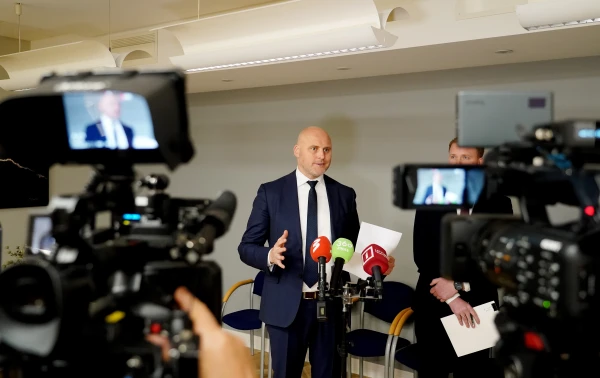
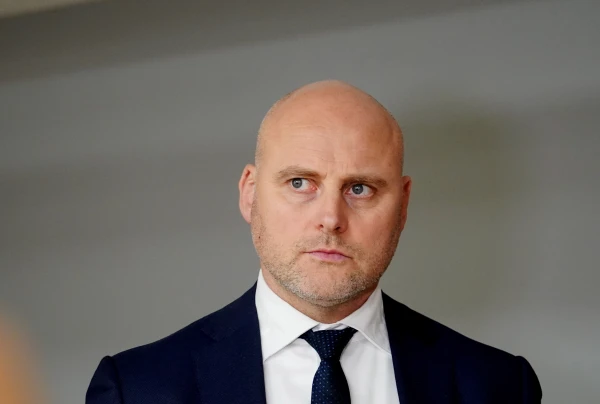
It is clear that reaching an agreement on changes will not be easy — the system itself implies a conflict of interest between donors and recipients. However, as acknowledged by the Chairman of the Union of Local Governments, Gints Kaminskis, in the podcast "Piķis un ģēvēlis!" on tv3.lv, postponing the reform again is wrong. Changes are undoubtedly necessary.
"It is impossible to exist for long in the format of a mutual aid fund. If we want Riga, Jūrmala, and the surrounding areas to develop, and not hinder them in this, such a growth locomotive is necessary. It is not enough to simply withdraw funds from other territories. The state's participation in equalizing the funding of local governments has long been insufficient," says Kaminskis.
The Union believes that it is necessary not just to shuffle amounts from place to place, but also to generally increase state funding for local authorities.




Leave a comment