This was the second unsuccessful launch of the Ceres-1 carrier rocket, developed by the Chinese company Galactic Energy. Prior to this, there had been 20 successful flights into space, according to Focus.
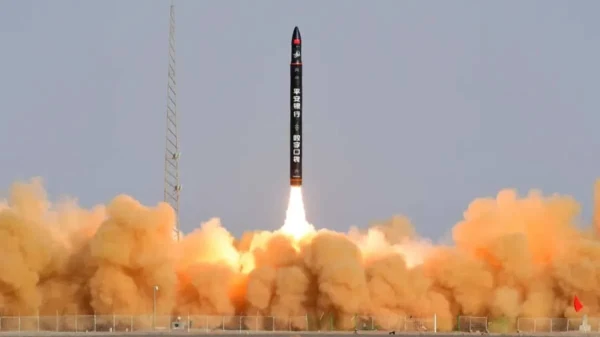
The solid-fuel carrier rocket Ceres-1, developed by the Chinese company Galactic Energy, launched from the Jiuquan Satellite Launch Center in northwest China on November 10. The rocket was supposed to deliver three satellites into low Earth orbit. However, the launch ended in disaster, according to Space.
Shortly after launch, the first three stages of the Ceres-1 rocket operated normally, but the engine of the fourth and final stage shut down too early, resulting in the loss of the three satellites that were meant to reach orbit. According to a statement from Galactic Energy, an abnormal engine failure occurred in the fourth stage of the rocket.
Representatives of the Chinese company stated that they are analyzing the cause of the engine failure and will take the data into account for future launches.
The Ceres-1 carrier rocket was supposed to deliver two satellites for the Chinese Earth observation satellite constellation "Jilin-1," as well as a satellite developed by one of the universities in China.
The four-stage Ceres-1 rocket is 19 meters tall and has a diameter of 1.4 meters. It can carry a payload of 400 kg into orbit.
The Ceres-1 rocket first went to space in November 2020. After completing nine successful launches, the first accident with the rocket occurred in September 2023. This launch was deemed unsuccessful. Now, Galactic Energy has experienced two unsuccessful launches of the Ceres-1 rocket, although this rocket has completed 20 successful flights.
Galactic Energy is also developing more powerful rockets, Ceres-2 and Pallas-1, which will be equipped with a reusable first stage, similar to SpaceX's Falcon 9.