
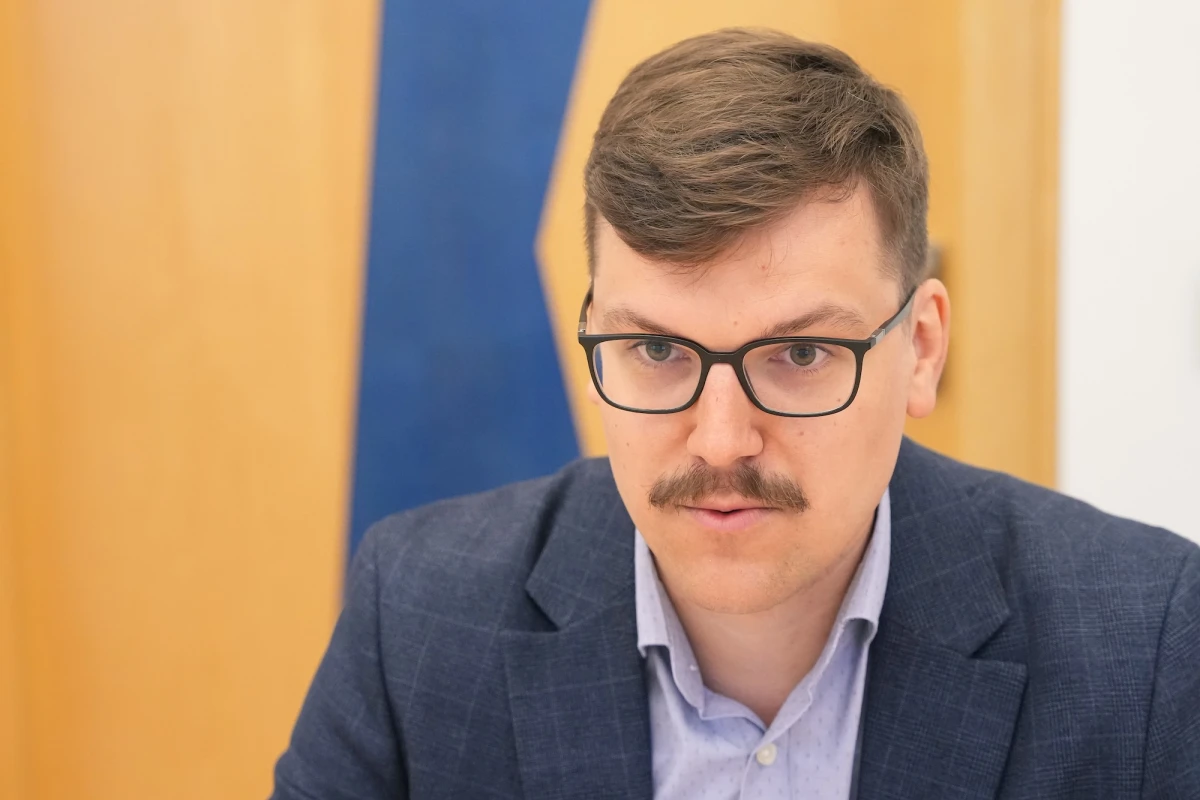
The communication of authorities after drone incidents in Latvia should become clearer and more thoughtful; however, the professionalism of the National Armed Forces should not be questioned. This opinion was expressed by Robert Keats, a researcher at the LaSER analytical center.
Robert Keats, a researcher at the LaSER analytical center, believes that after incidents involving drones entering Latvia, state structures need to improve communication with the public; however, criticism should not turn into distrust of the National Armed Forces.
According to him, previous reactions and informing residents have not always been successful, and conclusions must be drawn from these situations.
At the same time, Keats emphasized that he would be cautious with excessively harsh accusations against the army.
The expert reminded that Latvia's defense budget is growing very quickly, but the number of specialists and employees in this field is increasing much more slowly. Meanwhile, the tasks are becoming more numerous.
"New functions are emerging, while old ones do not disappear," the researcher noted, explaining why the system sometimes struggles to quickly adapt to new threats.
In his opinion, public anxiety is understandable, as Latvia is located near a region of real combat and lives in a state of hybrid warfare. However, professionals must be allowed to do their jobs, and some operational information cannot be disclosed publicly.
Keats also acknowledged that Latvia has gaps in its capabilities to detect and intercept drones, and these gaps need to be reduced as quickly as possible.
He believes it is incorrect to compare the situation with Ukraine, where a vast system of drone operators and countermeasures has formed due to the war.
The expert specifically noted that Latvia will likely need to change its approach to military technology procurement and adopt Ukraine's experience more quickly. Keats spoke particularly harshly about the problem of intercepting drones.
"The fact that we cannot shoot down drones entering Latvian territory is bad," he admitted.
According to the researcher, some try to assess the situation only through the cost of destroying a drone, but this is an incorrect approach. If a drone crashes into critical infrastructure, the consequences could be disproportionately more serious.
In fact, Latvia is currently seeking a balance between security and how to inform the public about potential threats.
The expert identified the cell alert system as a separate problem. If alerts come too frequently and without consequences, people will gradually stop taking them seriously. However, the absence of notification in the event of a real threat can also lead to severe consequences.
In Keats's opinion, state institutions should seek solutions to this issue in collaboration with local governments and communities.
The topic of drones and airspace protection has become one of the most sensitive security issues for Latvia in recent months—especially against the backdrop of the war in Ukraine and regular incidents near the borders of the Baltic states.












Leave a comment