
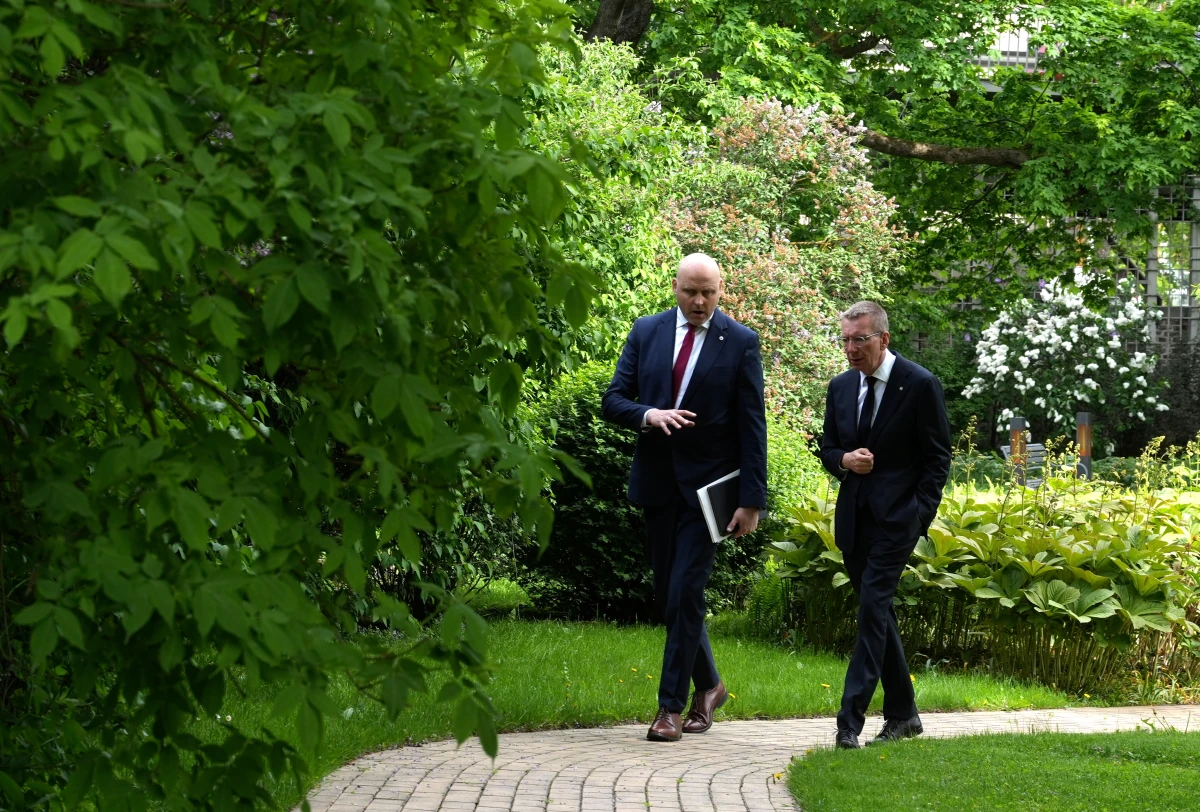
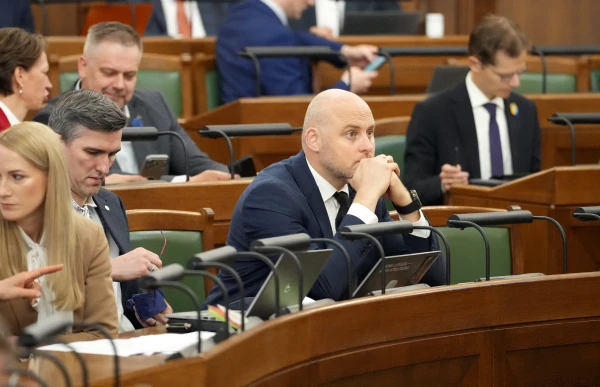
The parties forming the new government under the leadership of Andris Kulbergs have agreed on the distribution of ministries. The names of the future ministers have not yet been announced, but it is already clear which political forces will be responsible for finance, defense, economy, and internal security.
Four parties negotiating the formation of a new government in Latvia under the leadership of Andris Kulbergs have distributed responsibilities among themselves in the future Cabinet of Ministers. The final list of ministers is expected to be presented after a meeting with President Edgars Rinkēvičs.
According to preliminary agreements, the "United List" will receive the Ministry of Finance, the Ministry of Justice, and the Ministry of Smart Governance and Regional Development. This is notable as all three departments have been controlled by "New Unity" until now.
The National Alliance will receive the Ministry of Education and Science, the Ministry of Culture, the Ministry of the Interior, as well as the Ministry of Climate and Energy.
The Union of Greens and Farmers generally retains its positions in the government. The party will continue to control the Ministry of Economy, the Ministry of Welfare, and the Ministry of Agriculture, as well as maintain the position of Speaker of the Saeima. The only loss is the Ministry of Climate and Energy.
The most noticeable changes are occurring for "New Unity." After the change of government, the party retains influence in the areas of foreign affairs and health, and also receives the Ministry of Defense and the Ministry of Transport — these sectors have frequently been at the center of public discussions in recent months.
At the same time, Kulbergs did not confirm whether the current Prime Minister Evika Siliņa could transition to the post of Minister of Defense. This possibility has been actively discussed in political circles in recent weeks.
In fact, the new coalition is trying to build a maximally "calm" management model before the elections to the Saeima. Kulbergs himself emphasizes that there was very little time to form a government, so the main task became not to create a long-term program, but to achieve a working compromise between the parties.
According to him, the new government does not intend to write a declaration with plans for four or five years. Instead, the focus is on a short list of tasks that can realistically be accomplished in the time remaining before the elections.
The main priorities of the future Cabinet of Ministers are named as security, conducting parliamentary elections, supporting Ukraine, and strengthening internal stability. The coalition agreement specifically mentions strengthening the border, developing air defense, unmanned technologies, and civil defense.
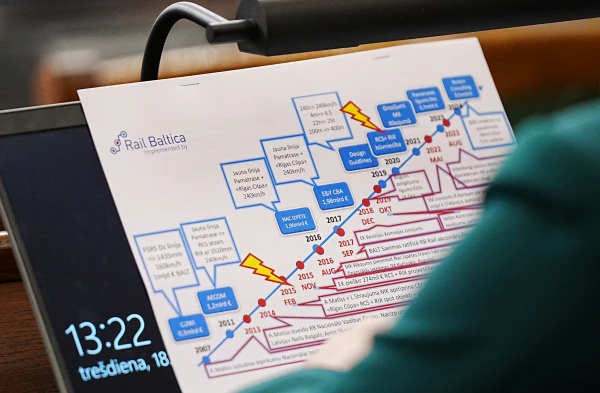
The parties also agreed to pay attention to combating corruption, reviewing state expenditures, and overseeing large projects, including Rail Baltica and airBaltic.
Politically, this looks like an attempt to quickly assemble a workable government without prolonged conflicts within the coalition. With relatively little time remaining before the elections, the parties seem to be betting on manageability rather than large-scale reforms.
It is expected that by tomorrow it will be known who will occupy ministerial posts in the new government.





Leave a comment