
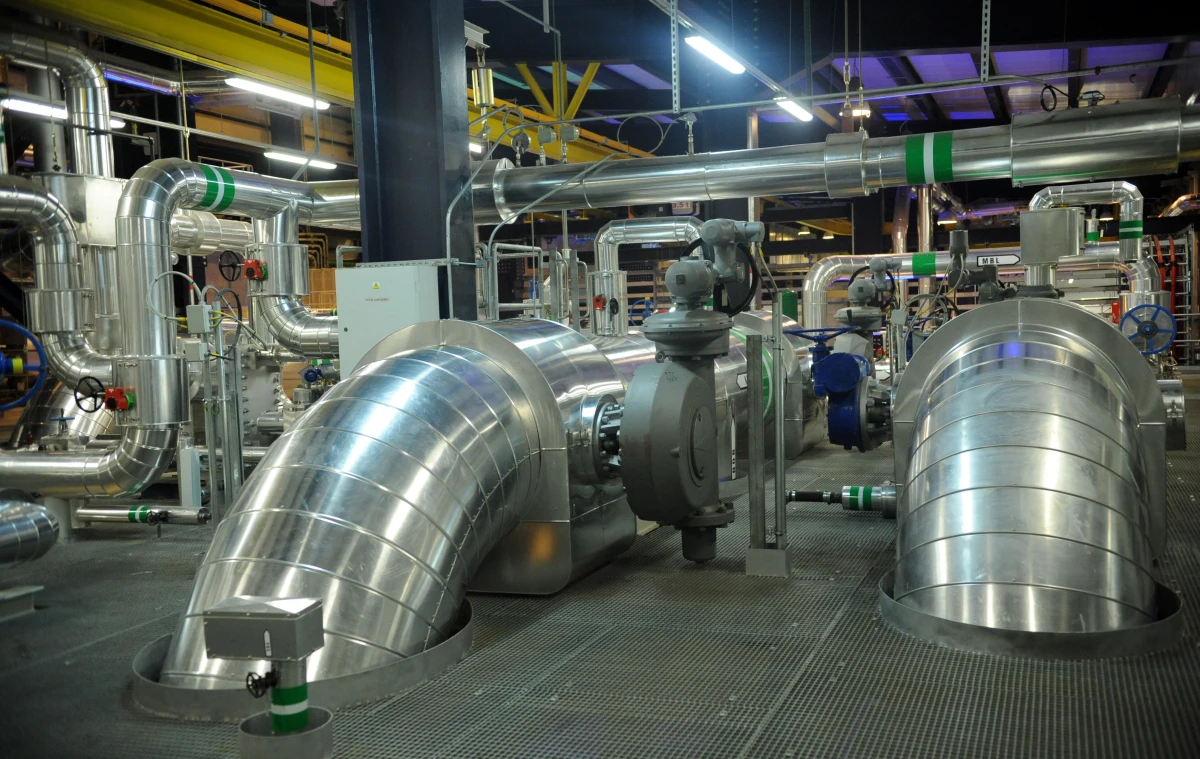
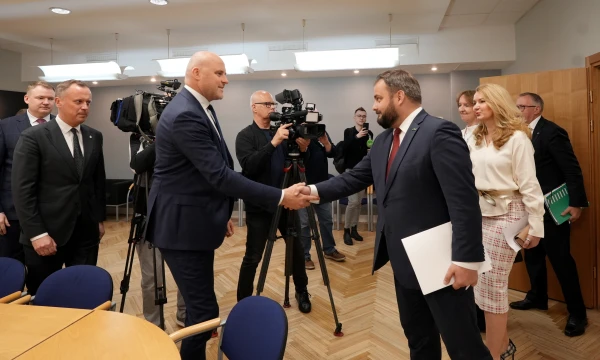
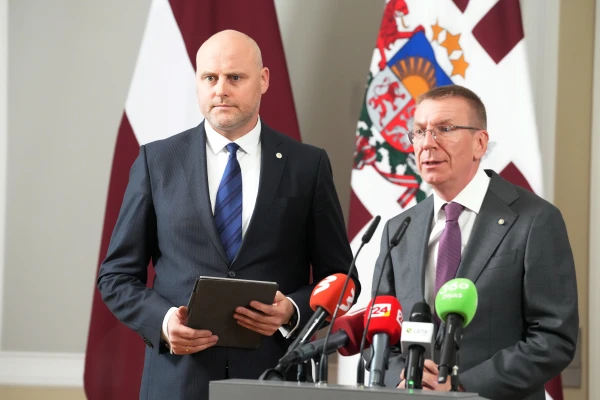
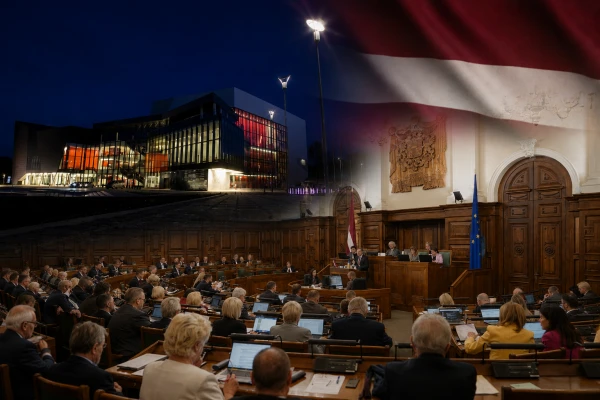
The parliamentary investigative commission on heating prices in Riga held its last public meeting last week – ahead of preparing the final report.
As stated by the chairman of the working body of the Saeima and future Prime Minister Andris Kulbergs, it is necessary to develop heating supply solutions for the capital based on the conclusions of the State Audit Office and expert assessments – for both the short and long term.
The State Concern Abandoned the City
A. Kulbergs briefly listed the preliminary findings of the commission: Riga has an "inadequate heat market model – the inaction of officials and involved parties has long allowed the emission of a paid, expensive, and valuable product into the atmosphere." "Riga residents have overpaid for heat for 5 years, with excessive resource consumption for double heat production."
According to calculations presented by Mr. Kulbergs, 42 million euros were wasted during the period from 2022 to 2025. He referred to "data that we cannot disclose here" (part of the commercial information was classified by the energy concern).
The Competition Council, for its part, "did not understand that Latvenergo does not produce heat."
"The Riga heat energy procurement system does not work and does not provide the cheapest price," the commission summarized. "It does not ensure sufficient competition and economically justified prices."
Participants in the production and market process, according to the Saeima, "did not act because they were waiting for initiatives from others, justifying their inaction with regulations and decisions of the Competition Council."
Latvenergo, for its part, "successfully exploited the shortcomings of the tariff set by the Public Utilities Commission and received unjustifiably high profits." At the same time, there was an "excess of heat production capacity" in Riga. Latvenergo did not participate sufficiently in the day-ahead heat energy market, and the heat plant in Imanta has unclear development prospects.
The existing Riga Energy Agency under the city council is "completely detached from the state energy strategy."
A Terrible Equivalent
Instead of unused energy, the capital purchased heat from "alternative," i.e., private, mini-stations. – Independent producers have a very influential finger through shareholders, the Ministry of Economics, emphasized Andris Kulbergs.
If we calculate how much wood raw material Riga needed to replace the emitted heat with "green fuel," we get:
-
11,359 heavy trucks with sawdust and chips, which could form a queue of 213 km – the distance from Riga to Ventspils;
-
142,309 felled trees;
-
A forest area of 355 hectares, the size of, for example, the town of Sabile;
-
CO2 emissions amounted to 295,976 tons, which is equivalent to 50,336 cars or 7% of Latvia's vehicle fleet.
The rare participation of the state-owned Latvenergo on certain days allowed prices in the market to collapse instantly – on average by 32%. For Rīgas Siltums (RS), this led to savings of 8.4 million euros.
The deputy also reminded that in the first "war" heating season of 2022/23, the government of A.K. Kariņš introduced the Law on Measures to Reduce the Extraordinary Increase in Energy Resource Prices, which provided for direct compensation of 50-90%. As a result, around half a billion euros were spent nationwide.
The commission also disclosed a letter from Latvenergo's production director Maris Kunickis, who demanded the concern's participation in the day-ahead heat energy market 12 years ago.
Rīgas Siltums Learned from Mistakes
The chairman of the board of RS Kalvis Kalniņš, speaking at the investigative commission, pointed out that the predominantly municipal enterprise achieved savings of 25 million euros in the past heating season. "The market situation played in favor of Riga residents."
– There were quite significant changes in this market. Its model is effective. Of course, there are decisions that we review from season to season to apply and improve...
According to K. Kalniņš, the guarantee of success is "sufficient diversification of fuel types and expansion of market zones."
– We have also started negotiations with Latvenergo, – noted the head of the municipal heating networks. However, in his opinion, "Latvenergo is not sufficiently motivated to start in the market."
The past winter, with its extremely cold weather, showed that the heat plants can operate efficiently. – I think the next season will be decisive here, – believes K. Kalniņš.
"Well, this is abnormal..."
Andris Vitols, an economist at the Competition Council, reminded that the public utilities regulator set the cogeneration energy volume for heat plants at 63%, while the State Audit Office noted that it was almost 20% higher. – This is not based on a complete assessment of economic principles and costs. And it turns out that the same regulated tariff gives a product sold at three different prices. Well, this is abnormal...
A. Kulbergs agreed – it is impossible to imagine that large gas heat plants produce heat at prices higher than those of small wood chip boilers. "They were not built for that."
Alda Ozola, chairwoman of the Public Utilities Regulation Council, noted on her part:
– It should be understood that a regulated merchant, at this moment we are talking about Latvenergo, has the right to return all justified costs...
For the upcoming heating season, A. Ozola wished that "there would not be this crazy profit here." As for Rīgas Siltums – it is important to comply with the price ceiling regulations.
After all, what a wonderful business heating supply is! After all, in what other sector of Latvia's economy is there such a marvelous combination of planned economy – and a wild market. The result, undoubtedly, becomes the wealth of certain decision-makers. But the investigative commission of the Saeima, unfortunately, did not reach them.
Who Is the Master in the House?
- JSC Latvenergo is a state company that is 100% owned by the Latvian state. The shareholder is: the Ministry of Economics of Latvia.
Despite periodic discussions about the possibility of listing part of the shares on the stock exchange (IPO), the enterprise remains a fully state-owned strategic asset.
- JSC Rīgas Siltums is a mixed-capital enterprise, where control is divided between the state and the Riga municipality:
– Riga City Council – 49.00%;
– Latvian state (represented by the Ministry of Economics) – 48.995%;
– LLC Enerģijas risinājumi. RIX (private investor) – 2.00%;
– JSC Latvenergo – 0.005%.





Leave a comment